
Universitat Autònoma de Barcelona
Founded in 1968, one of Spain's most innovative public universities, recognized as a Campus of International Excellence. QS World 2026 number 172, in the global top 200. Around 40,000 students, more than 4,000 international students from 130 plus countries. 13 faculties on a modern campus in Bellaterra (just 20 km from Barcelona). As an EU citizen you pay EU tuition (€2,000-€3,500 per year).
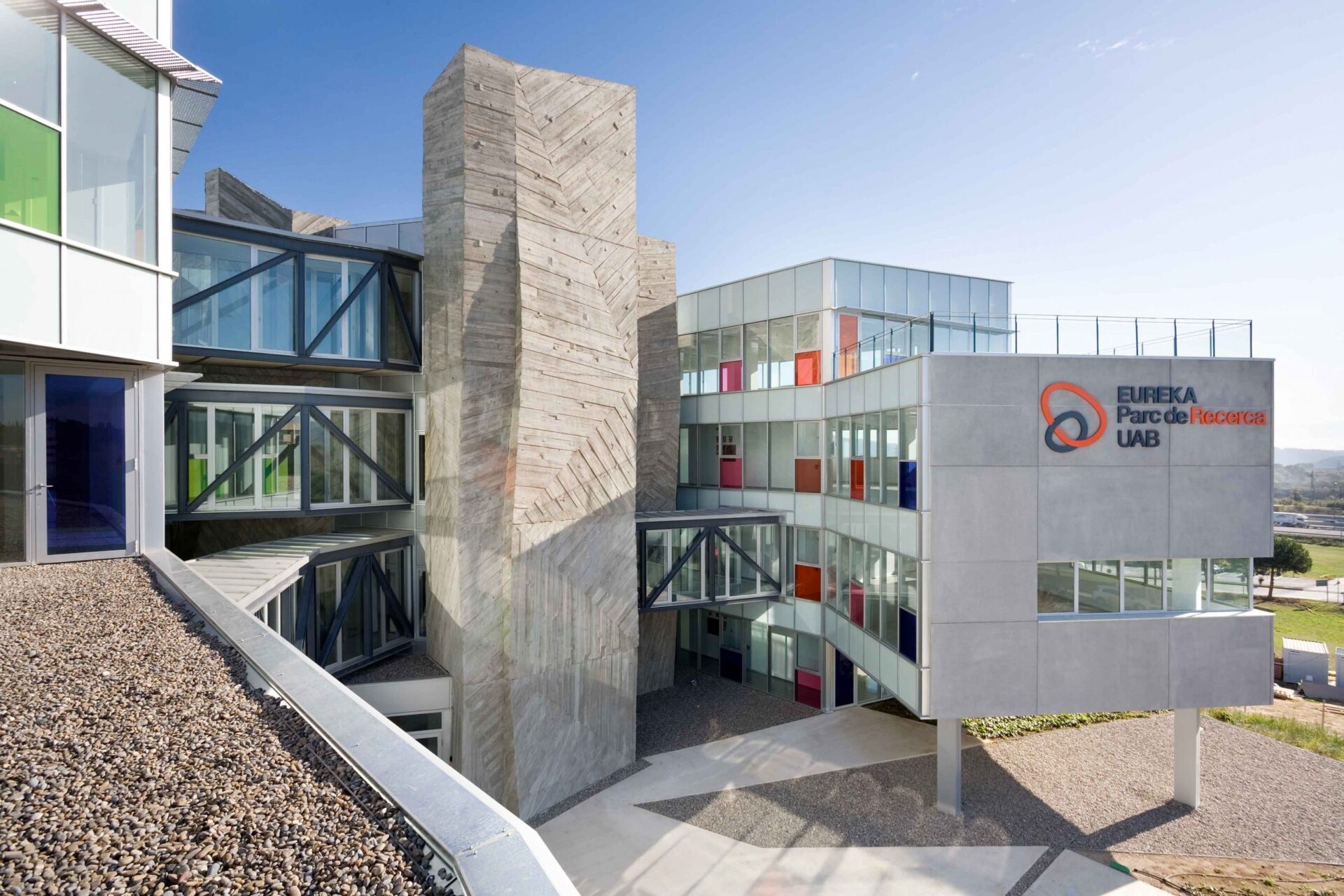
About Universitat Autònoma de Barcelona
Universitat Autònoma de Barcelona (UAB) is a modern public university, founded in 1968 on the principles of academic autonomy, democracy and social commitment. Just 58 years after its founding, UAB quickly established itself as one of the most innovative universities in Europe, becoming the first Spanish university recognized as a Campus of International Excellence (an elite government program).
UAB is QS World 2026 number 172, in the global top 200 of Times Higher Education, and consistently among the top 5 Spanish universities. The location is Bellaterra, in Cerdanyola del Vallès, a modern integrated campus just 20 km from the center of Barcelona, reachable in 30 minutes by train (FGC Sant Cugat or Renfe). The campus covers 262 hectares, with its own complete academic environment (student housing, sports centers, libraries, laboratories, veterinary hospitals), a quiet atmosphere ideal for research. Around 40,000 students, more than 4,000 international students from 130 plus countries. A member of EUA (European University Association) and ECIU (European Consortium of Innovative Universities).
TOP specializations at UAB: Veterinary Medicine (number 1 in Spain, with its own veterinary hospital and animal science research centers!), Biology and Biotechnology, Computer Science and Artificial Intelligence (Centre for Theoretical and Applied AI), Translation/Interpreting (the Facultat de Traducció i Interpretació, one of the best in Europe for rare language combinations), Communication and Journalism (with its own TV studios), Astrophysics (Institut de Ciències de l'Espai), Sociology, Economics and Business, Medicine, Law, Psychology. UAB has around 90 bachelor's programs (more than UB!), plus over 320 master's and PhD programs.
For Romanian students, UAB is an excellent option, especially for those interested in sciences, IT, communication or Veterinary Medicine. As an EU citizen you pay EU tuition: around €2,000-€3,500 per year (calculated per Catalonia ECTS credit, ~€18-€50 per credit). UAB has a significant number of bachelor's programs in English, more than UB: Bachelor in International Business Economics, Bachelor in Sociology (English path), Bachelor in Liberal Arts and Sciences (in partnership with the international curriculum), plus partially-English Business/CS options. The Romanian Baccalaureate is recognized through UNEDasiss, and applications are made through the Accesnet platform. For competitive programs (Veterinary, Medicine, Translation for certain language combinations) the cut-off grade is high. Cost of living in Bellaterra: ~€700-€1,100/month (cheaper than central Barcelona, with many students living on campus or in Sant Cugat). Note: bachelor's programs last 4 years (240 ECTS); Veterinary 5 years, Medicine 6 years.
How to apply to UAB
Get your Baccalaureate recognized through UNEDasiss
The first mandatory step for any Romanian: obtaining the Credencial de acceso through the national UNEDasiss system. You upload your Baccalaureate diploma, transcript, grade certificates and pay the fee (~€135). UNEDasiss calculates your access grade (your average converted to the Spanish 5-10 scale). Recommended deadline: apply from February-March for the year starting in September.
Choose your program and check the cut-off grade
UAB has ~90 bachelor's programs spread across 13 faculties. Recent cut-off grades: Veterinary Medicine ~12.3/14 (very competitive!), Medicine ~12.5/14, Translation/Interpreting ~11/14, Psychology ~10/14, Business ~9-10/14, Bio/Biotech ~9-11/14, Computer Science ~8-10/14, science/education/philology programs ~5-8/14.
Apply on Accesnet (the Catalonia portal)
Applications to UAB are made centrally through Accesnet, the Generalitat de Catalunya portal, alongside UB, UPF, UPC and the other public Catalan universities. Application deadline: generally in June, after UNEDasiss is ready. You choose up to 8 ordered preferences. Application fee: ~€32-€45. Strategy: if you want UAB Veterinary, put it first, then add backups in related programs.
Prove the language (Catalan, Spanish or English)
For programs in Catalan you need B2 Catalan plus B2 Spanish. Accepted: DELE, C1 Català or equivalent. For programs in English you need IELTS 6.0-6.5 or equivalent (Cambridge B2 First/C1, TOEFL iBT 80-90). UAB offers free intensive Catalan courses for international students in the first year.
Register as an EU citizen in Spain
As a Romanian citizen (EU), you do not need a study visa. After arrival, you register at the Oficina de Extranjeros to obtain your NIE (Número de Identificación de Extranjero) and the Certificado de Registro de Ciudadano de la Unión. Documents: passport or Romanian ID card, proof of admission to UAB, proof of financial resources (~€7,500/year), health insurance. NIE fee: ~€12.
Enrollment and start of studies (matrícula)
After confirmation of acceptance (July), you complete the matrícula online on the UAB portal. You choose your courses for the first semester (~30 ECTS), pay tuition (~€500-€900 per semester for EU rates). The academic year begins in mid-September. Housing: UAB has Vila Universitària on campus (~€500-€700/month), plus options in Bellaterra/Sant Cugat. Book 2-3 months in advance.
Costs for Romanians
EU tuition 2026-27
Total cost 4-year bachelor's
Statutory EU rates
As an EU citizen, you pay statutory EU rates, identical to those of a Spanish student. Tuition of €2,000-€3,500 per year versus non-EU €4,000-€6,000 per year. For a 4-year program, the total savings vs non-EU can reach €6,000-€12,000.
Stackable scholarships
Becas MEC (Ministerio de Educación) for EU students with income below the threshold, covering tuition plus housing. Becas Generalitat de Catalunya: regional scholarships. UAB Beques Equitat: internal scholarships. Erasmus+: €350-€500/month grant. UAB has over 600 Erasmus agreements.
Scholarships from Romania
You are eligible for the Spain Scholarship from the Romanian Ministry of Education if you gain admission to a Spanish public university (UAB qualifies). Many city halls have scholarship programs (Cluj, Timișoara, Iași, Bucharest). They stack with the Spanish ones. There are also private scholarships from Romanian foundations.
Want to apply to UAB?
We help you navigate UNEDasiss for the recognition of your Baccalaureate, choose the right program at UAB (including the English-taught options), apply on Accesnet and take advantage of the EU rates (€2,000-€3,500/year). Our mentors have been through the process. The mentoring session is 100% free.
Talk to a mentorFrequently asked questions
How hard is it to get into UAB?
UAB is moderately competitive, with an overall acceptance rate of ~60-70%, but it varies greatly by program. The competitive programs (high cut-off grades): Veterinary Medicine ~12.3/14 (#1 Spain, super competitive!), Medicine ~12.5/14, Translation/Interpreting ~11/14, Psychology ~10/14. The accessible programs (5-9/14): fundamental sciences, philology, education, sociology, communication. For Romanians, the cut-off grade is calculated from the Baccalaureate through UNEDasiss. A Baccalaureate average of 9 plus is recommended for Vet/Medicine/Translation, while a Baccalaureate of 8 plus is enough for most programs.
How much does UAB cost for Romanians exactly?
As an EU citizen, you pay statutory EU rates: ~€2,000-€3,500 per year (60 ECTS x €18-€50 per credit, depending on the program). Total cost of a 4-year bachelor's: €8,000-€14,000 in tuition alone. Housing: Vila Universitària UAB €500-€700/month, shared apartment in Bellaterra/Sant Cugat €400-€600. Food: €250-€400/month. Transport: T-Jove (under 25) ~€80/3 months covers FGC plus metro. Total cost of living: ~€700-€1,100/month (cheaper than central Barcelona!). Cost per year: ~€12,000-€16,000. Total 4 years all-in: ~€50-€65k. Note: Veterinary 5 years, Medicine 6 years.
What scholarships are available at UAB for Romanians?
Becas MEC: the Spanish national scholarship for EU students with family income below the threshold, covering tuition plus a housing subsidy. Becas Generalitat de Catalunya: regional Catalan scholarships. UAB Beques Equitat: internal UAB scholarships for students with financial need (covering part of tuition). Erasmus+: 350-500 EUR/month for academic exchange of 1-2 semesters, with UAB having over 600 active Erasmus agreements. The Spain Scholarship from the Romanian Ministry of Education: for Romanians admitted to a Spanish public university, stackable with the Spanish ones. Plus private scholarships from Romanian foundations or city halls. Important: the automatic EU rates (€2,000-€3,500/year) are already a major advantage over non-EU.
Does UAB have more English-taught programs than UB?
Yes, significantly more. UAB has invested consistently in international programs, offering full bachelor's programs in English such as: Bachelor in International Business Economics, Bachelor in Sociology (English path), Bachelor in Liberal Arts and Sciences, plus partially-English Business/CS options. At master's level UAB has over 70 programs entirely in English (Business, MBA, Bioinformatics, Materials Science, Translation Technology, etc.). For Romanians who do not want to learn Catalan, UAB is the better option than UB on this dimension, while still keeping the low EU rates.
What are the strongest programs at UAB?
UAB excels at: Veterinary Medicine (number 1 in Spain, with a veterinary hospital on campus and animal science research centers!), Biology and Biotechnology, Computer Science and Artificial Intelligence (Centre for Theoretical and Applied AI), Translation/Interpreting (very renowned in Europe for rare language combinations), Communication, Journalism, Audiovisual (its own TV studios), Astrophysics (Institut de Ciències de l'Espai), Sociology, Economics and Business, Medicine, Psychology, Public Policy and Administration. UAB is stronger than UB at Veterinary, Translation and Communication; UB is stronger at Human Medicine, Law and Pharmacy.
What is life like in Bellaterra vs Barcelona?
Bellaterra is a modern integrated campus, quieter than central Barcelona, ideal for academic focus. It covers 262 hectares with student housing (Vila Universitària), sports centers, libraries, shops, cafes, student clubs and even its own nightclub. The connection to Barcelona: FGC or Renfe train in 30 minutes (T-Jove ~€80/3 months covers everything). Many students live in Sant Cugat del Vallès (a vibrant town 5 km from campus) or Cerdanyola del Vallès. Pros: lower cost than central Barcelona, a real university campus atmosphere, a close-knit community. Cons: 20 km from Barcelona, so trips into the city are more planned. Recommendation: the optimal combination, live in Bellaterra/Sant Cugat and head into Barcelona on weekends.
Can I stay in Spain after graduating from UAB?
Yes, as an EU citizen, you have the automatic right to work in Spain without a visa. Spain is the 4th largest economy in the EU, with strong tech hubs in Barcelona (Glovo, Cabify, Wallapop, Mediapro, plus the European headquarters of Amazon Web Services), Madrid (BBVA, Santander, Telefónica, Indra) and Valencia. UAB has UAB Emprèn (its own entrepreneurship accelerator) and over 80 technology spin-offs. UAB graduate salaries: Veterinary €25-€40k starting; Bio/Biotech €22-€32k; CS/AI €25-€40k (Barcelona); Translation €20-€35k (depending on the language combination); Communication/Media €18-€30k. With a UAB degree recognized across Europe, you can work anywhere in the EU without a visa.
How long is a bachelor's at UAB and what about Veterinary?
Most bachelor's programs at UAB last 4 years (240 ECTS), in line with the European Bologna system. Important exceptions: Veterinary Medicine 5 years (300 ECTS), very competitive at UAB, one of the best in Europe; Medicine 6 years (360 ECTS). ECTS: 1 credit = ~25-30 hours of total study, 60 ECTS/year. For a bachelor's you must accumulate 240 ECTS plus the Trabajo Fin de Grado (TFG) of 6-12 ECTS in year 4. Why Veterinary at UAB: it has its own veterinary hospital on campus with over 20,000 cases/year, experimental farms, the most modern facilities and close ties to the veterinary pharmaceutical industry in Catalonia (Hipra, Boehringer Ingelheim local).
Our mentors from Europe
They studied at Bocconi, Sciences Po, TU Delft, ETH Zurich and other EU universities. Now they guide you.