
Universitat Pompeu Fabra
Founded in 1990, the youngest and most international public university in Spain. QS World 2026 number 265, top 100 worldwide in key fields, top 5 in Spain. Small (~12,000 students), selective, research-intensive: known as "the Cambridge of Catalonia". A member of "The Guild" (the alliance of European research-intensive universities, ~21 elite universities). UNICE partnerships: Sciences Po Paris (dual degrees!), LSE, UCLA. An urban campus in central Barcelona. Strong in Economics, International Relations, Communication, Translation, Data Science, Medicine. Many programs in English (among the most in Spain). As an EU citizen you pay EU fees (~EUR 3,100-EUR 3,400/year).
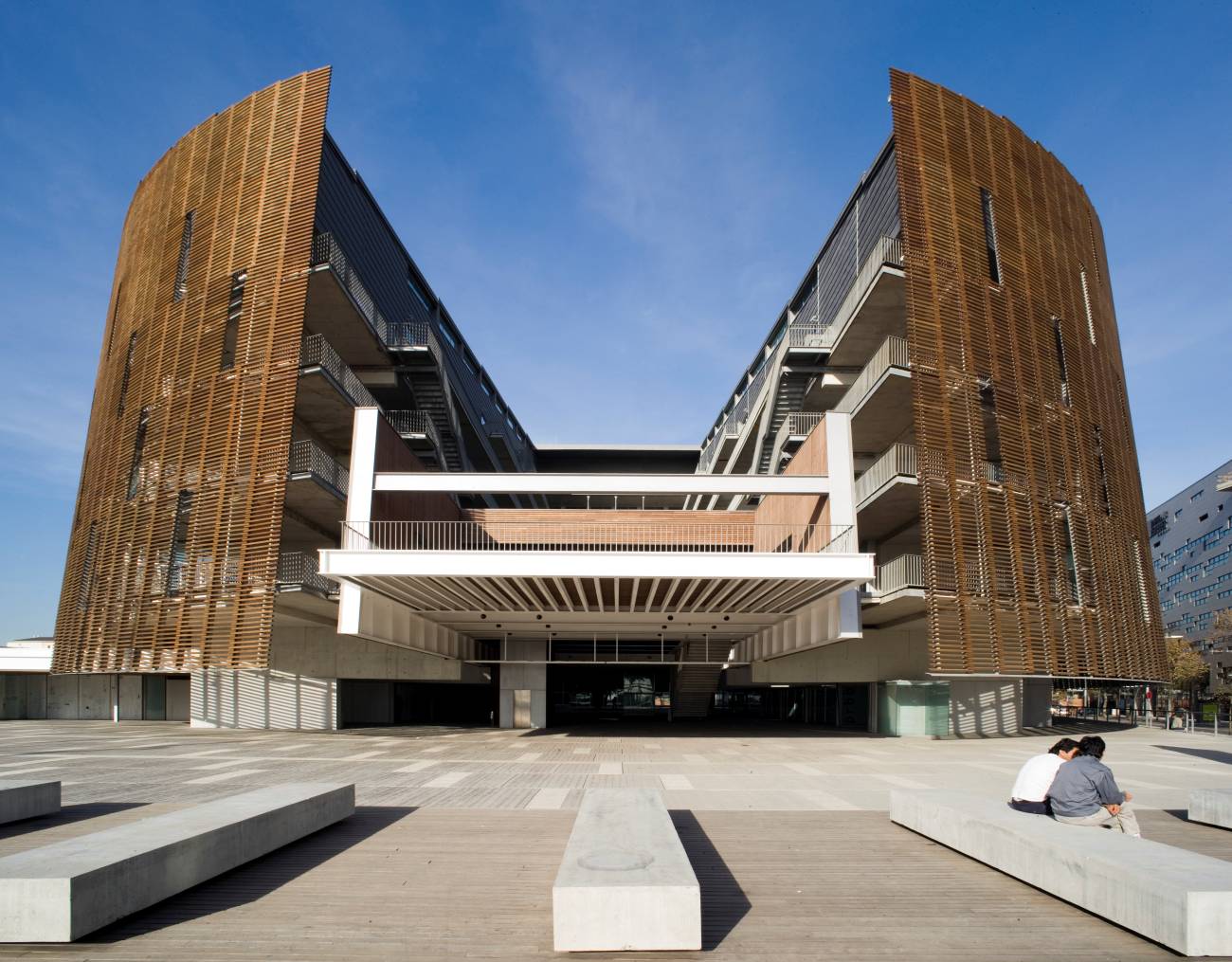
About Universitat Pompeu Fabra
Universitat Pompeu Fabra (UPF) is a public university founded in 1990 by the Generalitat de Catalunya, named after the Catalan philologist Pompeu Fabra (the man who standardized modern Catalan). In just 35 years of existence, UPF has become one of the most innovative and international universities in Spain, considered by many to be "the Cambridge of Catalonia" thanks to its small size, high selectivity and absolute focus on research.
UPF is QS World 2026 number 265, but in the rankings by key field it is far better: top 100 worldwide for Economics, Business, Communication, Linguistics. Times Higher Education places it in the top 180 worldwide and top 100 in Europe. UPF is the only Spanish public university that is a member of "The Guild of European Research-Intensive Universities", an elite alliance of 21 universities (alongside Bologna, Heidelberg, Uppsala, KU Leuven, Glasgow). Plus the EUTOPIA European University Alliance.
What makes UPF unique: rarely seen joint/dual degree partnerships. Bachelor in Global Studies with Sciences Po Paris (4 years, the first 2 in Paris, the last 2 in Barcelona, you receive 2 diplomas!), Bachelor in International Business Economics with an English path, partnerships with LSE (London School of Economics) and UCLA for certain programs. These opportunities are extremely rare at a Spanish public university with EU fees.
Strong specializations at UPF: Economics and Finance (BSE - Barcelona School of Economics, top European, the first Spanish Nobel laureate in Economics teaches here!), International Relations and Political Science, Communication, Audiovisual and Journalism (Poblenou campus with a professional TV studio), Translation/Interpreting, Data Science and Engineering, Medicine (Hospital del Mar campus), Law (with an English path), Humanities, Biomedical Engineering. UPF has ~40 bachelor's programs, of which many are in English or bilingual.
For Romanian students, UPF is probably the most accessible option for an international campus in public Spain. As an EU citizen you pay EU fees: ~EUR 3,100-EUR 3,400/year (EUR 26-EUR 57 per ECTS credit, depending on the program). By comparison, a non-European student pays EUR 5,800-EUR 6,700/year. Unique location: 3 urban campuses in central Barcelona (Ciutadella - main, Poblenou - Communication, Hospital del Mar - Medicine). The Romanian Baccalaureate is recognized through UNEDasiss, with applications through Accesnet. Cost of living in Barcelona center: ~EUR 900-EUR 1,300/month (more expensive than Bellaterra because it is a premium urban location). Note: bachelor's degrees last 4 years (240 ECTS); Medicine 6 years.
How to apply to UPF
Get your Baccalaureate recognized through UNEDasiss
First step: the Credencial de acceso through UNEDasiss. You upload your Baccalaureate, transcript and grade certificates; you pay ~EUR 135. UNEDasiss calculates your access grade (the Spanish 5-10 scale). For UPF: given the selectivity, we recommend you also take the PCE (Pruebas de Competencias Especificas) in 2-3 subjects to raise the grade from 10 to 14. PCE subjects for UPF: Matematicas Aplicadas a las Ciencias Sociales (Economics/Business), Economia de la Empresa, Ingles. UNEDasiss deadline: February-April.
Decide on the program (watch out for the dual degrees!)
UPF has ~40 bachelor's degrees. The most prestigious programs: Bachelor in Global Studies (with Sciences Po Paris, dual degree!), Bachelor in International Business Economics (English), Bachelor in Mathematical Engineering in Data Science, Bachelor in Philosophy, Politics and Economics (PPE), Bachelor in Translation and Interpreting. Recent cut-off grades: Global Studies (Sciences Po) ~12.5/14, Mathematical Engineering ~12.5/14, Medicine ~13/14, Economics ~11-12/14, International Business Economics ~12/14, Humanities/Communication programs 8-10/14.
Apply on Accesnet (the Catalonia portal)
UPF is part of the Accesnet system of the Generalitat de Catalunya. You choose up to 8 ordered preferences. Application deadline: June for the academic year starting in September. Tip for UPF: if you want competitive UPF programs, put them in the top spots and use the other preferences as a backup (similar programs at UAB, UB). For the Bachelor in Global Studies with Sciences Po, there is an additional selection process with an interview (you can also prepare the application directly with Sciences Po).
Prove your language (note: programs in English!)
UPF is the only Spanish public university with full bachelor's degrees in English. For those, you need IELTS 6.5-7.0 or equivalent (Cambridge C1 Advanced, TOEFL iBT 90-100). For the bilingual programs (English + Catalan/Spanish), you need B2 English plus B2 Catalan/Spanish. Programs taught entirely in Catalan: B2 Catalan plus B2 Spanish. UPF offers free Catalan courses in the first year. For the Bachelor in Global Studies with Sciences Po: you need C1 English plus B2 French plus B2 Spanish (three languages!).
Register as an EU citizen in Spain
As a Romanian citizen (EU), you do not need a visa. After arriving in Barcelona: NIE (Numero de Identificacion de Extranjero) plus Certificado de Registro de Ciudadano de la Union at the Oficina de Extranjeros. Documents: passport or ID card, proof of UPF admission, proof of financial resources (~EUR 8,000/year, more than at Bellaterra because Barcelona center is more expensive), health insurance (the European card or private). NIE fee: ~EUR 12. Recommended: register in Ciutat Vella or Poblenou if you live close to campus.
Enrollment and starting your studies
After confirming your acceptance (July), you complete the matricula online on the UPF portal. You pay tuition (~EUR 780-EUR 850 per semester for EU fees). The academic year starts: mid-September. UPF has a very well organized "welcome week": orientation across the 3 campuses, meetings with mentors, tours of Barcelona. Accommodation: UPF has the Residencia Universitaria UPF (limited spots), plus partnerships with Resa, BCU, Melon District. Accommodation costs in Barcelona center: residence EUR 600-EUR 900/month, shared apartment EUR 500-EUR 900, private room EUR 700-EUR 1,100. Book 2-3 months in advance - the rental market is competitive in Barcelona!
Costs for Romanians
EU tuition 2026-27
Total cost 4-year bachelor's (all in)
Statutory EU fees
As an EU citizen, you automatically pay EU fees: EUR 3,100-EUR 3,400/year versus non-EU EUR 5,800-EUR 6,700/year. Annual saving: EUR 2,700-EUR 3,300 just through EU citizenship. For a 4-year program, the total saving vs non-EU: EUR 10,800-EUR 13,200.
Spanish and Catalan scholarships
Becas MEC (the national scholarship for EU citizens below an income threshold), Becas Generalitat de Catalunya (regional), UPF Excellence Scholarships (internal, for top performance) and access to the Barcelona School of Economics programs. Erasmus+: over 250 active agreements, plus non-Erasmus partnerships with UCLA, LSE, UC Berkeley.
Spain Scholarship (Romanian ME)
As a Romanian student, you are eligible for the Spain Scholarship from the Romanian Ministry of Education if you gain admission to a Spanish public university (UPF qualifies). Recommended: combine it with a private Romanian scholarship or part-time work (legal for EU citizens, up to 20 hours/week during the academic year).
Want to apply to UPF?
We help you navigate UNEDasiss, decide between UPF's competitive programs (Global Studies with Sciences Po, Economics, Data Science), apply on Accesnet and take advantage of the EU fees. UPF's programs in English are a rare opportunity in public Spain. Our mentors have been through the process. A 100% free session.
Talk to a mentorFrequently asked questions
How hard is it to get into UPF?
UPF is very selective, with an overall acceptance of ~57%, but it varies greatly by program. The most competitive: Medicine ~13/14, Bachelor in Global Studies (with Sciences Po) ~12.5/14, Mathematical Engineering in Data Science ~12.5/14, International Business Economics ~12/14, Economics ~11-12/14, PPE ~11/14. More accessible programs (8-10/14): Humanities, Translation, Communication, Audiovisual, Political Science. For Romanians, the cut-off grade is calculated from the Baccalaureate through UNEDasiss. For the top UPF programs, we recommend a 9.5 plus Baccalaureate, plus the PCE in 2-3 subjects (Matematicas Aplicadas, Economia, Ingles) to raise the grade to 12-14.
What does "the Cambridge of Catalonia" mean?
UPF is described as "the Cambridge of Catalonia" because, although it is a public university (not private), it has characteristics that are unique in public Spain: small size (~12,000 students vs ~76,000 at UB or ~40,000 at UAB), high selectivity, research-intensive, very international (over 25% international students), an excellent professor-student ratio. UPF is the only Spanish public university that is a member of "The Guild of European Research-Intensive Universities" (an elite alliance of 21 universities including Bologna, Heidelberg, Uppsala, Glasgow, KU Leuven). In the rankings by field (Economics, Communication), UPF is top 100 worldwide.
What are the dual degrees with Sciences Po and LSE?
UPF has UNICE partnerships in public Spain: Bachelor in Global Studies with Sciences Po Paris - you do 2 years at Sciences Po Reims or Le Havre + 2 years at UPF Barcelona, and you receive 2 diplomas (Sciences Po plus UPF). Languages of the program: English, French, Spanish. Very competitive, ~30 spots per year. There are also exchange partnerships with the London School of Economics (LSE), UCLA, UC Berkeley for specific programs (Economics, Political Science, Communication). UPF is among the few European public universities with this level of international partnerships, while at the same time keeping the low EU fees. For an ambitious Romanian, this can be the best value-for-money deal in Europe.
Are UPF's programs in English?
UPF has the most programs in English in public Spain. Full bachelor's degrees in English: Bachelor in International Business Economics, Bachelor in Global Studies (with Sciences Po), Bachelor in Mathematical Engineering in Data Science. Many bilingual programs (English plus Catalan/Spanish) in Communication, Translation, Audiovisual. At master's level UPF has over 50 programs in English. Language requirements: IELTS 6.5-7.0 or Cambridge C1, TOEFL iBT 90-100. UPF is well suited to Romanians who want education in English at a European public university with low EU fees - a combo that is hard to find elsewhere in public Spain.
What are UPF's strongest programs?
UPF excels at: Economics and Finance (Barcelona School of Economics is top European; the alumnus Manuel Arellano is a constant Nobel candidate); International Relations and Political Science (top Europe); Communication, Audiovisual, Journalism (Poblenou campus with a professional TV studio, many alumni in international media); Translation/Interpreting (renowned for rare language combinations); Data Science and Mathematical Engineering (a new, very selective program with many tech opportunities); Medicine (Hospital del Mar campus, a top Barcelona hospital); Philosophy, Politics and Economics (PPE); Humanities and Literature; Biomedical Engineering. UPF is the strongest in Spain for Social Sciences and Economics.
What is student life like at UPF in Barcelona?
UPF has 3 urban campuses in central Barcelona: Ciutadella (main, near Parc de la Ciutadella, Economics, Social Sciences, Law programs), Poblenou (Communication, ITT - the 22@Barcelona tech district, very modern), Hospital del Mar (Medicine, near the beach). Unique location: you can go to class and then to the beach in 10 minutes! A very international community: 25%+ international students, a cosmopolitan atmosphere. Compared with UAB Bellaterra: UPF is more urban, more expensive (accommodation EUR 600-EUR 1,100/month vs EUR 400-EUR 700), but it throws you straight into Barcelona life. Compared with UB: UPF is smaller, more international, more focused on research. Recommended for: students who want an urban experience plus an international community.
Can I stay in Spain after graduating from UPF?
Yes, as an EU citizen, you automatically have the right to work in Spain without a visa. UPF has one of the best employability rates in Spain thanks to its international reputation. UPF graduates work at: the big Spanish banks (BBVA, Santander, CaixaBank), big four consultancy (Deloitte, PwC, EY, KPMG Barcelona), tech (Glovo, King.com - Candy Crush HQ Barcelona, Amazon Web Services, Microsoft, plus startups), media (RTVE, TV3, El Pais), international organizations (many Global Studies graduates work at the UN, OSCE, EU institutions). Starting salaries for UPF graduates: Economics/Business EUR 28-EUR 45k Barcelona; Data Science EUR 30-EUR 50k; Medicine (MIR residency) EUR 30-EUR 45k; Communication EUR 22-EUR 35k; Translation EUR 22-EUR 40k (language combination). With a UPF degree you can work anywhere in the EU.
UPF vs UB vs UAB: which one should I choose?
It depends on your profile. UPF: if you want an international, English-language, research-intensive education, programs like Economics/Business/Communication, the possibility of a dual degree with Sciences Po/LSE. More expensive (EUR 3,100-EUR 3,400) and competitive. Barcelona center location. UB: if you want a classic university, historic prestige (575 years), top Spain Medicine, Law, Pharmacy. Programs mainly in Catalan/Spanish, fewer in English. A slightly lower fee (EUR 2,800-EUR 3,600). Barcelona center location. UAB: if you want Veterinary (#1 in Spain!), Translation, AI, Communication, Bio/Biotech, a large integrated campus at Bellaterra (quieter, cheaper EUR 400-EUR 700 accommodation). More programs in English than UB, but UPF remains the leader. A lower fee (EUR 2,000-EUR 3,500). Conclusion: for ambitious Romanians with an international profile, UPF is probably the best choice in public Spain.
Our mentors from Europe
They studied at Bocconi, Sciences Po, TU Delft, ETH Zurich and other EU universities. Now they guide you.