
Universidad Complutense de Madrid
One of the oldest and largest universities in Spain, with origins in 1499 (Cardenal Cisneros). QS World 2026 number 187, 3rd in Spain and number 1 nationally for employability. Around 72,000 students, over 7,000 international. As an EU citizen you pay EU fees (roughly EUR 1,000-2,000 per year), drastically lower than a non-European.
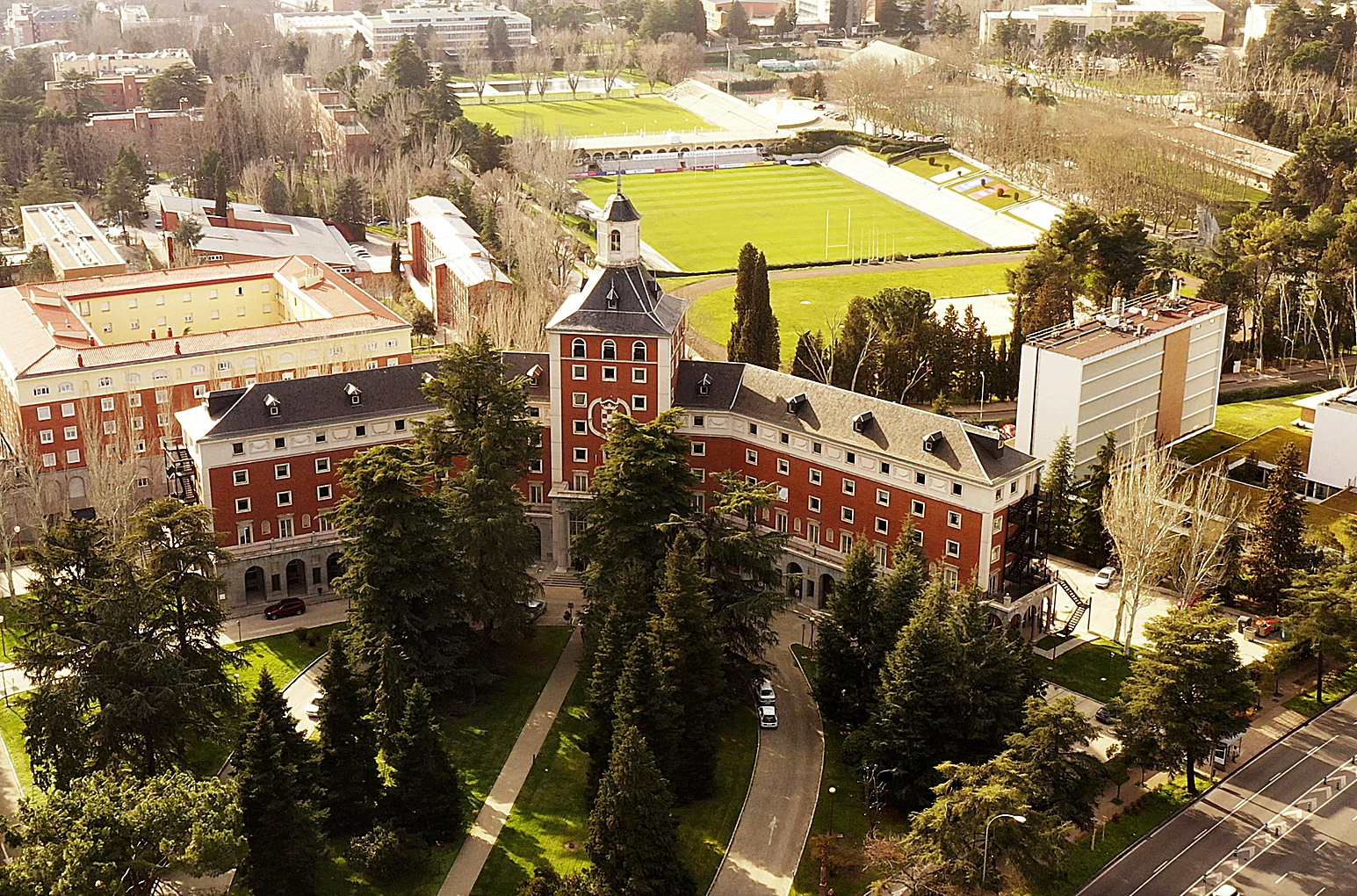
About Universidad Complutense de Madrid
Universidad Complutense de Madrid (UCM) is a public university with deep historical roots: its origins go back to 1293 (a royal charter for a studium generale in Alcala de Henares), and the university itself was established in 1499, when Cardinal Cisneros obtained the papal bull from Pope Alexander VI. The name "Complutense" comes from Complutum, the Roman name of the city of Alcala. In 1836 the institution moved to Madrid, becoming Universidad Central, and in the 1970s it received its current name. It is one of the oldest and largest universities in Spain.
UCM is QS World 2026 number 187, the 3rd university in Spain and number 1 nationally for employability (53rd in the world on this indicator). It has remarkable scores for International Research Network (92.7) and academic reputation (78.5). The main campus is Ciudad Universitaria, an extensive university district in the north-west of Madrid, plus the Somosaguas campus (social sciences). UCM has around 72,000 students, of whom over 7,000 are international, and is one of the largest residential universities in Europe.
UCM's strong fields: Medicine and health sciences (Pharmacy, Dentistry, Veterinary), Law (the historic Facultad de Derecho), Political Science and Sociology, Economics and Business, Psychology, Philology and Philosophy, Communication and Journalism (Ciencias de la Informacion), exact sciences (Mathematics, Physics, Chemistry, Biology). UCM offers over 70 bachelor's programmes (grados) and hundreds of master's programmes. Most bachelor's degrees are taught in Spanish (B2 level required), but there is a growing set of programmes or tracks in English, especially at master's level and on certain grados (Business, International Relations).
For Romanian students, UCM is one of the most accessible opportunities in Europe. As an EU citizen you pay EU fees: roughly EUR 1,000-2,000 per year for a bachelor's degree (calculated per ECTS credit, depending on the experimental level of the programme), versus the much higher fees applied to non-Europeans. The Romanian Baccalaureate is recognised through the UNEDasiss system (it issues the Credencial de acceso), and applications go through the Distrito Unico portal of the Comunidad de Madrid, NOT through Accesnet (that one is for Catalonia). For competitive programmes (Medicine, Psychology, ADE, RR.II.) the entry mark (nota de corte) matters, calculated from the Baccalaureate average plus the optional PCE exam. Cost of living in Madrid: ~EUR 900-1,300/month. Note: bachelor's degrees in Spain are 4 years (240 ECTS), not 3 as in the UK.
How to apply to UCM
Get your Baccalaureate recognised through UNEDasiss
The mandatory first step: obtaining the Credencial de acceso through the national UNEDasiss system (run by the Universidad Nacional de Educacion a Distancia). You upload your Baccalaureate diploma, transcript and grade certificates (officially translated), and pay the fee (~EUR 135). UNEDasiss calculates your entry mark on the Spanish scale. Recommended timing: apply through UNEDasiss in February-March for the academic year starting in September.
Choose your programme and check the nota de corte
UCM has over 70 grados: Medicine, Law, ADE (Business), Economics, Psychology, Ciencias Politicas, Relaciones Internacionales, Communication, Philology, Mathematics, Physics, Chemistry, Biology. Each has a nota de corte set by supply and demand: Medicine ~13/14 (the most competitive), Relaciones Internacionales and Psychology ~11-12/14, ADE/Law ~9-11/14, with many science and humanities programmes below 9/14 (more accessible). To raise your mark you can take the PCE (Pruebas de Competencias Especificas) in 2 subjects.
Apply on the Distrito Unico Madrid portal
For public universities in the Comunidad de Madrid (UCM, UAM, UC3M, UAH, URJC, UPM) applications are centralised through the Distrito Unico portal of the Comunidad de Madrid (NOT Accesnet, which is for Catalonia). Application deadline: generally June, once UNEDasiss is ready. You choose several ranked preferences of programmes at Madrid universities. The system allocates you to the first option where your mark qualifies. Note: if you only want UCM, list several UCM grados to maximise your chances.
Prove your language (Spanish or English)
For programmes in Spanish (most grados at UCM) you need Spanish B2 level, proven through DELE, SIELE or the language option within UNEDasiss. For programmes or tracks in English (certain Business grados, Relaciones Internacionales, plus many master's degrees) you need IELTS 6.0-6.5 or TOEFL iBT 80-90, or a Cambridge equivalent (B2 First / C1 Advanced). Check the exact requirement on each grado's page.
Register as an EU citizen in Spain
As a Romanian (EU) citizen, you do not need a study visa. After arriving in Madrid, you register at the Oficina de Extranjeria to obtain your NIE (Numero de Identificacion de Extranjero) and the Certificado de Registro de Ciudadano de la Union. Documents required: passport or Romanian ID card, proof of admission to UCM, proof of financial resources (~EUR 7,500/year) and health insurance (European Health Insurance Card or private). NIE fee: ~EUR 12.
Enrolment and start of studies (matricula)
After confirmation of acceptance (July), you complete the matricula online on the UCM portal. You choose your courses for the first semester (~30 ECTS) and pay tuition (EU fees, calculated per credit). Start of the academic year: mid-September. UCM has an orientation programme for international students and an Erasmus and mobility office. Tip: arrange accommodation (colegios mayores, residencias or shared apartments) at least 2 months in advance; Madrid has a competitive rental market in student areas.
Costs for Romanians
EU tuition 2026-27 (EU citizens)
Total cost per year (estimate)
EU fees
As an EU citizen, you automatically pay EU fees identical to those of a Spaniard. You do not have to do anything special, just prove your Romanian citizenship with a passport or ID card. Tuition is roughly EUR 1,000-2,000 per year versus the much higher fees applied to non-Europeans. That means thousands of euros saved per year simply by being an EU citizen.
European scholarships
Becas MEC (Ministerio de Educacion): for European students with family income below a threshold, covering tuition plus an accommodation component. Becas Comunidad de Madrid: regional scholarships for EU students. Erasmus+: if you come initially on Erasmus for 1-2 semesters, you receive between EUR 350-500/month grant. UCM's own scholarships: there are internal grants and becas de colaboracion for students with academic achievement.
Bursa Spania
As a Romanian student, you are eligible for the Bursa Spania from the Romanian Ministry of Education if you gain admission to a Spanish public university. Also, many cities in Romania have scholarship programmes for their students abroad (check with your local city hall). Important: these scholarships can be combined with the Spanish ones, but they must be applied for in parallel.
Want to apply to UCM?
We help you navigate UNEDasiss for Baccalaureate recognition, choose the right programme at UCM, apply on the Distrito Unico Madrid portal and take advantage of the EU fees (roughly EUR 1,000-2,000/year). Our mentors have been through the process. The mentoring session is 100% free.
Talk to a mentorFrequently asked questions
How hard is it to get into Universidad Complutense de Madrid?
UCM is a large public university and admission is variable by programme, decided by the nota de corte. Competitive programmes: Medicine ~13/14 (the hardest to access), Relaciones Internacionales and Psychology ~11-12/14, ADE (Business) and Law ~9-11/14. Many science, humanities or education programmes have a nota de corte below 9/14, so they are more accessible. For Romanians, the entry mark is calculated from the Baccalaureate through UNEDasiss. A Baccalaureate average of 9 plus is recommended for competitive programmes, while Baccalaureate 7-8 plus is enough for many grados. To raise your mark you can take the PCE in 2 additional subjects.
How much does UCM cost for Romanians exactly?
As an EU citizen, you pay statutory EU fees: roughly EUR 1,000-2,000 per year for a bachelor's degree (60 ECTS x ~EUR 15-30 per credit, depending on the experimental level of the programme). Accommodation Madrid: EUR 450-800/month (residencia or colegio mayor more expensive, shared apartment EUR 400-700). Food: EUR 250-400/month. Transport: the transport pass for young people under 26 in the Comunidad de Madrid is very cheap (~EUR 8-20/month). Total cost per year: ~EUR 12,000-16,000 all-in, drastically lower than the UK (GBP 180k plus) or the USA (USD 280k plus). Note: bachelor's degrees in Spain are 4 years (240 ECTS), not 3 as in the UK.
What scholarships are available at UCM for Romanians?
Becas MEC (Ministerio de Educacion): for EU citizens with family income below a threshold, covering tuition plus an accommodation component. Becas Comunidad de Madrid: regional scholarships for EU students. Becas de colaboracion UCM: internal grants for students with good results. Erasmus+: if you come initially on an academic exchange for 1-2 semesters, you receive EUR 350-500/month. Bursa Spania from the Romanian Ministry of Education: for Romanians admitted to a Spanish public university, combinable with Spanish scholarships. Important: the EU fees you automatically receive (~EUR 1,000-2,000/year) are already a major advantage compared with what non-Europeans pay.
Are the programmes at UCM in English?
Most bachelor's degrees at UCM are taught in Spanish, so you need Spanish B2 level (proven through DELE, SIELE or the language option within UNEDasiss). However, there are also programmes or tracks in English, especially in: certain Business grados (bilingual ADE), Relaciones Internacionales and social science courses. At master's level the offer in English is wider. If you want a 100% English-taught programme at bachelor's level, private universities such as IE University or other Madrid institutions can be alternatives, but UCM remains the most accessible public option in Madrid with EU fees.
What are the strongest programmes at UCM for Romanians?
UCM is renowned for: Medicine and health sciences (Pharmacy, Dentistry, Veterinary, clinical Psychology), Law (the historic Facultad de Derecho), Ciencias Politicas and Sociology, Economics and ADE (Business), Relaciones Internacionales, Communication and Journalism (Ciencias de la Informacion), Philology and Philosophy, plus exact sciences (Mathematics, Physics, Chemistry, Biology). UCM is number 1 in Spain for employability (53rd in the world on this QS indicator). Note: Medicine, Psychology and Relaciones Internacionales have the highest notas de corte.
What is student life like at UCM in Madrid?
Madrid is the capital of Spain and one of the most vibrant cities in Europe: culture, gastronomy, museums (Prado, Reina Sofia), nightlife, sport and a strong job market. The main campus Ciudad Universitaria is an extensive university district in the north-west of the city, with faculties, libraries, sports grounds and colegios mayores. Students get around easily with the metro and buses, and the transport pass for young people under 26 is very cheap. Large international community: over 7,000 international students, with the Erasmus Student Network (ESN), events and trips. The everyday language is Spanish; English works in international and tourist settings.
Can I stay in Spain after graduating from UCM?
Yes, as an EU citizen! Unlike the United Kingdom or the USA where you need a work visa, as a Romanian (EU) citizen you automatically have the right to work in Spain without a visa. Spain is one of the largest economies in the EU, and Madrid is the main economic hub: the headquarters of major companies (BBVA, Santander, Telefonica, Iberdrola, Indra) plus a growing tech and startup ecosystem. Main industries: finance, tech, telecom, consulting, healthcare, communication, renewable energy. With UCM being number 1 in Spain for employability, the degree has good traction on the local market. Plus, with a degree recognised across the EU, you can work anywhere in the Union without a visa.
How long is the bachelor's degree at UCM and what about the ECTS system?
Bachelor's degrees (grados) at UCM last 4 years (240 ECTS), in line with the European Bologna system. That is one year more than the UK (3 years) and the same length as the USA. ECTS (European Credit Transfer System): 1 ECTS equals roughly 25-30 hours of total study (class plus individual work). A standard academic year is 60 ECTS = 2 semesters x 30 ECTS. To obtain the degree ("Grado") you must accumulate 240 ECTS plus complete a Trabajo Fin de Grado (TFG), a final-year thesis in year 4. Advantage of the ECTS system: you can transfer credits to other European universities (useful for Erasmus). Exceptions: Medicine is 6 years (360 ECTS), and Pharmacy is 5 years (300 ECTS).
Our mentors from Europe
They studied at Bocconi, Sciences Po, TU Delft, ETH Zurich and other EU universities. Now they guide you.


