
Universidad de Navarra
Private Catholic university founded in 1952, one of the most prestigious private institutions in Spain. QS World 2026 number 262, around 14,000 students of whom 28 percent are international. Renowned for Medicine (consistently ranked number 1 in Spain), Business (the affiliated IESE school), Communication and Law. Campuses in Pamplona, Madrid and San Sebastián.
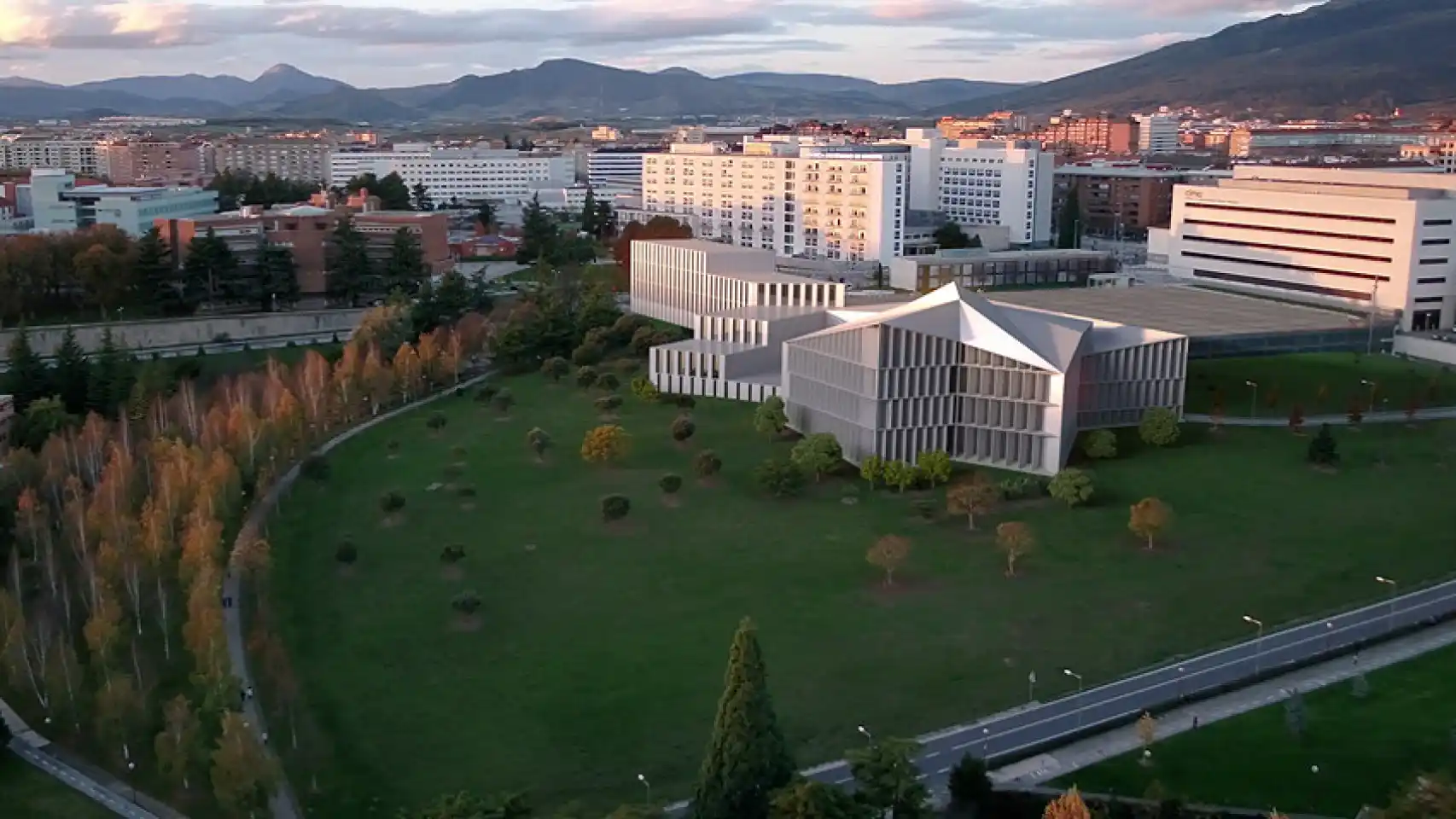
About Universidad de Navarra
Universidad de Navarra (UNAV) is a private Catholic university founded in 1952 in Pamplona, in the Navarra region of northern Spain. It was established as an educational initiative of Opus Dei and is today one of the most prestigious private universities in Spain, with a solid reputation across Europe for the quality of its teaching and its close ties to the professional world.
UNAV has around 14,000 students, of whom roughly 28 percent are international, and it spans several campuses: the main campus in Pamplona (Medicine, Law, Communication, Sciences, Philosophy), San Sebastián (the Tecnun engineering school) and Madrid (which also hosts the IESE business school, affiliated with the university and ranked among the best business schools in the world). In the QS World 2026 ranking it sits at position 262, consistently among the highest-rated private Spanish universities.
Strong specialisations at Navarra: Medicine (frequently ranked number 1 in Spain, with Clínica Universidad de Navarra, one of the most respected university hospitals in the country), Business and Economics (supported by the IESE ecosystem), Communication and Journalism (one of the oldest and most respected communication faculties in Spain), Law, Pharmacy, Architecture, Engineering (Tecnun) and Philosophy. The university offers bilingual programmes (Spanish + English) in fields such as economics, business, international law and sciences, so Spanish is also required; most programmes are taught entirely in Spanish.
For Romanian students, it is important to know that Navarra is a private university: you do not apply through the Spanish public system (UNEDasiss or Accesnet), but directly to the university, through its own process with essays, an admissions test and an interview. Note: as a private institution, tuition is similar for all students, regardless of nationality. As an EU citizen you do not receive reduced statutory EU fees as you would at public universities; you pay the same fee as a non-European student. In return, the university offers consistent merit-based and need-based scholarships, which can cover between 30 and 100 percent of tuition for candidates with strong academic results or demonstrated financial need.
How to apply to Navarra
Apply directly to the university
Unlike Spain's public universities, Navarra does not use UNEDasiss or Accesnet. You apply directly through the UNAV portal, choose your programme (Medicine, Business, Communication, Law, etc.) and open your application file. Recommended: start the process around 6 months before the academic year begins (September), so around November to January, since places fill up over time.
Academic record and essays
You upload your high school transcript, grades and Baccalaureate diploma (or predicted grades if you are in your final year), plus motivation essays explaining why you are choosing Navarra and that particular programme. The essays count in the holistic evaluation, not just your grades. Prepare a strong, authentic essay focused on your interest in the field.
Language proof (IELTS / TOEFL for EN)
For English-taught programmes you need IELTS 6.5-7 or TOEFL iBT 85-100. For Spanish-taught programmes you need an advanced level of Spanish (DELE B2-C1 or equivalent). Check the exact requirement for your programme, as it differs between faculties.
Own admissions test and interview
Navarra uses a holistic evaluation: it combines your high school grades with the result of an own admissions test (indicative ratio 60 percent grades / 40 percent test), which assesses logical thinking, verbal and spatial reasoning, plus field-specific questions. International candidates usually also have an interview with the Navarra delegate in their country. For Medicine the process is the most competitive.
Admission decision and scholarship
After the evaluation you receive your admission decision. In parallel you can apply for merit-based or need-based scholarships (30-100 percent of tuition). Merit scholarships are awarded based on academic results and the test, while need-based aid is based on the family's financial situation. Apply for a scholarship as early as possible, as funds are limited each year.
Enrolment and moving to Spain
You confirm your place, pay tuition (or the remaining part after the scholarship) and complete your matrícula. As a Romanian (EU) citizen you do not need a study visa; on arrival you register for an NIE and a Certificado de Registro de Ciudadano de la Unión. Arrange accommodation (UNAV residences or apartments in Pamplona, a compact and affordable city) a few months in advance.
Costs and scholarships for Romanians
Indicative tuition 2026-27 (private)
Total cost per year with living (Pamplona)
30-100% tuition
Academic excellence scholarships (merit-based) are awarded based on high school grades and the admissions test result. For very strong candidates, the reduction can reach up to 100 percent of tuition. This is the main way a Romanian with a solid academic profile drastically reduces their cost.
Need-based aid
Navarra also offers financial aid based on the family's situation (need-based). Income and circumstances are assessed, and the university can cover a significant part of tuition. This is applied for separately from admission, with supporting documents on the family's income.
Erasmus+ and RO
Erasmus+ for mobility, plus European excellence scholarships. As a Romanian, also check the scholarships of the Romanian Ministry of Education and any scholarship programmes from your local council for studies abroad. These can be combined with Navarra's internal scholarship, lowering the net cost even further.
Want to apply to Navarra?
We help you with the direct application, the motivation essays, preparation for the admissions test and interview, plus a merit-based and need-based scholarship strategy to reduce your real cost. Our mentors have been through the process. The first mentoring session is 100% free.
Talk to a mentorFrequently asked questions
How do I apply to Universidad de Navarra as a Romanian?
Navarra is a private university, so you apply directly to the university, not through the Spanish public system (NOT UNEDasiss, NOT Accesnet). You open your application file on the UNAV portal, choose your programme, upload your grades and Baccalaureate diploma, write motivation essays, prove your language level (IELTS 6.5-7 or TOEFL 85-100 for English-taught programmes; advanced Spanish for Spanish-taught ones), take the own admissions test and usually have an interview with the Navarra delegate in Romania. It is recommended to start around 6 months before the year begins, so November to January.
How much does Universidad de Navarra cost for Romanians?
Being private, tuition varies by programme: around €10,000-€12,000/year for humanities programmes, €12,000-€15,000/year for business, law and communication, and €15,000-€20,000/year for medicine, pharmacy and engineering. Note: the fee is identical for EU and non-EU citizens, so as a Romanian you do NOT receive reduced statutory EU fees as you would at public universities. Total cost per year with accommodation and living in Pamplona: around €19,000-€33,000. The good news: merit-based scholarships can reduce tuition by 30-100 percent.
Why don't I get reduced EU fees like at Spanish public universities?
Because Navarra is a private university, not a public one. At public universities (for example Universitat de Barcelona), EU citizens pay statutory EU fees much lower than non-Europeans, because the state subsidises the places. At a private university like Navarra this subsidy does not exist: all students pay the same tuition, regardless of nationality. Your advantage as a Romanian does not come from the fee, but from the merit-based and need-based scholarships (30-100 percent) you can obtain, and from the fact that, as an EU citizen, you do not need a study visa.
What scholarships can I get at Navarra as a Romanian?
Navarra offers merit-based scholarships (based on grades and the admissions test, up to 100 percent of tuition for very strong candidates) and need-based scholarships (based on the family's financial situation). In addition, as a Romanian you can access Erasmus+ for mobility, the scholarships of the Romanian Ministry of Education and possible local scholarship programmes for studies abroad. Navarra's internal scholarship can be combined with external ones. Apply early, funds are limited. In practice, the real bill for a Romanian who performs well academically can be much lower than the listed fee.
What are the strongest programmes at Navarra?
Navarra is renowned for: Medicine (frequently ranked number 1 in Spain, with Clínica Universidad de Navarra, a highly respected university hospital), Business and Economics (supported by the IESE ecosystem, one of the best business schools in the world, affiliated with the university), Communication and Journalism (one of the oldest and most respected communication faculties in Spain), Law, Pharmacy, Architecture, Engineering (the Tecnun school in San Sebastián) and Philosophy. Medicine has the most competitive admissions process.
Are there programmes in English at Navarra?
Yes, but note: Navarra mainly offers bilingual programmes (Spanish + English), in fields such as economics, business, international law and certain sciences, so Spanish is also required. Most programmes are taught entirely in Spanish. For English-taught programmes you need IELTS 6.5-7 or TOEFL iBT 85-100. For Spanish-taught programmes you need an advanced level (DELE B2-C1 or equivalent). Check the exact language of your programme, as it differs between faculties. Many programmes are bilingual or allow courses in both languages.
What is the admissions test and how do I prepare?
Navarra uses a holistic evaluation: it combines high school grades with an own admissions test, at an indicative ratio of 60 percent grades / 40 percent test. The test assesses logical thinking, verbal and spatial reasoning, plus multiple-choice questions specific to the chosen field. Many international candidates also have an interview with the Navarra delegate in their country. Preparation means practising logical and verbal reasoning, plus solidifying the core knowledge of the target field. Our mentors can help you with exercises and mock tests.
Can I stay in Spain after graduating from Navarra?
Yes, as an EU citizen you have the automatic right to work in Spain without a work visa. Navarra has a strong alumni network and close ties to the professional world, especially through IESE and through the reputation of its Medicine, Business and Communication programmes. Pamplona and northern Spain have a healthy economy (healthcare, industry, services), and through the Madrid campus you have access to the capital's job market. With a degree obtained in the EU you can later work anywhere in the European Union without a visa.
Our mentors from Europe
They studied at Bocconi, Sciences Po, TU Delft, ETH Zurich and other EU universities. Now they guide you.


