
Vrije Universiteit Amsterdam
A public university founded in 1880, in the city of Amsterdam. QS World 2026 number 194, in the national top 10 in the Netherlands. Around 32,000 students, of whom over 6,600 are international. Strong in life sciences, social sciences, business, law and medicine. As an EU citizen you pay the Dutch statutory fee (around EUR 2,694 per year), with dozens of bachelor's programmes taught entirely in English.
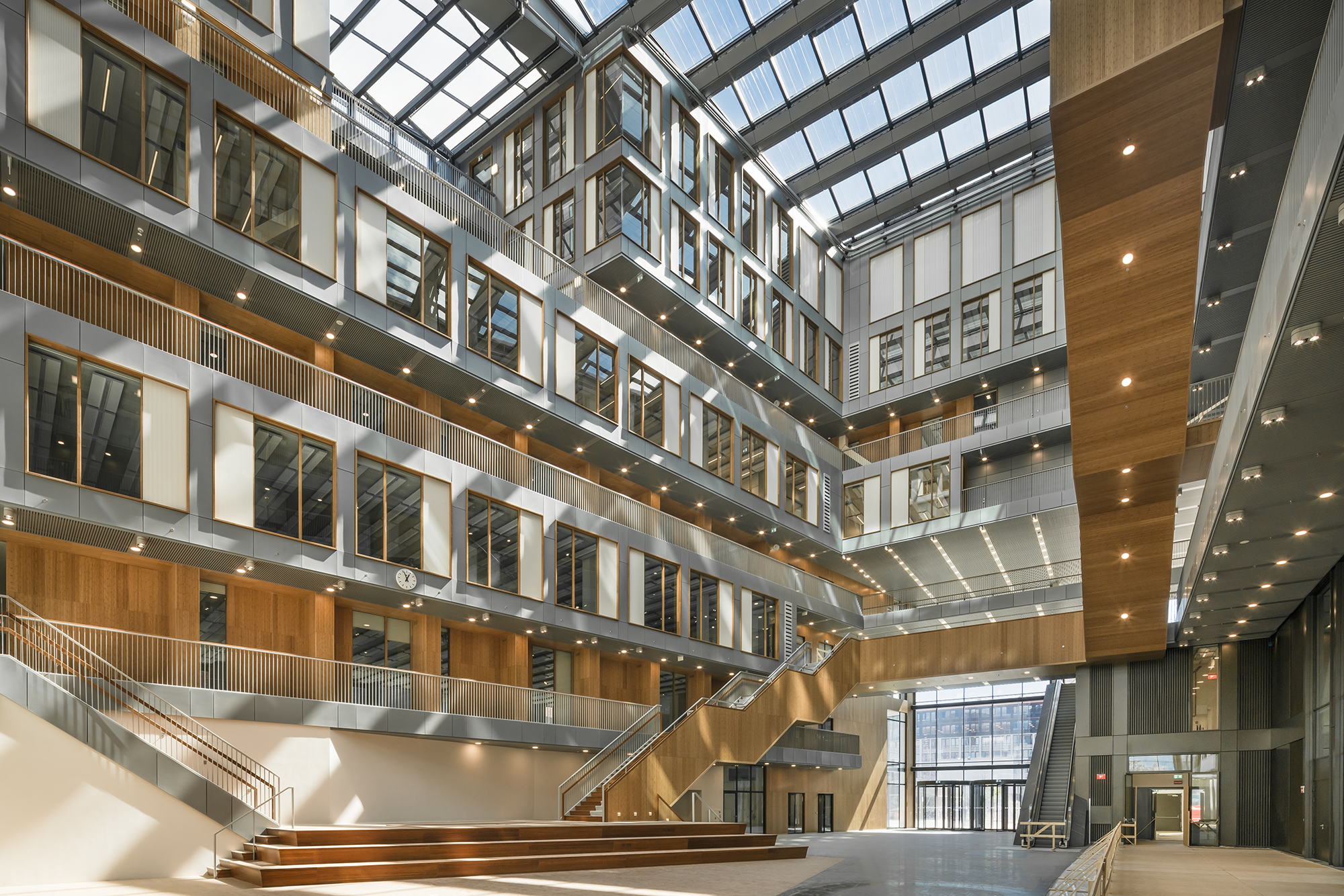
About Vrije Universiteit Amsterdam
Vrije Universiteit Amsterdam (VU Amsterdam) is a public research university founded in 1880. The name "Vrije" means "free" in Dutch, a reference to its independence from state and church at the time of its founding. The main campus is located in the Buitenveldert neighbourhood, next to the Zuidas business district in the south of Amsterdam, easily accessible by metro and train. Today VU has around 32,000 students, of whom over 6,600 are international, and is organised into ten faculties.
VU Amsterdam is QS World 2026 number 194 and sits in the national top 10 among Dutch universities. It is recognised for interdisciplinary research and for a model of education centred on social impact. The faculties cover Sciences, Earth and Life Sciences, Behavioural and Movement Sciences, School of Business and Economics, Law, Social Sciences, Humanities, Theology, ACTA Dentistry and Medical Sciences (Amsterdam UMC, VU location).
VU's strengths include life sciences (biology, neuroscience, health), social sciences (a high global ranking in psychology), business and economics, law and medicine through the Amsterdam UMC academic medical centre. VU offers dozens of bachelor's programmes taught entirely in English, plus programmes in Dutch, making it one of the most international universities in the Netherlands. The Dutch model emphasises critical thinking, group work and interactive learning (problem-based learning), rather than passive lectures.
For Romanian students, VU Amsterdam is one of the most accessible routes to an English-language Dutch university. As an EU citizen you pay the Dutch statutory fee: for the 2026-2027 academic year, around EUR 2,694 per year for most bachelor's degrees, far below the several thousand euros extra that a non-European pays (institutional fee). Bachelor's degrees last 3 years (180 ECTS), in line with the Bologna system, so one year less than in Spain or Germany. The Romanian Baccalaureate is recognised. Applications are made through the national platform Studielink, and some highly sought-after programmes have limited capacity (Numerus Fixus) with selection.
How to apply to VU Amsterdam
Choose your programme and check Numerus Fixus
VU has dozens of bachelor's programmes in English in business, economics, law, social sciences, psychology, life sciences, IT and communication. Check on vu.nl whether your programme has Numerus Fixus (limited capacity with selection) or open access. Numerus Fixus programmes have an earlier deadline, usually 15 January, and a separate selection procedure.
Apply through Studielink
Applications to all Dutch universities are made centrally through the national platform Studielink. You create an account with a DigiD code or as an international applicant, choose your VU programme and submit your application. The standard deadline for open-access programmes is usually 1 May; for Numerus Fixus, 15 January. Apply early.
Submit your documents and Baccalaureate diploma
After applying on Studielink, VU opens an online file for you. You upload your Baccalaureate diploma (or a certificate of completion if you are in your final year), your transcript, a copy of your passport or ID card and, if the programme requires it, a motivation letter. The Romanian Baccalaureate is recognised for bachelor's admission.
Prove your English (IELTS or equivalent)
For English-taught programmes you need proof of your level: usually IELTS Academic 6.0-6.5 (with a minimum on each component), TOEFL iBT 80-92 or Cambridge C1 Advanced. Check the exact threshold on the programme page. Some programmes accept waivers for certain certificates, but plan your test early.
Register as an EU citizen and get a BSN
As a Romanian (EU) citizen you do not need a study visa. After moving to Amsterdam you register at the city hall (Gemeente) in the population register (BRP) and receive a BSN (Burgerservicenummer, the Dutch personal number), needed for a bank account, insurance and a job. You need an address in the Netherlands and your ID document.
Pay the fee and complete enrolment
To be enrolled (enrolment) you pay the EU statutory fee (around EUR 2,694 for 2026-27), usually via a payment authorisation (digital authorisation) in instalments or in full. After payment and documents are confirmed, VU finalises your enrolment. The academic year starts in September. Arrange your accommodation early, Amsterdam has a very competitive market.
Costs for Romanians
EU statutory fee 2026-27 (EU citizens)
Cost of living in Amsterdam (estimate)
Statutory fee
As an EU citizen, you automatically pay the Dutch statutory fee (around EUR 2,694 per year for 2026-27), identical to that of a Dutch student. All you need to do is prove your Romanian citizenship with a passport or ID card. The institutional fee for non-Europeans is several times higher.
Dutch support
As an EU citizen who works in the Netherlands (usually at least 56 hours per month), you can become eligible for the DUO student grant (studiefinanciering) and for the student public transport pass. Many Romanian students combine their studies with a part-time job. VU also has a career office that helps with finding jobs.
External scholarships
Check Erasmus+ scholarships if you come on an exchange, plus scholarships offered by foundations or by your city in Romania for students abroad. VU also has emergency funds and limited grants. Important: the automatic EU fee you receive is already a major advantage over a non-European student.
Want to apply to VU Amsterdam?
We help you choose the right programme, check whether it has Numerus Fixus, apply on Studielink, prepare for IELTS and take advantage of the EU statutory fee (around EUR 2,694 per year). Our mentors have been through the process. The mentoring session is 100% free.
Talk to a mentorFrequently asked questions
How hard is it to get into VU Amsterdam as a Romanian?
Many of VU's bachelor's degrees have open access: if you meet the academic requirements (recognised Baccalaureate) and language requirements (English), you are admitted without competition. However, highly sought-after programmes have Numerus Fixus (limited capacity) with a selection procedure based on grades, motivation and sometimes tests. For a Romanian, a solid Baccalaureate (average of 8 plus) and good English (IELTS 6.0-6.5) cover most programmes. Watch out for the 15 January deadline for Numerus Fixus.
Exactly how much does VU Amsterdam cost for Romanians?
As an EU citizen you pay the Dutch statutory fee: for the 2026-2027 year around EUR 2,694 per year for most bachelor's degrees (special programmes such as PPE or Liberal Arts have higher fees). With a bachelor's degree of 3 years (180 ECTS), the total tuition is around EUR 8,082. Cost of living in Amsterdam: accommodation EUR 600-900 per month, food EUR 250-350 per month, total around EUR 12,000-16,000 per year. Important: the scheme that halved the fee in the first year ended after 2024-2025, so the first year is paid in full.
What does the EU statutory fee mean and why does it matter?
In the Netherlands there are two types of fees: the statutory fee (statutory fee), set by the government, paid by EU and EEA citizens, and the institutional fee (institutional fee), much higher, paid by non-European students. As a Romanian (EU) citizen you automatically pay the statutory fee (around EUR 2,694 per year in 2026-27). Conditions: you must be an EU/EEA citizen and not already have obtained a degree of the same level in the Netherlands. It is one of the biggest financial advantages of EU citizenship.
Are the bachelor's programmes at VU Amsterdam in English?
Yes, VU offers dozens of bachelor's programmes taught entirely in English, alongside programmes in Dutch. Fields with a rich offering in English: business and economics, international law, social sciences, psychology, life sciences, IT, communication and PPE (Philosophy, Politics and Economics). For these programmes you need proof of English (IELTS Academic 6.0-6.5 or equivalent). You do not need to know Dutch in order to study, although learning the language helps for a job and for everyday life. WIB note: the Dutch Wet internationalisering in balans law, currently being phased in, aims to rebalance internationalisation and may gradually reduce some English-taught programmes; check the exact language of your programme when you apply.
What is Studielink and how do I apply through it?
Studielink is the national platform through which you apply to all universities in the Netherlands. You create an account (with DigiD if you have a BSN, or as an international applicant), choose your VU programme and submit your application. After applying, VU opens an online file for you where you upload your Baccalaureate diploma, transcript, a copy of your ID document and proof of English. General deadline: 1 May for open access, 15 January for Numerus Fixus. Recommendation: apply early, especially for programmes with selection.
What is Numerus Fixus and how does the selection work?
Numerus Fixus means that a programme has a fixed number of places and more candidates than places, so a selection takes place. Applications for these programmes have an earlier deadline, usually 15 January, and the selection is based on criteria such as grades, the motivation letter, relevant activities and sometimes tests or interviews. Open-access programmes have no selection: if you meet the requirements, you are admitted. Check on vu.nl the exact status of your programme.
How long is the bachelor's at VU and what about the ECTS system?
Bachelor's degrees at VU Amsterdam last 3 years (180 ECTS), in line with the European Bologna system. That means one year less than in Spain or Germany (4 years / 240 ECTS) and the same as in the United Kingdom. ECTS (European Credit Transfer System): 1 ECTS is the equivalent of around 28 hours of total study. A standard academic year has 60 ECTS, so 3 years x 60 = 180 ECTS for a bachelor's degree. Exception: medicine programmes and some sciences have longer structures. The advantage of ECTS: you can transfer credits to other European universities.
Can I stay and work in the Netherlands after graduation?
Yes, as an EU citizen you have the automatic right to work in the Netherlands without a visa or work permit. The Netherlands has a strong economy and an open labour market, with hubs in Amsterdam (tech, finance, consultancy, health). English is very widespread in the workplace at multinationals. For a job you need a BSN (the Dutch personal number) and a local bank account. Many VU graduates work part-time already during their studies, and with a degree recognised in the EU you can work anywhere in the Union without a visa.
Our mentors from Europe
They studied at Bocconi, Sciences Po, TU Delft, ETH Zurich and other EU universities. Now they guide you.

