
University of Amsterdam
Founded in 1632 as the Athenaeum Illustre, it is the largest comprehensive public university in the Netherlands. QS World 2026 number 53, number 1 comprehensive university in the Netherlands. Over 40,000 students, around 14,000 international from more than 100 countries. English-speaking, with dozens of bachelor's programmes taught entirely in English. As an EU citizen you pay the statutory EU fee (approximately EUR 2,694 per year), not the institutional fee for non-EU students.
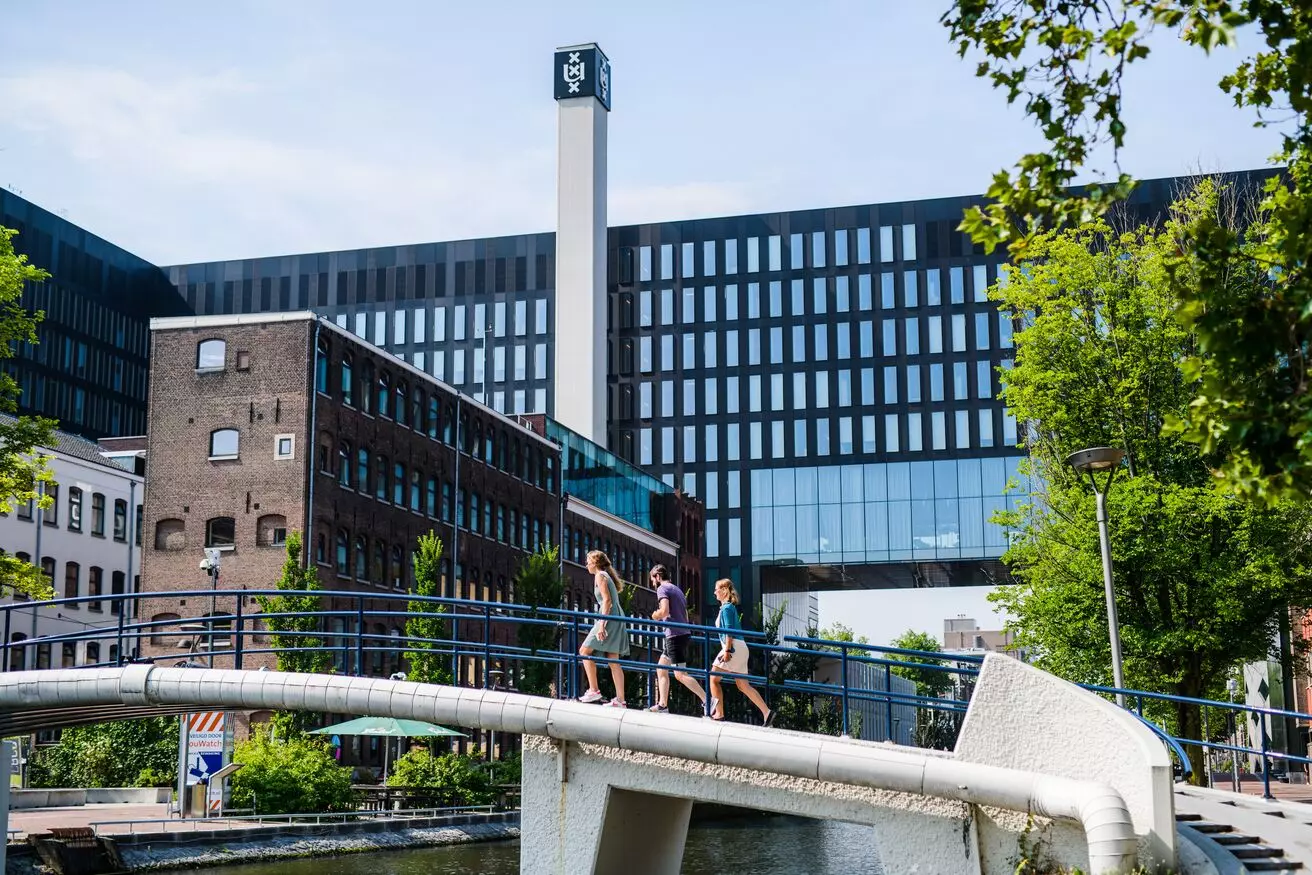
About the University of Amsterdam
University of Amsterdam (UvA / Universiteit van Amsterdam) is a public university founded in 1632 as the Athenaeum Illustre, the city of Amsterdam's higher school, and raised to university status in 1877. It is the largest comprehensive university in the Netherlands and an international reference for social sciences, communication, economics and the humanities. In the QS World 2026 ranking it holds position 53 worldwide, being the number 1 comprehensive university in the Netherlands (TU Delft, a technical university, is first nationally).
UvA has seven faculties: Social and Behavioural Sciences, Humanities, Economics and Business, Science, Law, Medicine and Dentistry. The campuses are spread across the heart of Amsterdam, mainly Roeterseiland (social sciences, economics, law) and Science Park (the exact sciences). The university counts over 40,000 students, of whom around 14,000 are international, coming from more than 100 countries. Communication (media studies) at UvA is consistently ranked among the best in the world.
The Netherlands is one of the most welcoming destinations for international students, because the language of instruction is English for a wide range of programmes. UvA offers more than 20 bachelor's programmes taught entirely in English, from Economics and Business Economics, Communication Science and Political Science, to Psychology, PPLE (Politics, Psychology, Law and Economics) or Liberal Arts and Sciences. Research university bachelor's degrees in the Netherlands last 3 years (180 ECTS), so one year less than in Spain or the USA.
For Romanian students, UvA is one of the most accessible serious options in Europe. As an EU citizen you pay the statutory EU fee, approximately EUR 2,694 per year, and the Netherlands applies a 50 percent reduction for the first year of study (approximately EUR 1,347 in year 1). A non-EU student would pay the institutional fee, from approximately EUR 12,000 up to over EUR 34,000 per year, depending on the programme. The Romanian Baccalaureate with the relevant overall average is recognised, and admission is handled through the national platform Studielink. Some highly sought-after programmes have a Numerus Fixus (a fixed number of places, with selection and a 15 January deadline).
How to apply to UvA
Choose your programme and check Numerus Fixus
First step: choose from the more than 20 English-taught bachelor's (Economics, Communication Science, Political Science, Psychology, PPLE, Liberal Arts and Sciences). Check on the UvA website whether the programme has a Numerus Fixus (a fixed number of places, with selection). Numerus Fixus programmes have a 15 January deadline, earlier than the rest, so watch the calendar.
Register on Studielink
Applying to any public university in the Netherlands is done through the national platform Studielink. You create an account, choose UvA and the programme you want. EU citizens identify themselves through DigiD or by registering as an international student. After Studielink, you also complete UvA's own application with the required documents.
Prove your English (IELTS 6.0-6.5)
For the English-taught programmes you need a language test: IELTS 6.0-6.5 (depending on the programme), TOEFL iBT 80-92 or Cambridge C1 Advanced. Some programmes also require specific components (for example mathematics for Economics). The Romanian Baccalaureate is recognised as a qualifying diploma.
Selection (matching or Numerus Fixus)
Programmes without Numerus Fixus often use a matching procedure (questionnaire, essay or orientation day) with a non-binding recommendation. Programmes with Numerus Fixus have competitive selection: grades, motivation letter, possibly a test or interview. The Numerus Fixus selection result generally arrives by 15 April.
BSN and registration as an EU citizen
As a Romanian (EU) citizen you do not need a visa or residence permit. After arriving in Amsterdam you register with the municipality (gemeente) in the BRP register and receive a BSN (Burgerservicenummer), the personal number needed for a bank account, insurance and a part-time job. You need health insurance (the European Health Insurance Card or Dutch insurance if you work).
Enrolment and paying the statutory EU tuition
After admission you confirm your place, arrange payment of the statutory EU fee (approximately EUR 2,694 per year, with a 50 percent reduction in the first year, approximately EUR 1,347) by direct debit or one-off payment, and finalise your enrolment. The academic year starts at the beginning of September. UvA has an orientation week for international students. Tip: arrange accommodation early, Amsterdam has a very crowded market.
Costs for Romanians
Statutory EU tuition (EU citizens)
Total cost per year (all included)
Statutory EU fee
As an EU citizen you automatically pay the statutory EU fee, identical to that of a Dutch student. You only need to prove your Romanian citizenship through a passport or ID card. Tuition is approximately EUR 2,694 per year versus EUR 12,000-EUR 34,800 per year for a non-EU student. That means a saving of thousands of euros per year simply by being an EU citizen.
DUO and work
As an EU student working part-time in the Netherlands (a minimum certain number of hours per month) you can become eligible for the tuition loan from DUO (the Dutch education agency), at a low interest rate. As an EU citizen you automatically have the right to work part-time without a permit, which helps cover living costs in Amsterdam.
Romania plus UvA scholarship
As a Romanian student admitted to a public university abroad you can apply for the Romanian state study scholarship and to scholarship programmes offered by some Romanian municipalities for their own students. UvA also has its own merit scholarships and funds for European students. Important: these scholarships apply in parallel, check the deadlines of each one.
Want to apply to UvA?
We help you choose the right English-taught programme, check whether it has a Numerus Fixus, apply correctly on Studielink and take advantage of the statutory EU fee (approximately EUR 2,694/year). Our mentors have been through the process. The mentoring session is 100% free.
Talk to a mentorFrequently asked questions
How hard is it to get into the University of Amsterdam?
It depends a great deal on the programme. Many bachelor's at UvA have admission based on meeting the requirements (diploma, English, possibly mathematics) plus a matching procedure with a non-binding recommendation, so they are accessible if you have the right profile. The highly sought-after programmes, with a Numerus Fixus (for example Psychology, Communication Science or PPLE), have competitive selection for a fixed number of places and are harder to get into. For Romanians, a solid Baccalaureate plus English at the required level (IELTS 6.0-6.5) is the starting point. For Numerus Fixus the motivation letter and academic results also count.
How much does UvA cost for Romanians exactly?
As an EU citizen, you pay the statutory EU fee, approximately EUR 2,694 per year, with a 50 percent reduction in the first year (approximately EUR 1,347 in year 1). A non-EU student pays the institutional fee, from approximately EUR 12,000 up to over EUR 34,800 per year, depending on the programme. Accommodation Amsterdam: EUR 600-EUR 1,000/month. Food: EUR 250-EUR 350/month. Transport and expenses: EUR 100-EUR 150/month. Total cost per year all-in: approximately EUR 14,000-EUR 18,000. Total tuition over 3 years of a bachelor's: approximately EUR 6,735. Research university bachelor's degrees in the Netherlands last 3 years (180 ECTS).
What is Numerus Fixus and which programmes at UvA have selection?
Numerus Fixus means that a programme has a fixed number of places set annually, so selection is carried out among candidates. These programmes have an earlier deadline, 15 January, and a selection procedure (grades, motivation letter, possibly a test or interview), with results generally by 15 April. At UvA the Numerus Fixus programmes vary from year to year and often include the most sought-after bachelor's, for example Psychology, Communication Science or PPLE. Programmes without Numerus Fixus use a matching procedure with a non-binding recommendation and have a later deadline. Always check the status of your programme for the given year on the UvA website.
How do I apply through Studielink as a Romanian student?
Studielink is the national platform through which you apply to all public universities in the Netherlands. You create an account, identify yourself (EU citizens use DigiD or registration as an international student), choose University of Amsterdam and the programme you want. After you submit your request through Studielink, you receive access to UvA's own application, where you upload the documents: the Baccalaureate diploma (or certificate), the transcript of records, proof of English (IELTS 6.0-6.5), passport and a motivation letter if the programme requires it. Watch the deadline: Numerus Fixus programmes have a 15 January deadline, the rest have later deadlines (often 1 May for EU citizens), but it is best to apply early.
Are the programmes at UvA in English?
Yes, UvA is an English-speaking university for a wide range of programmes. It offers over 20 bachelor's taught entirely in English, among them Economics and Business Economics, Communication Science, Political Science, Psychology, PPLE (Politics, Psychology, Law and Economics) and Liberal Arts and Sciences. At master's level the English-language offer is even broader, with UvA being among the universities with the most English-taught master's programmes in Europe. You do not need Dutch to study an English-taught programme, although learning the language helps with day-to-day life and with a job. For the English-taught programmes you need IELTS 6.0-6.5 or equivalent. WIB note: the Dutch Wet internationalisering in balans law, currently being phased in, aims to rebalance internationalisation and may gradually reduce some English-taught programmes; check the exact language of your programme when you apply.
What are the strongest programmes at UvA for Romanians?
UvA is a comprehensive university with clear strengths in social sciences, communication and media, economics and the humanities. Communication Science is consistently ranked among the best in the world. Other strong points: Political Science, Sociology, Psychology, Economics and Business Economics, Law, plus the humanities (history, philosophy, languages, media). Interdisciplinary programmes valued by international students: PPLE (Politics, Psychology, Law and Economics) and Liberal Arts and Sciences. If you are interested in the exact sciences, UvA also has a strong Science Park (computer science, physics, biology, mathematics).
Do I need a visa or permit as a Romanian citizen for the Netherlands?
No. As a Romanian (EU) citizen you do not need a visa or residence permit to study in the Netherlands. You only need a valid Romanian passport or identity card. After arriving in Amsterdam you register with the municipality (gemeente) in the BRP register and receive a BSN (Burgerservicenummer), the personal number needed for a bank account, health insurance and a part-time job. You need health insurance (the European Health Insurance Card at first, or Dutch insurance if you start working). As an EU citizen you also automatically have the right to work part-time without a permit.
Can I stay in the Netherlands after graduation?
Yes, as an EU citizen you automatically have the right to work in the Netherlands without a visa or work permit. The Netherlands has a strong, international economy, with major hubs in Amsterdam: technology (Booking.com, Adyen, Uber EMEA), finance (ING, ABN AMRO), media, consulting and a large ecosystem of international companies with English as the working language. Many UvA graduates stay in Amsterdam because the job market works well in English. With an EU degree, you can later work anywhere in the European Union without a visa. English is enough for many jobs, but Dutch helps for certain roles and for long-term integration.
Our mentors from Europe
They studied at Bocconi, Sciences Po, TU Delft, ETH Zurich and other EU universities. Now they guide you.

