
University College Cork
Founded in 1845, in Ireland's second city. QS World 2026 number 246, number 3 in Ireland. Around 24,000 students, with over 4,000 international students from more than 100 countries. All programmes are taught in English, in a natively English-speaking country. As an EU citizen you benefit from the Free Fees scheme: the state pays the tuition, and you pay only the student contribution (~EUR 2,500/year).
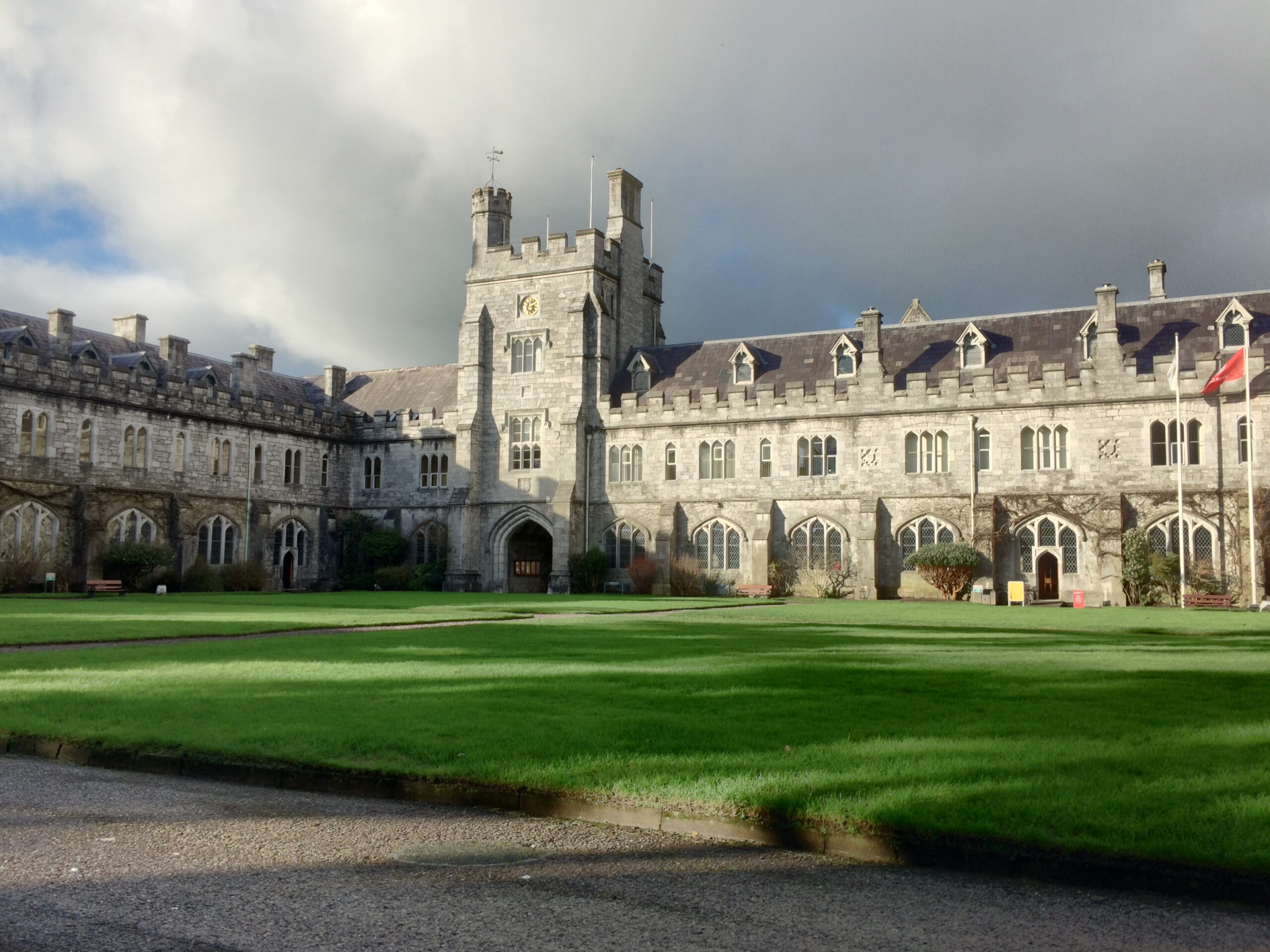
About University College Cork
University College Cork (UCC) is a public university founded in 1845, one of the three original Queen's Colleges in Ireland (alongside Belfast and Galway). With over 180 years of academic tradition, it became University College, Cork through the Irish Universities Act of 1908. It is one of the most respected institutions in Ireland and an internationally recognised research university.
UCC is QS World 2026 number 246 (up from 273 the previous year, its best position in the last ten years) and number 3 in Ireland after Trinity College Dublin and University College Dublin. Location: Cork, Ireland's second city, in the south of the country, a university city with a more affordable cost of living than Dublin. Around 24,000 students, of whom over 4,000 are international from more than 100 countries. UCC was the first university in the world to receive Green Flag certification and is renowned for its riverside campus on the River Lee.
Strong fields at UCC: Medicine (School of Medicine, with the affiliated Cork University Hospital), Sciences (Chemistry, Biology, Physics, Food Science), Business (Cork University Business School), Law (School of Law), and Food Science and Nutrition (a globally leading field, with Ireland being a European agri-food hub). UCC also has strong programmes in pharmacy, dentistry, nursing, engineering and arts. All undergraduate programmes are taught in English, as this is a natively English-speaking country, so you do not need a second foreign language as in other European countries.
For Romanian students, UCC is one of the most accessible opportunities in Europe. As an EU citizen you benefit from the Free Fees scheme: the Irish state pays the tuition, and you pay only the student contribution of up to EUR 2,500 per year (2026/27), compared with the EUR 17,000-EUR 30,000+ paid by a non-EU student. You apply through the CAO (Central Applications Office), Ireland's national centralised system. The Romanian Baccalaureate is converted into CAO points through an official equivalence grid. Cost of living in Cork: ~EUR 900-EUR 1,300/month, lower than Dublin. Important note: bachelor's degrees in Ireland generally last 3 or 4 years depending on the programme (Medicine 5-6 years).
How to apply to UCC
Apply through CAO (Central Applications Office)
Applications to all public universities in Ireland, including UCC, are made centrally through the CAO, the national portal. The CAO form opens in November and the normal application deadline is 1 February for the academic year starting in September. You create an account, choose up to 10 ordered preferences of bachelor's programmes and pay the application fee (~EUR 30-EUR 45). As an EU citizen you apply under the EU/EFTA/UK category, not the international one.
Convert the Baccalaureate into CAO points
UCC and the CAO recognise the Romanian Baccalaureate through an official CAO points conversion grid. Your overall Baccalaureate average is converted into a CAO score (the scale goes up to 625 points). The higher your Baccalaureate average, the more points you receive. Each programme has a points cut-off set annually by supply and demand. Check the UCC website for the exact equivalence for your year and which minimum grades are required in the relevant subjects.
Choose your programmes and check the cut-off points
UCC offers programmes in Medicine, Sciences, Business, Law, Food Science, Engineering, Arts, Pharmacy, Nursing and many others, all in English. Each programme has a different points cut-off: Medicine and certain Business or Law specialisations require high scores, while many arts and science programmes are more accessible. Order your CAO preferences wisely: put your desired programme in first position and choose more accessible backup options lower down the list.
Prove your English proficiency
Although Ireland is an English-speaking country, as an international student you must prove your English level for admission. UCC accepts IELTS 6.0-6.5 (depending on the programme), TOEFL iBT 80-90, Cambridge C1 Advanced, Duolingo English Test or equivalent. The language competency certificate from the Baccalaureate or Cambridge certificates may be accepted in certain cases; check the exact requirements of your programme. This is the only language test required, since teaching is entirely in English.
Get a PPS number as an EU citizen
As a Romanian (EU) citizen, you do not need a study visa for Ireland. After arrival, you need a PPS Number (Personal Public Service Number), the equivalent of the Irish tax identification number, to access public services, open a bank account and work part-time. You obtain it from the Department of Social Protection by presenting your Romanian ID, proof of address in Ireland and proof of admission to UCC. As an EU citizen you have the automatic right to work and live in Ireland without a permit.
Accept the offer and register
CAO offers are issued in August (CAO Offer Rounds). You accept the offer online on the CAO portal, then UCC sends you the registration instructions. You pay the student contribution (~EUR 2,500/year, the state covers tuition through Free Fees), choose your modules and receive your student card. Start of the academic year: September. UCC has an Orientation Week for international students with campus tours, meetings with mentors and accommodation support. Tip: arrange accommodation (UCC residences or private apartments) at least 2 months in advance, as Cork has a competitive rental market.
Costs for Romanians
Free Fees 2026-27 (EU citizens)
Total cost per year (all-in)
Free Fees
As an EU citizen who meets the residency condition (3 of the last 5 years in EU/EEA/Switzerland/UK), the Irish state pays your tuition. You pay only the student contribution of up to EUR 2,500 per year. You do not have to do anything special, just prove your citizenship and residency. The saving compared with a non-EU student exceeds EUR 14,000 per year.
UCC scholarships
UCC Quercus Scholarships: merit scholarships for academic, sporting, artistic or leadership excellence. SUSI (Student Universal Support Ireland): government grant that can cover the student contribution for those eligible on income criteria. Erasmus+: if you come initially on an academic exchange of 1-2 semesters, you receive an EUR 350-EUR 500/month grant. Check the UCC scholarships page for the scholarships specific to each faculty.
Romania scholarship
As a Romanian student admitted to a public university in the EU, you may be eligible for scholarship programmes from the Romanian Ministry of Education or local authorities (check with your town hall). Also, as an EU citizen you have the right to work part-time in Ireland without a permit, which helps cover the cost of living. These scholarships can be combined with the Irish ones, but they must be applied for in parallel.
Want to apply to UCC?
We help you navigate the CAO, convert your Baccalaureate into CAO points, choose the right programmes at UCC and take advantage of the Free Fees scheme (only ~EUR 2,500/year contribution). Our mentors have been through the process. The mentoring session is 100% free.
Talk to a mentorFrequently asked questions
How hard is it to get into University College Cork?
Admission to UCC is based on CAO points, calculated from your Baccalaureate average through an official conversion grid. Each programme has a points cut-off set annually by supply and demand, on a scale of up to 625 points. Medicine and certain Business or Law programmes require high scores, while many arts and science programmes are more accessible. The higher your Baccalaureate average, the more options you have. Tip: put your desired programme in first position in the CAO and choose more accessible backup options lower down the list.
How much does UCC cost for Romanians exactly?
As an EU citizen who meets the residency condition, you benefit from the Free Fees scheme: the Irish state pays the tuition, and you pay only the student contribution of up to EUR 2,500 per year (2026/27). A non-EU student instead pays ~EUR 17,000-EUR 30,000+ per year in tuition. Accommodation in Cork: EUR 500-EUR 850/month (more affordable than Dublin). Food: EUR 250-EUR 400/month. Transport and miscellaneous: EUR 100-EUR 150/month. Total cost per year: ~EUR 13,000-EUR 18,000 all-in, of which academic fees are only a small part. The saving compared with a non-EU student exceeds EUR 14,000 per year.
What is the Free Fees scheme and how do I qualify as a Romanian?
The Free Fees Initiative is the Irish government scheme through which the state pays the tuition for eligible undergraduate students. As a Romanian (EU) citizen you qualify if you have been resident in an EU/EEA/Switzerland/UK state for at least 3 of the last 5 years before the start of your studies and you are on your first full-time bachelor's programme. In this case you pay only the student contribution of up to EUR 2,500 per year, which also includes the capitation fees. For official details, check the HEA website and the UCC fees page.
Are the programmes at UCC in English?
Yes, all undergraduate programmes at UCC are taught entirely in English, because Ireland is a natively English-speaking country. This is a major advantage over other European destinations where you would have to learn a second language (Catalan, German, Dutch). You only need to prove your English level for admission: UCC accepts IELTS 6.0-6.5, TOEFL iBT 80-90, Cambridge C1 Advanced, Duolingo English Test or equivalent, depending on the programme. The language competency certificate from the Baccalaureate may be accepted in certain cases.
What are the strongest programmes at UCC for Romanians?
UCC is renowned for: Medicine (School of Medicine, affiliated with Cork University Hospital), Sciences (Chemistry, Biology, Physics), Food Science and Nutrition (a globally leading field, with Ireland being a European agri-food hub), Business (Cork University Business School), Law (School of Law), Pharmacy, Dentistry, Nursing, Engineering and Arts. For Romanian students interested in medicine, sciences or food science, UCC is a solid option with teaching in English and reduced academic fees through Free Fees.
What is student life like at UCC in Cork?
Cork is Ireland's second city, in the south of the country, with a friendly university-city atmosphere and a more affordable cost of living than Dublin. The UCC campus is located on the banks of the River Lee, with historic buildings and green spaces (UCC was the first university in the world with Green Flag certification). International community: over 4,000 students from 100+ countries, with student societies, events, the Erasmus Student Network (ESN) and an annual International Cultures Fest. Everyday language: English, everywhere. Cork is close to the Atlantic coast, perfect for trips and outdoor life.
Can I stay in Ireland after graduation?
Yes, as an EU citizen! Unlike the UK or the USA where you have to apply for a work visa, as a Romanian (EU) citizen you have the automatic right to work and live in Ireland without a permit. Ireland hosts the European headquarters of some of the largest tech and pharma companies: Apple (its European headquarters right in Cork), Google, Meta, Microsoft, Pfizer, Stripe. Main industries: tech, pharma, food science, finance, medical devices. Salaries for graduates are among the best in the EU, and with a recognised Irish degree in English you can work anywhere in the EU or in the English-speaking world without a visa.
How long does a bachelor's at UCC take and how do I apply through CAO?
Bachelor's degrees at UCC generally last 3 or 4 years depending on the programme (Medicine 5-6 years, certain programmes with a placement year may last longer). Applications are made through the CAO (Central Applications Office), the national centralised system. The form opens in November, the normal deadline is 1 February. You choose up to 10 ordered programme preferences, and your Baccalaureate is converted into CAO points through an official grid. Offers are issued in August, and the academic year starts in September. As an EU citizen you apply under the EU/EFTA/UK category and benefit from Free Fees.
Our mentors from Europe
They studied at Bocconi, Sciences Po, TU Delft, ETH Zurich and other EU universities. Now they guide you.