
Humboldt-Universität zu Berlin
Founded in 1810, the birthplace of the "Humboldtian" model of the university, where research and teaching go hand in hand. QS World 2026 number 130, 7th in Germany. 57 Nobel laureates associated throughout its history, the most of any German university. As an EU citizen you study for free, paying only the Semesterbeitrag (~300 EUR per semester, with a Berlin transport ticket included).
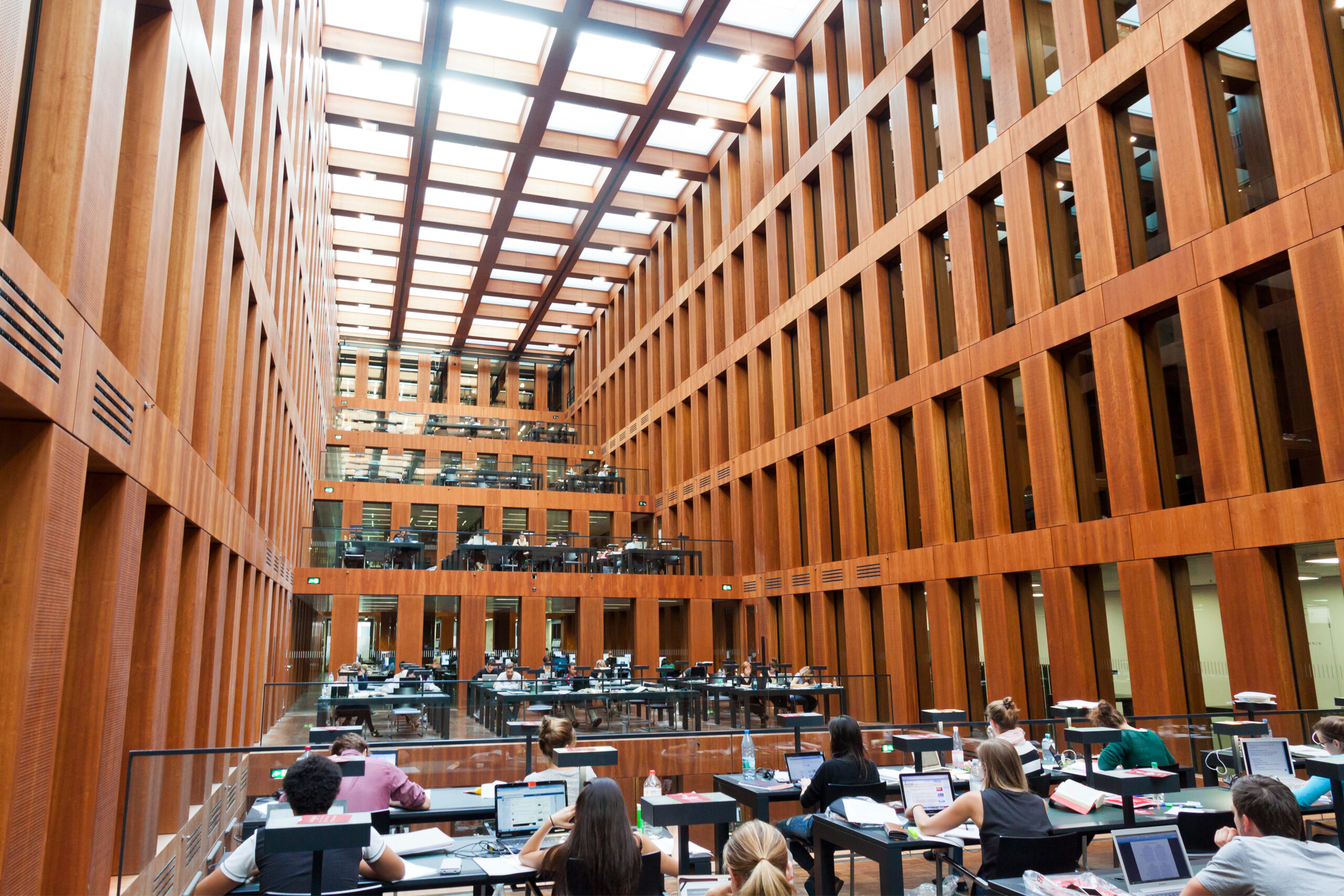
About Humboldt-Universität
Humboldt-Universität zu Berlin (HU Berlin) is a public university founded in 1810 by the reformer Wilhelm von Humboldt, under the patronage of King Friedrich Wilhelm III of Prussia. The first students were admitted on 6 October 1810, with 256 enrolled and 52 professors. HU is where the "Humboldtian" model of the university was born: the idea that teaching and research must go hand in hand, and that students learn through direct participation in research. This model has influenced modern universities around the world, including American ones.
HU is a research university with a global reputation in the humanities, social sciences, law and the sciences. Its historic professors and alumni include Albert Einstein, Max Planck, Robert Koch, Georg Wilhelm Friedrich Hegel, Theodor Mommsen, the Grimm brothers and Karl Marx. The university counts 57 associated Nobel laureates throughout its history, the most of any German university. Today it has roughly 36,000 students, of whom more than 5,000 are international, and offers programs across around 170 disciplines.
The main building sits on Unter den Linden, the historic boulevard in the centre of Berlin, alongside the Brandenburg Gate, Museum Island and the state opera house. HU is part of the Berlin University Alliance, together with Freie Universität Berlin, Technische Universität Berlin and Charité, one of Germany's elite research alliances (with "University of Excellence" status). Berlin, the capital of Germany, is a relatively affordable city for a European capital, with a very active cultural, tech and startup scene.
For Romanian students, HU Berlin is one of the strongest opportunities in Europe. As an EU citizen you pay no tuition: just like German students, you study for free, paying only the Semesterbeitrag (the semester contribution), roughly 300 EUR per semester, a sum that includes a public transport ticket for Berlin (Tarifbereich ABC: U-Bahn, S-Bahn, tram, bus). Note, however: most bachelor's programs are taught in German and require proof of C1 level (DSH or TestDaF). At master's level the English-language offer is broader. Romanians usually apply through uni-assist, the shared service that processes international applications.
How to apply to HU Berlin
Choose your program and check the language
HU offers programs across around 170 disciplines, with strengths in the humanities, social sciences, law and the sciences. Most bachelor's degrees are taught in German, so check early whether your program is in German (requires C1) or whether an English-taught version exists (more common at master's level). Also check whether the program has restricted admission (NC, Numerus Clausus) or is open.
Apply through uni-assist
For Romanians, the application to HU is usually submitted through uni-assist, the shared office that evaluates international diplomas. You upload your Baccalaureate diploma and transcript, and uni-assist checks equivalence with German requirements (Hochschulzugangsberechtigung). Mind the uni-assist processing fee (~75 EUR for the first application, ~30 EUR for each additional one).
Prove the language (DSH/TestDaF C1 or English at master's)
For German-taught programs you need C1 level, proven through DSH-2 or TestDaF (4x TDN 4). For English-taught master's programs you need IELTS 6.5+ or TOEFL iBT 90+, depending on the program. Recommendation: start preparing for the German certificate at least 1 year in advance.
Meet the deadlines
For the winter semester (start in October), the application deadline through uni-assist is usually in July; for the summer semester (start in April), in January. Deadlines vary by program, especially for those with restricted admission. Check the exact date on your program's page and apply early, because uni-assist needs a few weeks to process.
Register as an EU citizen in Berlin (Anmeldung)
As a Romanian (EU) citizen you do not need a study visa. After arriving in Berlin, you do the Anmeldung (address registration) at the Bürgeramt, within the first few days. You will need a rental contract and health insurance (the European Health Insurance Card or German insurance). The Anmeldung gives you the official address used for a bank account, a phone contract and enrolment.
Imatrikulation and paying the Semesterbeitrag
After the admission letter you complete the Imatrikulation (enrolment) at HU. You pay the Semesterbeitrag (~300 EUR per semester), which includes the Studentenwerk contribution, the student contribution and the Berlin transport ticket (Tarifbereich ABC). After enrolment you receive your student card and start classes. Arrange accommodation (Studentenwerk or a private flat, WG) a few months in advance, as Berlin has a competitive rental market.
Costs for Romanians
Tuition and fees (EU citizens)
Cost of living in Berlin (monthly)
Free studies
As a Romanian (EU) citizen, you pay no tuition at HU Berlin, identical to German students. The only mandatory payment is the Semesterbeitrag (~300 EUR / semester), which also includes the Berlin transport ticket. You do not have to do anything special, just prove your Romanian citizenship with a passport or ID card.
Germany scholarships
Deutschlandstipendium: 300 EUR per month for students with good results, open to international students too. DAAD (German Academic Exchange Service): scholarships for study and research in Germany. Erasmus+: if you come initially on an exchange of 1-2 semesters, you receive a monthly grant. Many foundations (Studienstiftung, political foundations) offer merit-based scholarships.
Romania scholarship
As a Romanian student admitted to a public university in Germany, you may be eligible for scholarships from the Romanian Ministry of Education for studies abroad. In addition, many cities and counties in Romania have their own scholarship programs for their students who go abroad. Check with your school inspectorate or local town hall and apply in parallel.
Want to apply to HU Berlin?
We help you choose the right program, navigate uni-assist for the recognition of your Baccalaureate, plan your German certificate (DSH/TestDaF C1) and make the most of the free studies for EU citizens. Our mentors have been through the process. The mentoring session is 100% free.
Talk to a mentorFrequently asked questions
How much does studying at HU Berlin cost for a Romanian?
As an EU citizen, you pay no tuition at HU Berlin. The only mandatory fee is the Semesterbeitrag (the semester contribution), roughly 300 EUR per semester, so around 600 EUR per academic year. This sum includes a public transport ticket for all of Berlin (Tarifbereich ABC: U-Bahn, S-Bahn, tram, bus) for the entire semester.
The real cost of studying is living in Berlin: roughly 850-1,100 EUR per month (accommodation, food, health insurance). When applying, a uni-assist fee of roughly 75 EUR for the first application is added.
Do I need to know German to study at HU Berlin?
For most bachelor's programs, yes: the language of instruction is German and you need proof of C1 level, through DSH-2 or TestDaF (4x TDN 4). This is usually the biggest obstacle for Romanians, which is why we recommend starting language preparation at least 1 year in advance.
At master's level, HU has an increasingly broad offer of programs taught in English, where you need IELTS 6.5+ or TOEFL iBT 90+ instead of German. Check the language of instruction on each program's page before applying.
Where does HU Berlin rank?
In the QS World University Rankings 2026, HU Berlin is 130th worldwide and 7th in Germany. The university is recognised globally for the humanities, social sciences, law and the sciences, and in certain fields it appears much higher in the subject rankings.
HU is part of the Berlin University Alliance (with Freie Universität, TU Berlin and Charité), one of the alliances with "University of Excellence" status in Germany. It has 57 Nobel laureates associated throughout its history, the most of any German university.
How do I apply to HU Berlin through uni-assist?
For Romanians, the application to HU Berlin is usually submitted through uni-assist, the shared office that evaluates international diplomas for German universities. The main steps:
1) You create an account on the uni-assist portal and choose your HU program.
2) You upload your Baccalaureate diploma and transcript (certified translations if required).
3) You pay the uni-assist fee (~75 EUR for the first application, ~30 EUR for each additional one).
4) uni-assist checks the equivalence of your diploma (Hochschulzugangsberechtigung) and forwards your file to HU.
5) HU makes the admission decision. Mind the deadlines: usually July for the winter semester and January for the summer one.
Is the Romanian Baccalaureate accepted at HU Berlin?
Yes. The Romanian Baccalaureate is generally recognised as a Hochschulzugangsberechtigung (the right of access to German higher education), assessed by uni-assist during the application process. In some cases, depending on the program and the subjects in your Baccalaureate, there may be additional requirements.
Beyond the recognition of the Baccalaureate, the decisive factor for programs with restricted admission (Numerus Clausus) is your grade average, and for German-taught programs it is proof of C1 level. For an exact assessment of your file, we recommend checking directly with uni-assist or with a mentor.
What is the "Humboldtian" model and why does it matter?
HU Berlin is where the "Humboldtian" model of the university was born, in 1810, conceived by Wilhelm von Humboldt. The central idea: teaching and research must go hand in hand, and students learn through direct participation in research, not just from textbooks. To this is added academic freedom and education through science (Bildung durch Wissenschaft).
This model became the basis of modern research universities around the world, including American ones. For you, as a student, it means early access to research groups, professors active in their field and a serious academic culture.
Do I need a visa to study in Germany as a Romanian?
No. As a Romanian (EU) citizen you have the automatic right to live and study in Germany without a study visa. You must, however, within the first few days after arrival, do the Anmeldung, the address registration at Berlin's Bürgeramt.
For the Anmeldung you need a rental contract and health insurance (the European Health Insurance Card issued in Romania or German insurance). Registration gives you the official address used for a bank account, a phone contract and for the Imatrikulation at the university.
Can I stay in Germany after graduation?
Yes, as an EU citizen you have the automatic right to work in Germany without a work visa, unlike the United Kingdom or the United States. Germany is the largest economy in the EU and needs qualified graduates, especially in engineering, IT, law, the sciences and administration.
Berlin has one of the most active startup scenes in Europe, alongside large companies and public institutions. With a recognised degree from HU Berlin and good German, you can work in Germany right after graduation, and an EU degree lets you work anywhere in the European Union.
Our mentors in Europe
They studied at Bocconi, Sciences Po, TU Delft, ETH Zurich and other EU universities. Now they guide you.


