
Universitat Politècnica de València
The best public technical university in Spain, founded in 1968. QS World 2026 around number 422, first in Spain for Chemical Engineering, Agricultural Sciences, Art and Design and Statistics. Around 30,000 students from 114 countries. As an EU citizen you pay EU fees (roughly EUR 1,500-2,500 per year), half of what a non-European pays. Strengths: engineering, architecture, computer science, design.
About Universitat Politècnica de València
Universitat Politècnica de València (UPV) is a public technical university founded in 1968 as a higher polytechnic school and constituted as a university in 1971. It is recognised as the best technical university in Spain, focused on engineering, architecture, technology, science and design. UPV has been in the world top 500 of the QS ranking for 14 consecutive years, currently QS World 2026 around number 422.
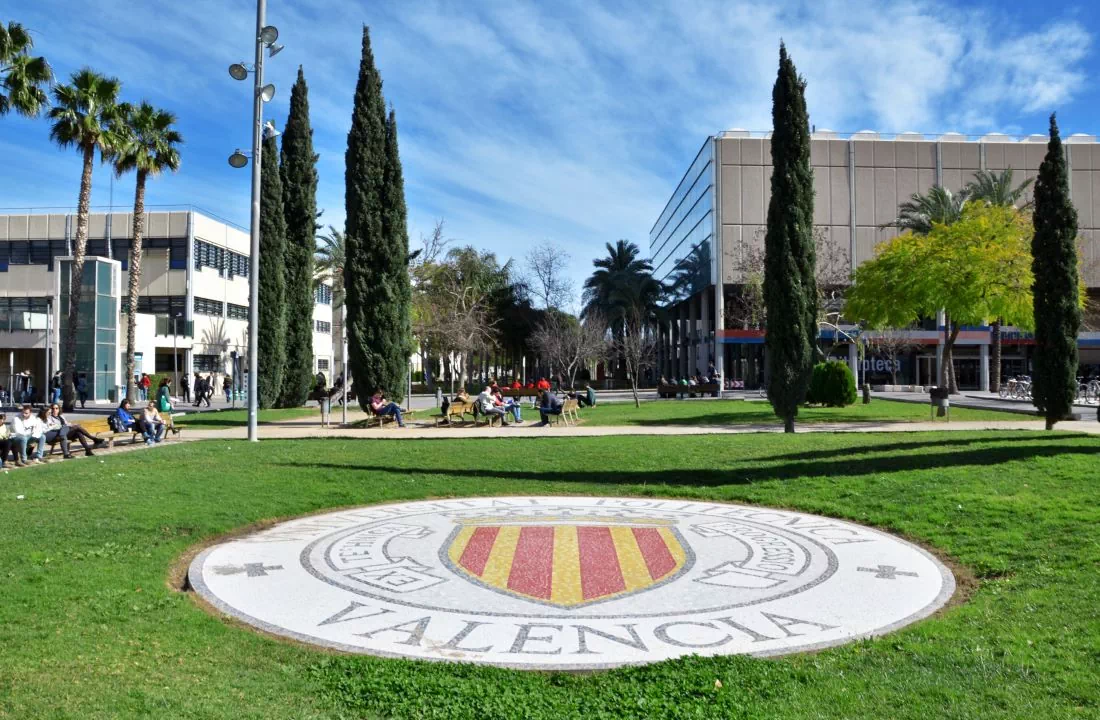
UPV has 3 campuses: the main Vera campus in Valencia (one of the largest and most modern campuses in Spain, with green spaces, laboratories and sports facilities), plus the campuses in Gandia (by the sea, with audiovisual communication and tourism programmes) and Alcoy (engineering and business). The university has 13 schools and faculties, around 30,000 students and students from 114 nationalities, over 60 percent of the world's countries. UPV is a member of the international networks T.I.M.E., CESAER (the association of technical research universities in Europe) and Vives.
UPV's strongest specialisations: it is first in Spain according to QS by Subject 2026 for Chemical Engineering, Agricultural Sciences (number 36 worldwide), Art and Design (top 100 worldwide) and Statistics and Operational Research. Third in Spain for Civil Engineering, Mechanical, Aeronautical and Manufacturing Engineering, Electrical and Electronic Engineering and Architecture. Overall, it is number 135 worldwide for Engineering and Technology. Its main schools include Computer Science (ETSINF), Telecommunications (ETSIT), Architecture (ETSA), Industrial Engineering (ETSII), Civil Engineering, Industrial Design and the Faculty of Fine Arts.
For Romanian students, UPV is one of the best technical opportunities in Europe. As an EU citizen you pay EU fees: roughly EUR 1,500-2,500 per year (calculated per credit, around EUR 25-40 per ECTS, 60 ECTS per year, set by the Generalitat Valenciana), versus roughly double that amount for a non-European. The Romanian Baccalaureate is recognised through the UNEDasiss system (which issues the Credencial de acceso). Applications to public universities in the Valencian Community are made through the regional preinscripció portal of the Generalitat Valenciana, NOT through Accesnet (that is Catalonia's portal). UPV offers an increasingly wide range of programmes in English, especially in engineering, business and design, but most bachelor's degrees are taught in Spanish or Valencian (a B2 level is required). Cost of living in Valencia: roughly EUR 700-1,000 per month, one of the most affordable large cities in Spain. Important note: bachelor's degrees in Spain last 4 years (240 ECTS), not 3 like in the UK.
How to apply to UPV
Recognise your Baccalaureate through UNEDasiss
The first mandatory step: obtaining the Credencial de acceso through the national UNEDasiss system (run by the National University of Distance Education). You upload your Baccalaureate diploma, transcript and grade certificates, and pay the fee (roughly EUR 135). UNEDasiss calculates your access grade on the Spanish scale (5-10). Recommended timing: apply as early as February-March for the academic year that starts in September.
Choose your programme and check the cut-off grade
UPV has programmes in engineering, architecture, computer science, design, telecommunications, agricultural sciences and business. Each has a cut-off grade (nota de corte) set by supply and demand. The most sought-after technical programmes (Computer Science, Industrial Technologies, Architecture, Design) require higher grades, around 9-12 out of 14. Many engineering specialisations have more accessible cut-offs, 5-8 out of 14. To raise your grade you can sit the PCE (Pruebas de Competencias Específicas) in subjects such as mathematics, physics or technical drawing.
Apply through the Valencia regional portal
For public universities in the Valencian Community (UPV, Universitat de València, UJI, UA, UMH) applications are centralised through the preinscripció portal of the Generalitat Valenciana, NOT through Accesnet (that one is only for Catalonia). Application deadline: generally June-July, once UNEDasiss is ready. You choose several ranked preferences of programmes; the system allocates you to the first option that accepts your grade. Tip: if you only want UPV, list several UPV programmes to maximise your chances.
Prove your language (Spanish, Valencian or English)
For programmes in Spanish or Valencian you need a B2 level of Spanish (DELE or equivalent). UPV offers language courses for international students. For programmes in English (certain engineering, business and design specialisations) you need IELTS 6.0-6.5, TOEFL iBT 80-90 or equivalent (Cambridge B2 First / C1 Advanced). Check the language of each programme before applying, as many are mixed (Spanish plus courses in English).
Register as an EU citizen in Spain
As a Romanian (EU) citizen, you do not need a student visa. After arriving in Valencia, you register at the Oficina de Extranjeros to obtain the NIE (Número de Identificación de Extranjero) and the Certificado de Registro de Ciudadano de la Unión. Documents: passport or Romanian ID card, proof of admission to UPV, proof of financial resources (roughly EUR 7,500 per year), European health insurance (European Health Insurance Card) or private insurance. NIE fee: roughly EUR 12.
Enrolment and start of studies (matrícula)
After confirming acceptance (July), you complete the matrícula (the enrolment itself) online on the UPV portal. You choose your courses for the first semester (around 30 ECTS) and pay tuition at EU rates. Start of the academic year: mid-September. UPV runs a welcome orientation programme for international students, with campus tours, meetings with mentors and administrative support. Tip: arrange accommodation (UPV residences, halls or private apartments) at least 2 months in advance; Valencia has more affordable rents than Barcelona or Madrid.
Costs for Romanians
EU tuition 2026-27 (EU citizens)
Total cost 4-year bachelor's (all in)
EU fees
As an EU citizen, you automatically pay EU fees identical to those of a Spaniard. You do not have to do anything special, just prove your Romanian citizenship with a passport or ID card. Tuition is roughly EUR 1,500-2,500 per year, versus roughly double the amount for a non-European. That means a significant saving per year simply by being an EU citizen.
European grants
Becas MEC (Ministerio de Educación): for EU students with family income below a threshold, covering tuition plus a subsidy. Becas Generalitat Valenciana: regional grants for EU students. Erasmus+: if you initially come on an academic exchange of 1-2 semesters, you receive between EUR 350-500 per month as a grant. UPV's own grants: there are aids for students with academic performance and for mobility.
Spain grant
As a Romanian student, you are eligible for the Spain grant from the Romanian Ministry of Education if you gain admission to a Spanish public university. Many cities in Romania also have grant programmes for their students abroad (check with your local town hall). Important: these grants can be combined with the Spanish ones, but they must be applied for in parallel.
Want to apply to UPV?
We help you navigate UNEDasiss for the recognition of your Baccalaureate, choose the right technical programme at UPV, apply through the Valencia regional portal and benefit from EU fees (EUR 1,500-2,500 per year). Our mentors have been through the process. The mentoring session is 100% free.
Talk to a mentorFrequently asked questions
How hard is it to get into Universitat Politècnica de València?
Admission to UPV depends heavily on the programme. The most sought-after technical programmes (Computer Science, Industrial Technologies, Architecture, Industrial Design) have higher cut-off grades, around 9-12 out of 14, while many engineering specialisations or the programmes at the Gandia and Alcoy campuses have more accessible grades, 5-8 out of 14. For Romanians, the access grade is calculated from the Baccalaureate through UNEDasiss. A Baccalaureate average of 8 plus is enough for most programmes, while 9 plus is recommended for competitive technical programmes. To raise your grade you can sit the PCE (Pruebas de Competencias Específicas) in mathematics, physics or technical drawing.
How much does UPV cost for Romanians exactly?
As an EU citizen, you pay statutory EU fees: roughly EUR 1,500-2,500 per year (60 ECTS x roughly EUR 25-40 per credit, set by the Generalitat Valenciana). Total cost of a 4-year bachelor's: roughly EUR 6,000-10,000 in tuition alone. Accommodation in Valencia: EUR 350-650 per month (residence or shared apartment). Food: EUR 220-350 per month. EMT transport: roughly EUR 25-40 per month for a student pass. Total cost of living: roughly EUR 700-1,000 per month, one of the most affordable large cities in Spain. Total 4 years all-in: roughly EUR 42,000-55,000, much lower than the UK or the USA. Note: bachelor's degrees in Spain last 4 years (240 ECTS), not 3 like in the UK.
How do I apply to UPV as a Romanian, through UNEDasiss and the Valencia portal?
The process has two main steps. Step 1, UNEDasiss: you have your Baccalaureate recognised through the national UNEDasiss system, which issues the Credencial de acceso and calculates your access grade on the Spanish scale. You apply from February-March. Step 2, the regional portal: you apply through the preinscripció portal of the Generalitat Valenciana, not through Accesnet (that one is only for the universities in Catalonia, such as UB or UAB). For public universities in the Valencian Community, including UPV, applications are centralised at the regional level. You choose ranked programme preferences, and the system allocates you to the first option that accepts your grade. The application deadline is generally June-July.
Are the programmes at UPV in English?
UPV offers an increasingly wide range of programmes and courses in English, especially in engineering, business, design and telecommunications, but most bachelor's degrees are taught in Spanish or Valencian. For programmes in Spanish you need a B2 level of Spanish (DELE or equivalent). For programmes in English you need IELTS 6.0-6.5 or TOEFL iBT 80-90. Many programmes are mixed, with a core in Spanish and optional courses in English. UPV offers language courses for international students. Recommendation: check the exact language of each programme before applying, as it varies from one faculty to another.
What are UPV's strongest programmes for Romanians?
UPV is the best technical university in Spain and, according to QS by Subject 2026, it is first in Spain for Chemical Engineering, Agricultural Sciences (number 36 worldwide), Art and Design (top 100 worldwide) and Statistics and Operational Research. It is third in Spain for Civil Engineering, Mechanical, Aeronautical and Manufacturing Engineering, Electrical and Electronic Engineering and Architecture. Overall, it is number 135 worldwide for Engineering and Technology. For Romanians interested in technology, the most attractive are Computer Science, Telecommunications, Industrial Engineering, Architecture and Design.
What is student life like at UPV in Valencia?
Valencia is the third largest city in Spain, with a Mediterranean climate, beach, gastronomy (the home of paella), modern architecture (Ciutat de les Arts i les Ciències) and affordable living costs. UPV's main Vera campus is one of the largest and most modern in Spain, with green spaces, laboratories, libraries and sports facilities. UPV also has campuses in Gandia (by the sea) and Alcoy. Students move around the city by metro, the EMT bus (student pass roughly EUR 25-40 per month) or bikes (Valencia has extensive cycle lanes). International community: students from 114 countries, with the Erasmus Student Network (ESN), events and trips. Everyday language: Spanish plus Valencian. English works well in the technical academic environment and in tourist areas.
Can I stay in Spain after graduating from UPV?
Yes, as an EU citizen! Unlike the UK or the USA where you have to apply for a work visa, as a Romanian (EU) citizen you automatically have the right to work in Spain without a visa. With a technical degree from UPV you have access to a strong market: Spain is the 4th largest economy in the EU, with tech hubs in Valencia (a growing digital district), Barcelona (Glovo, Wallapop, Mediapro) and Madrid (BBVA, Santander, Telefónica, Indra). Main industries for UPV graduates: software and IT, industrial engineering, architecture, automotive, renewable energy, agrotech, telecommunications. Salaries for technical graduates: Engineering / CS roughly EUR 25-40k starting; Architecture roughly EUR 22-32k starting. With an EU degree you can work anywhere in the EU without a visa.
How long is a bachelor's at UPV and what about the ECTS system?
Technical bachelor's degrees at UPV (Grado) last 4 years (240 ECTS), in line with the European Bologna system. That means one year more than the UK (3 years). ECTS (European Credit Transfer System): 1 ECTS equals roughly 25-30 hours of total study (lectures plus individual work). A standard academic year has 60 ECTS, that is 2 semesters x 30 ECTS. To obtain the bachelor's you must accumulate 240 ECTS plus a Trabajo Fin de Grado (TFG), a final-year dissertation in year 4. Advantage of the ECTS system: you can transfer credits to other European universities, useful for Erasmus exchanges. At UPV most engineering programmes also have integrated work placements (prácticas en empresa), many with partner technical companies.
Our mentors from Europe
They studied at Bocconi, Sciences Po, TU Delft, ETH Zurich and other EU universities. Now they guide you.


