
Caltech
The most selective STEM university in the USA. Only ~990 undergraduates, but 39+ Nobel laureates and management of JPL (NASA Jet Propulsion Laboratory). The Core Curriculum is the most rigorous STEM core in the world, mandatory for all students. A student-run Honor Code with unproctored exams. For theoretical physics, pure math and aerospace, Caltech via JPL is the best place in the world.
About Caltech
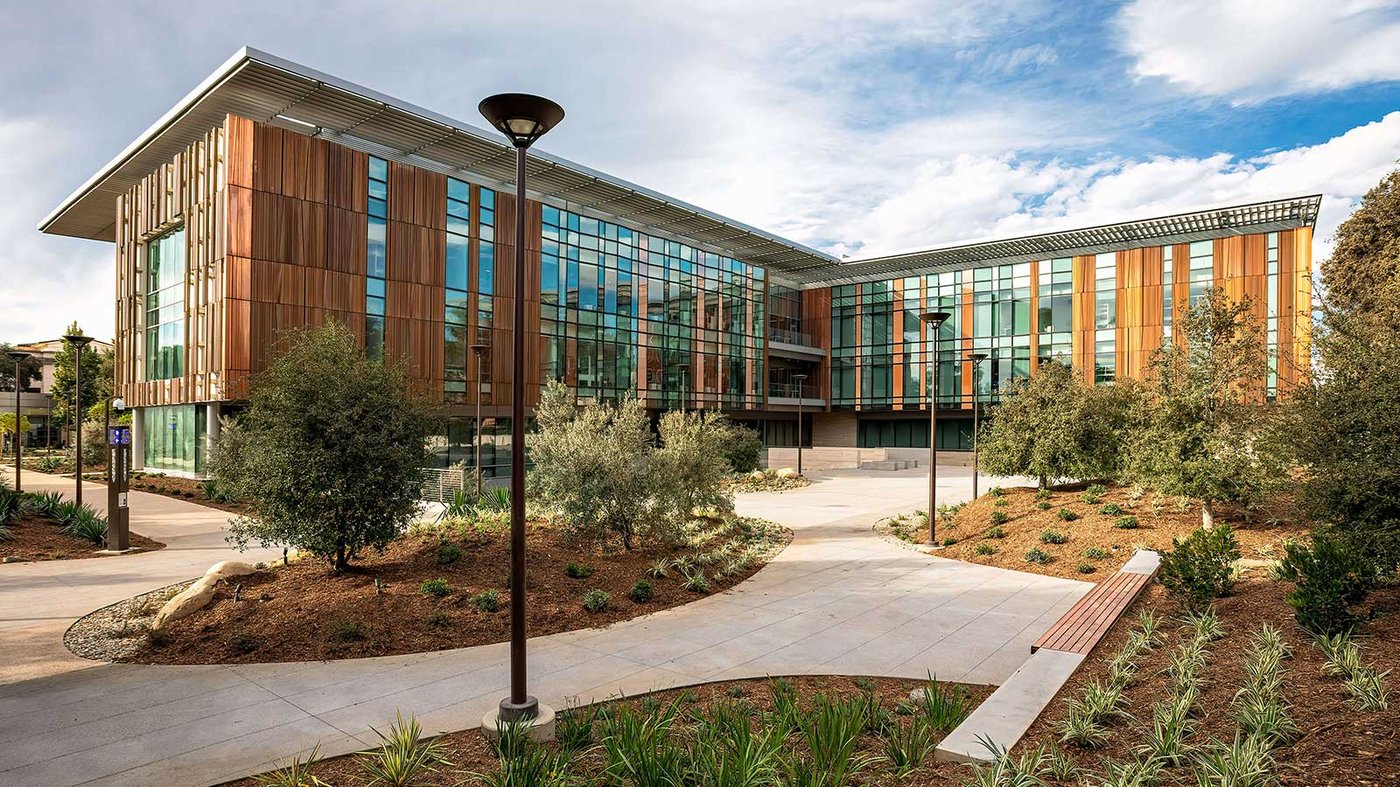
The California Institute of Technology (Caltech) is located in Pasadena, California, 18 km northeast of Los Angeles. The 50-hectare campus is dense but full of palm trees, with the San Gabriel mountains as a backdrop. Caltech is the smallest elite university in the USA, ~990 undergraduates and ~1,300 graduate students, a total of ~2,300 students (fewer than most Romanian high schools!). This size is strategic: a 3:1 student-to-faculty ratio, every student works directly with senior professors, including Nobel laureates. 39+ Nobel Prizes have been won by Caltech affiliates, relative to its size the highest Nobel-to-student ratio in the world.
Caltech has 6 divisions (equivalent to schools, but without strict separation): Biology and Biological Engineering, Chemistry and Chemical Engineering, Engineering and Applied Science (the largest, includes CS, MechE, ECE, ChemE), Geological and Planetary Sciences, Humanities and Social Sciences (small but mandatory for everyone), Physics, Mathematics and Astronomy. Caltech's unique programs: Applied Physics, Astronomy, Planetary Science, Geophysics, Chemical Physics. For pure science (theoretical physics, astronomy, math), Caltech is often preferred over MIT (which is more applied).
Unique Caltech features: (1) JPL (Jet Propulsion Laboratory), the NASA laboratory managed by Caltech since 1936, ~6,500 people, in La Cañada Flintridge 8 km from campus. Mars rovers (Curiosity, Perseverance), Voyager 1&2, Cassini, Galileo, the Webb telescope, all JPL/Caltech. For Caltech students: direct internships at JPL, access to frontline planetary research, many professors with a JPL affiliation; (2) Core Curriculum, the most rigorous STEM core in the USA, 5 terms of Math, 5 of Physics, 2 of Chem, 2 of Bio plus 12 Humanities courses; (3) a student-run Honor Code, unproctored exams, take-home exams with rules respected through honor; (4) Houses system, 8 "houses" (Blacker, Dabney, Fleming, Page, Ricketts, Avery, Lloyd, Ruddock), similar to Hogwarts but less organized than Rice Residential Colleges. Mascot: Beavers. Conference: SCIAC (Division III, recreational sports).
How to apply to Caltech
Common App or QuestBridge (NOT Coalition)
Caltech accepts the Common Application or the QuestBridge Application (for low-income students). It does NOT accept the Coalition App. Application fee: $75 (waiver available). On the Common App, the "Caltech Application" section asks for information about your STEM interest, your list of courses and scientific activities, plus 3-4 Caltech-specific essays.
2 rounds: REA or RD
Caltech offers 2 rounds: REA (Restrictive Early Action) non-binding, deadline 1 November, decision mid-December. REA means you cannot apply simultaneously ED I/REA to another private school. RD: deadline 3 January, decision in March. Caltech explicitly states that the admission rate is below 5 percent for both rounds.
SAT/ACT now REQUIRED (reinstated for Class of 2029)
MAJOR change: Caltech was test-blind during the pandemic (did NOT accept scores at all), but reinstated required SAT/ACT for the Class of 2029 onward. Median of Caltech admits: SAT 1570, ACT 36 (Caltech superscores the SAT and requires submission of ALL scores). Caltech College Board code: 4034. For international students: TOEFL 100+ or IELTS 7.5+ required.
An exceptional STEM profile (essential)
Caltech admits only students with an extraordinary STEM profile, not just a high GPA. What matters enormously: international olympiads (IMO, IPhO, IChO, IBO, IOI), Intel ISEF, Regeneron STS, published research, maker projects. For Romanians: international medals in STEM olympiads are the strongest indicator.
Recommendations: 2 STEM teachers plus a counselor
A counselor recommendation plus 2 mandatory teachers from math, physics, chemistry, biology or computer science. Recommendations from non-STEM teachers (languages, history, ELA) are NOT accepted at Caltech. Optionally 1 additional recommendation from a research mentor or olympiad coach.
No alumni interview
Caltech does NOT offer an alumni interview, the decision is made exclusively on the basis of the written application. This means that the essays, activity lists and recommendations count disproportionately. Make sure every piece is impeccable, and that the essays are authentic (Caltech detects generic essays immediately).
Costs for Romanians
List cost (academic year 2025-26)
Total cost for 4 years (international)
with impact
Caltech is need-aware for intl students (source admissions.caltech.edu): "Caltech is need-aware for international students because the total amount of financial aid funds is limited". The request for aid is taken into account at admission.
100% need met
For intl students admitted with aid: 100% of demonstrated need covered, through grants (gifts, not repayable), work-study and institutional loans. Average grant Fall 2024: ~$73,000/year.
first-year only
Official source: "An international citizen who does not receive assistance for their first year at Caltech is not eligible for aid for any other academic period during their undergraduate career. No exceptions". Exception: Canada/Mexico.
Want to apply to Caltech?
Caltech is the most selective university in the USA (3.78% Class of 2029) and requires an exceptional STEM profile, international olympiads, published research, a maker portfolio. We help you build a competitive profile, decide REA vs RD, write Caltech-specific essays and navigate the financial aid process. The first mentoring session is 100% free.
Talk to a mentorFrequently asked questions
Caltech vs MIT, when does each make sense for a Romanian?
The key differences. Size: Caltech ~990 undergrad vs MIT ~4,700, a 5x difference. Caltech is much smaller, a 3:1 student-to-faculty ratio, the atmosphere of a giant research lab. MIT is still small but closer to a "normal" university. Focus: Caltech is pure STEM, no business, no official pre-med, no humanities majors. MIT has Sloan Business, Media Lab, Architecture, more diversified. Location: Caltech in Pasadena (a quiet LA suburb), MIT in Cambridge MA (urban, next to Boston and Harvard). Application: Caltech does NOT accept Coalition, does NOT offer an interview. MIT has an optional alumni interview. CRITICALLY different: MIT is need-blind for intl students and meets 100% of need, Caltech is need-aware. For theoretical physics, astronomy, pure math they are equal. For applied engineering, CS, biotech, entrepreneurship MIT wins. For pre-med MIT wins (or Stanford, Rice).
What is the Caltech Core Curriculum?
The Core Curriculum is the most rigorous STEM core in the USA, mandatory for ALL students regardless of major. It contains: 5 terms of Math (calculus, multivariable, differential equations, linear algebra), 5 terms of Physics (mechanics, electromagnetism, quantum, thermodynamics, optics), 2 terms of Chemistry, 2 terms of Biology, plus 12 mandatory Humanities/Social Sciences courses (Caltech does NOT want culturally illiterate engineers). The first 2 terms are Pass/Fail, allowing you to adjust to the rigor. After that, the system becomes normal grading. For Romanians: the Core is difficult but very good for those who have done olympiads. If you come from a well-prepared science track (math, physics, chemistry at olympiad level), the Caltech Core is manageable. If you come from a pedagogical or social sciences track, it will be extremely hard.
What is JPL (Jet Propulsion Laboratory)?
JPL is NASA's propulsion laboratory, managed by Caltech since 1936, the main US center for uncrewed planetary missions. Mars rovers (Curiosity, Perseverance), Voyager 1 and 2, Cassini-Saturn, Galileo-Jupiter, the James Webb Space Telescope, are all JPL/Caltech. ~6,500 people work at JPL, in La Cañada Flintridge, 8 km from campus. For Caltech students: direct internships at JPL (SURF program, Summer Undergraduate Research Fellowship), access to frontline planetary research, many professors have a JPL affiliation, the possibility to contribute to real missions (e.g. instruments for a probe). For a Romanian interested in astronomy, planetary science, aerospace, space robotics, Caltech via JPL is the best place in the world, nowhere else do you have direct access to such an institution from year 1.
How does financial aid work for Romanians at Caltech?
Caltech is need-aware for international students (official source admissions.caltech.edu/afford): "Caltech is need-aware for international students because the total amount of financial aid funds for international students is limited". The request for aid can impact the admission decision. For those admitted with aid: 100% of demonstrated need covered, through grants, work-study and institutional loans. Average grant Fall 2024: ~$73,000/year. CRITICAL for Romanians (official quote): "An international citizen who does not receive assistance for their first year at Caltech is not eligible for aid for any other academic period during their undergraduate career. This policy cannot be appealed and no exceptions will be granted at any time during their undergraduate career". Applying for intl aid: International Financial Aid Statement of Intent + CSS Profile. FAFSA does NOT apply for intl students, who are ineligible for Federal Aid (Pell Grant, Federal Direct Loan, federal Work-Study). Exception: citizens of Canada/Mexico.
SAT/ACT at Caltech, required or optional?
MAJOR CHANGE: Caltech was test-blind (did NOT accept scores at all) during the pandemic. But it reinstated required SAT/ACT for the 2025-26 cycle (Class of 2030) onward. The official reason: 95% of applicants were sending scores anyway, and the admissions office could not use them (frustrating). Now the scores are part of the evaluation. Median of Caltech admits: SAT 1570 (range 1530-1590), ACT 36. Caltech superscores the SAT (combining best math + best EBRW from different tests) and requires submission of ALL scores (you cannot hide weak tests). Score deadline: 31 October for REA, 31 December for RD. Caltech code: 4034. For Romanians: SAT 1550+ or ACT 35+ realistically required, for STEM olympians 1500+ under certain circumstances.
Honor Code, how does it work?
The Caltech Honor Code is the only one of its level in the world: "No member of the Caltech community shall take unfair advantage of any other member of the Caltech community". It works student-run: the Board of Control (BoC), made up of students, decides cases of violation. Day-to-day practice: (1) Take-home exams with a time limit (e.g. 4 hours, no more), students work at home, unproctored, respecting the time through honor; (2) Problems with specified materials (open book/closed book, calculator yes/no), respected through honor; (3) You are NOT allowed to collaborate if the problem is specified as "individual", you are allowed if it is "group". For Romanians: it is a culture very different from the Romanian system. The advantage: less stressful exams, an atmosphere of trust. The disadvantage: YOU must respect the rules, a detected violation means immediate expulsion. The culture of trust is so deep that professors leave exams on tables unsupervised.
For which majors is Caltech the best choice?
Caltech is the best global choice for: (1) Theoretical physics, top 1-2 worldwide (alongside Princeton, MIT). 4 Nobel laureates in Physics just from the last 2 decades; (2) Astronomy and Astrophysics, thanks to JPL + Palomar Observatory + unique facilities; (3) Planetary Science, the only university that manages a NASA mission center; (4) Applied Math, top 5 worldwide; (5) pure Chemistry, top 3 in the USA; (6) Aerospace Engineering, thanks to JPL adjacency; (7) Geophysics, with a Seismological Lab on campus. Caltech is NOT suitable for: business, finance, economics (a small department), pre-med (it exists but is not a focus), humanities as a main major, arts. For Romanians: Caltech is meaningful only if you want a career in pure research (academia or an industrial lab) or in aerospace. For a mainstream industry career (tech, finance, consulting), MIT, Stanford or even the Ivies are better choices from a networking standpoint.
How many Romanian students are at Caltech?
Caltech has ~12% international students at the undergraduate level (~120 students), representing 27 countries (Class of 2029). For Romanians: we estimate 3-7 Romanian students at the undergraduate level across all 4 years combined, very selective. At the graduate level (PhD in Physics, Math, EE, CS, Aerospace), the community is larger, 20-40 Romanian PhD students plus postdocs. Notable Romanians affiliated with Caltech: Vlad Stamatescu (PhD Physics), Răzvan Pașcanu (Caltech postdoc, now DeepMind), plus other researchers in AI and physics. Pasadena's advantage for Romanians: LA Metro with over 70,000 Romanians, the largest Romanian community in the USA (about 30 km away), the Romanian Orthodox Church in LA, Romanian restaurants. The cost of living in Pasadena is moderate vs the Bay Area or LA proper. The climate is warm almost all year (an advantage vs Boston or NYC for Romanians coming from a continental climate).
Our mentors for the USA
They studied in the USA, at universities like Harvard, MIT and Stanford. They went through the process. Now they guide you.


