
Sorbonne Université
A public university in Paris, created in 2018 through the merger of Paris-Sorbonne and Pierre et Marie Curie (UPMC), with a heritage reaching back to the Collège de Sorbonne of 1257. QS World 2026 number 72, among the best in France. Roughly 53,400 students, of whom 10,200 are international. As an EU citizen you pay EU fees (about €283 per year for a bachelor's, including CVEC), with no visa needed.
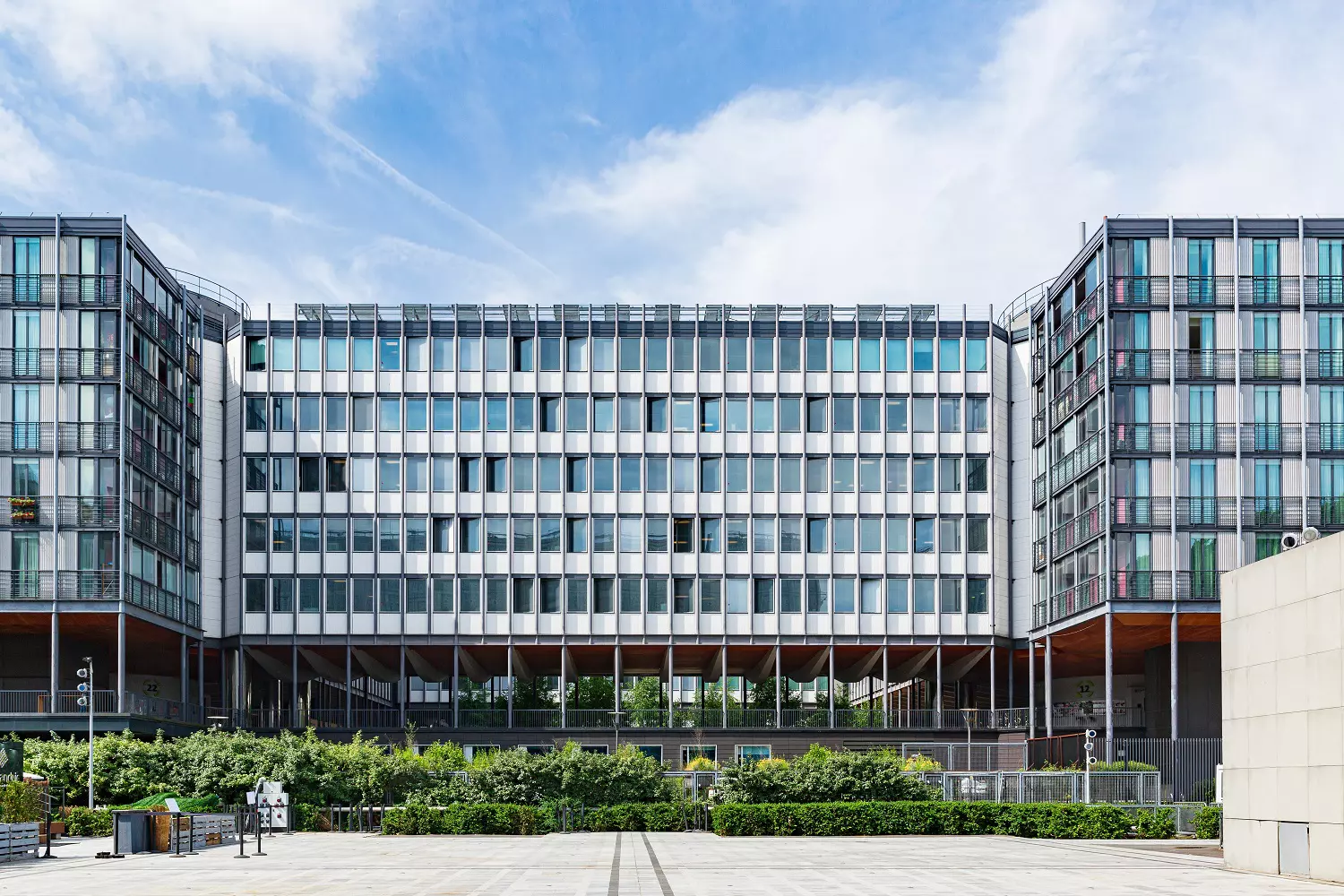
About Sorbonne Université
Sorbonne Université is a public university in Paris, officially created in 2018 through the merger of Université Paris-Sorbonne (letters and humanities) and Université Pierre et Marie Curie / UPMC (sciences and medicine). Its name and prestige come from a far older heritage: the Collège de Sorbonne, founded in 1257 by Robert de Sorbon within the old University of Paris. Today it is one of the most prestigious universities in France and a global reference for research.
Sorbonne Université is QS World 2026 number 72, one of the best-ranked universities in France, with outstanding scores for academic reputation and international research network. The university has roughly 53,400 students, of whom over 10,200 are international and about 4,400 are doctoral candidates. It is organised into three large faculties: Lettres (Letters and Humanities), Sciences et Ingénierie (Sciences and Engineering) and Médecine (Medicine, with the Pitié-Salpêtrière university hospital and other affiliated centres).
Strong specialisations at Sorbonne: Letters and Humanities (Philology, History, Philosophy, Arts, classical and modern Languages, one of the strongest traditions in the world), Sciences (Mathematics, Physics, Chemistry, Biology, Computer Science, Geosciences, the UPMC heritage) and Medicine (clinical training in the major Paris hospitals). Most bachelor's degrees (Licence) are taught in French, so you need a B2 or C1 level. At master's level and in international programmes there is an ever-wider set of courses taught in English, especially in the sciences and certain research specialisations.
For Romanian students, Sorbonne Université is one of the most accessible elite opportunities in Europe. As an EU citizen you pay EU fees: at bachelor's level the statutory fee is about €178 per year, plus CVEC (the student campus-life contribution, about €103-€105), so around €283 per year in total. A non-European student pays frais différenciés of about €2,770 per year at bachelor's level, so as a Romanian you save enormously simply by being an EU citizen. You do not need a visa, you automatically have the right of residence and work in France. Bachelor's degrees last 3 years (180 ECTS), in line with the Bologna system.
How to apply to Sorbonne
Apply through Parcoursup (bachelor's)
For entry to a bachelor's (Licence), the official route is the national platform Parcoursup. You create your file, choose the programmes you want (you can add several "vœux"), upload your grades and your motivation letter, and rank your preferences. Deadline: registration on Parcoursup generally opens in January, with preferences confirmed by March. As a Romanian student with a Baccalaureate, you apply through Parcoursup like any candidate from the French or EU system.
Campus France (recommended for the EU)
Although as an EU citizen you do not need a visa, it is recommended to go through Campus France (the "Études en France" platform), which guides your file, the recognition of your diploma and the link with the university. For a master's or direct enrolment (outside Parcoursup), Campus France is usually the starting point. Check the Sorbonne page for the exact procedure for your specialisation.
Prove your language (DELF B2-C1 or IELTS)
Most bachelor's degrees are taught in French, so you need a B2 or C1 level proven through DELF/DALF or TCF. For programmes in English (especially at master's level and certain science courses) you need IELTS 6.5+ or an equivalent TOEFL iBT. Check the exact language requirement for each programme, because it differs between Letters, Sciences and Medicine.
Prepare your academic file
You upload your Baccalaureate diploma (or certificate), your high-school transcript, your motivation letter (lettre de motivation) and, where applicable, a CV. For science and medicine specialisations, your grades in mathematics, physics, chemistry and biology matter a lot. The Romanian Baccalaureate is recognised as an access diploma, being a diploma from an EU member state.
Register as an EU citizen in France
As a Romanian (EU) citizen, you do not need a study visa or a residence permit. All you need is a valid ID card or passport. Recommended: open a French bank account, get a student social-security number and health insurance (the European Health Insurance Card covers the initial period). You can also apply for the CAF (APL) housing benefit, which is available to EU students too.
Enrolment and CVEC payment
After acceptance, you complete the enrolment (inscription administrative) online on the Sorbonne portal. You pay the statutory bachelor's fee (about €178) and, compulsorily, the CVEC (about €103-€105) through the CROUS platform before registration. Start of the academic year: generally September. Arrange accommodation early (CROUS residences, private halls or an apartment), since Paris has a very competitive rental market.
Costs for Romanians
EU tuition 2026-27 (EU citizens)
Total cost per year (tuition plus living)
EU fees
As an EU citizen, you automatically pay EU fees identical to those of a French student. You do not have to do anything special, just prove your Romanian citizenship with a passport or ID card. Bachelor's tuition about €178 plus CVEC ~€103-€105, so ~€283 per year, versus non-EU ~€2,770 per year. That means over €2,400 in savings per year simply by being an EU citizen.
European scholarships
CROUS scholarships based on social criteria are accessible to EU students who meet income and residence conditions. CAF (APL): housing benefit available to EU students too, significantly reducing accommodation costs. Erasmus+: if you come initially on an academic exchange of 1-2 semesters, you receive a monthly grant. Also check Sorbonne's own scholarships for international students.
Romania scholarship
As a Romanian student, you can apply for the scholarships offered by the Romanian state for studies abroad (check the Ministry of Education and local programmes). Many cities in Romania run scholarship programmes for their students who go abroad (check with your local council). Important: these scholarships can be combined, but they must be applied for in parallel and well in advance.
Want to apply to Sorbonne?
We help you navigate Parcoursup and Campus France, choose the right programme, prepare your file and your proof of French (DELF B2-C1), and make the most of the EU fees (~€283/yr). Our mentors in Europe have been through the process. The mentoring session is 100% free.
Talk to a mentorFrequently asked questions
How much exactly does Sorbonne Université cost for Romanians?
As an EU citizen, you pay statutory EU fees. At bachelor's level, the fee is about €178 per year, plus CVEC (the campus-life contribution, about €103-€105), so around €283 per year in total. At master's level, the statutory EU fee is indicatively around €250 per year plus CVEC. A non-European student pays frais différenciés of about €2,770 per year at bachelor's level. The real cost comes from living in Paris: accommodation €600-€1,000/month, food €300-€450/month, Navigo transport ~€350/yr, so roughly €13,000-€18,000 per year all-in, drastically below the UK or USA.
How do I apply to Sorbonne as a Romanian student, through Parcoursup or Campus France?
For entry to a bachelor's (Licence), the official route is the national platform Parcoursup, which you apply through like any EU candidate. Registration generally opens in January, and you confirm your preferences ("vœux") by March. In parallel, although as an EU citizen you do not need a visa, it is recommended to go through Campus France (the "Études en France" platform), which guides your file and the recognition of your diploma. For a master's or direct enrolment outside Parcoursup, Campus France is usually the starting point.
Do I need a visa to study in France?
No. As a Romanian (EU) citizen you automatically have the right of residence and study in France, with no visa and no residence permit. You register with just your valid ID card or passport. Recommended: open a French bank account, get a student social-security number and health insurance (the European Health Insurance Card covers the initial period). Unlike the USA or UK, there are no visa fees, no SEVIS and no embassy interview.
Are Sorbonne's programmes in English or do I need to know French?
Most bachelor's degrees at Sorbonne are taught in French, so you need a B2 or C1 level proven through DELF/DALF or TCF. There are, however, programmes in English, especially at master's level and in certain science and research courses, where IELTS 6.5+ or an equivalent TOEFL iBT is required. For Romanian students who want a bachelor's in Letters or Medicine, French at B2-C1 level is almost always necessary. Check the exact language requirement for each programme.
What are the strongest programmes at Sorbonne for Romanians?
Sorbonne Université is renowned for its three major fields: Letters and Humanities (Philology, History, Philosophy, Arts, classical and modern Languages, the Paris-Sorbonne heritage, one of the strongest traditions in the world), Sciences and Engineering (Mathematics, Physics, Chemistry, Biology, Computer Science, Geosciences, the UPMC heritage) and Medicine (clinical training in the major Paris hospitals such as Pitié-Salpêtrière). For Romanian students passionate about the humanities, fundamental sciences or medicine, Sorbonne is one of the most prestigious choices in continental Europe.
Is the Romanian Baccalaureate accepted at Sorbonne?
Yes. Being a diploma from an EU member state, the Romanian Baccalaureate is recognised as an access diploma for university studies in France. You apply through Parcoursup for a bachelor's, uploading your diploma (or certificate), your high-school transcript and your motivation letter. For science and medicine specialisations, your grades in mathematics, physics, chemistry and biology matter a lot, while for Letters your humanities profile and your French level matter. Recommendation: a good overall Baccalaureate average plus the grades relevant to your chosen specialisation.
How long is a bachelor's at Sorbonne and what about the ECTS system?
Bachelor's degrees (Licence) at Sorbonne last 3 years (180 ECTS), in line with the European Bologna system. A standard academic year has 60 ECTS, that is 2 semesters x 30 ECTS. After the bachelor's you can continue with a master's (2 years, 120 ECTS) and then a doctorate. ECTS (European Credit Transfer System) means you can transfer credits to other European universities, useful for Erasmus exchanges. Notable exception: medicine studies have a longer, specific structure, in line with the French medical-training system.
Can I stay in France after graduation?
Yes, as an EU citizen! Unlike the UK or USA where you have to apply for a work visa, as a Romanian (EU) citizen you automatically have the right to work in France with no visa and no work permit. France is the second-largest economy in the EU, with a strong labour market in research, healthcare, tech, finance, engineering, culture and education, especially in the Paris region. With a degree from Sorbonne and an EU diploma, you can work anywhere in the European Union without a visa. On top of that, the fluent French gained during your studies is a major asset on the job market.
Our mentors in Europe
They studied at Bocconi, Sciences Po, TU Delft, ETH Zurich and other EU universities. Now they guide you.


