
Université PSL
Paris Sciences et Lettres, Paris's elite research college, formed as a federation in 2010. Ranked number 28 worldwide in QS World 2026 and number 1 in France. Around 17,000 students and 11 member schools including ENS, Dauphine, Mines Paris, Chimie ParisTech and Observatoire de Paris. As an EU citizen you pay the French public fees, far below the non-EU rates.
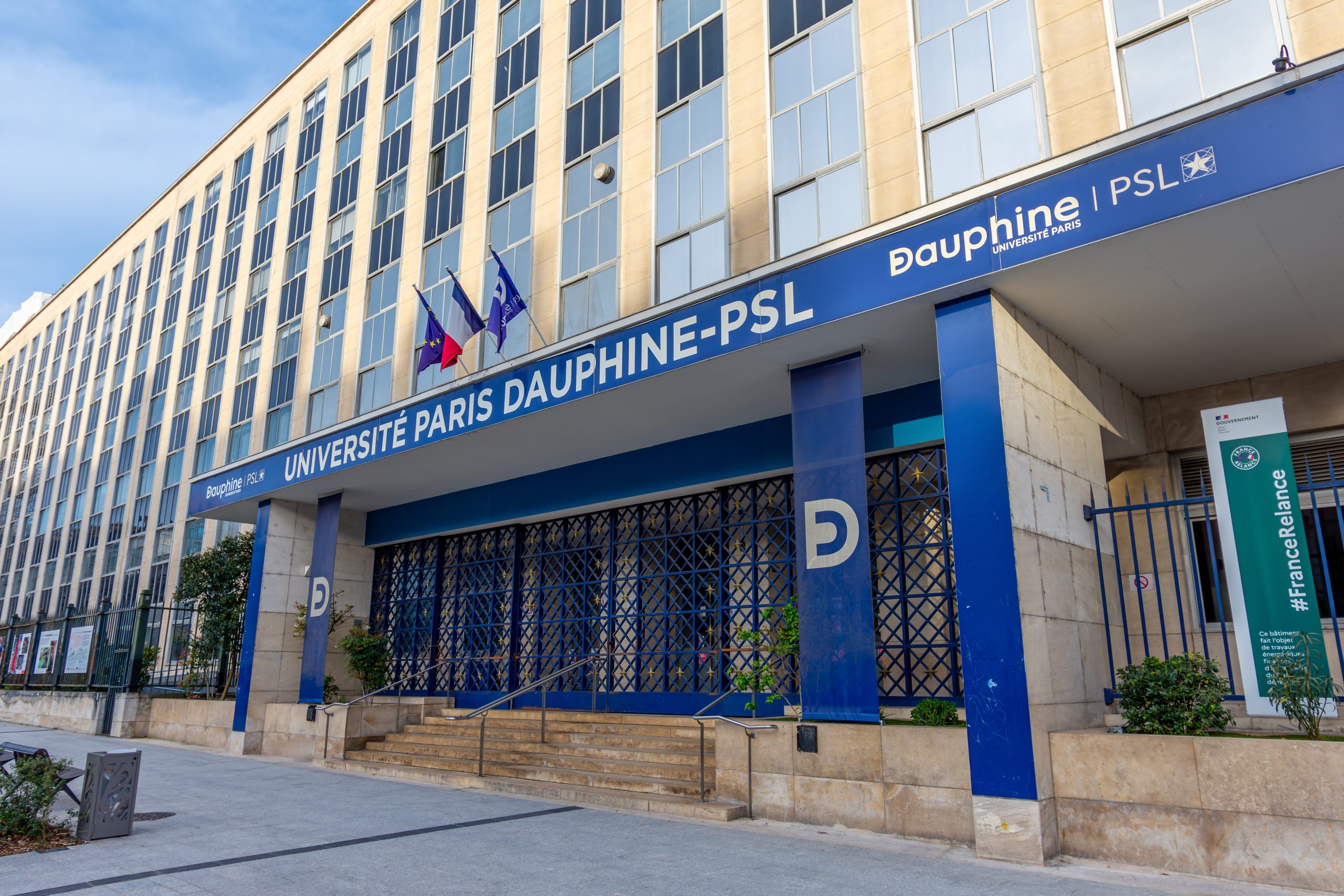
About Université PSL
Université PSL (Paris Sciences et Lettres) is a public research university in Paris, formed as a federation in 2010 by uniting several historic elite institutions. Although the grouping is recent, its member schools carry centuries of academic tradition. Today PSL brings together around 17,000 students and roughly 2,900 researchers, making it a human-scale university compared with the large public campuses.
PSL is ranked number 28 worldwide in QS World 2026 and number 1 in France, sits in the top 50 at Times Higher Education and around number 33 in the Shanghai ranking (ARWU). Its strength comes from its 11 member schools: École normale supérieure (ENS) Paris, Université Paris Dauphine PSL (economics, finance, management), Mines Paris PSL (engineering), Chimie ParisTech PSL, ESPCI Paris PSL (physics, chemistry), Observatoire de Paris, Collège de France, École Pratique des Hautes Études, École nationale des chartes, plus arts schools and associated institutions such as Institut Curie.
Strong specializations at PSL: mathematics and physics (ENS, ESPCI, where Marie Curie taught), engineering (Mines Paris), chemistry (Chimie ParisTech), economics, finance and management (Dauphine), humanities and social sciences, arts and design. PSL has a remarkable record of Nobel laureates and Fields medalists associated with its member institutions. At undergraduate level the offer is selective: the interdisciplinary CPES program (Cycle Pluridisciplinaire d'Études Supérieures), the Dauphine PSL bachelor's degrees and other specific tracks. At master's and doctoral level there are numerous programs taught entirely in English, including funded Master-PhD tracks.
For Romanian students, PSL is a gateway to the top of European research at French public fees. As an EU citizen you pay the national public fee (around 175 EUR per year for a bachelor's plus the CVEC contribution of about 103 to 105 EUR), versus the much higher rates that apply to non-EU students. You do not need a study visa and, after graduation, you have an automatic right to work in France and across the rest of the EU. Note: some specific international components or programs may have their own higher fees, so check directly with the member school you are applying to.
How to apply to PSL
Choose the program and application route
PSL does not have a single application. For CPES (the interdisciplinary bachelor's program) all candidates apply on the national Parcoursup platform. For the Dauphine PSL bachelor's degrees and other components, the route may be a direct application on the member school's website or the Études en France procedure, depending on the program. The first step is to identify exactly which school and track you are aiming for.
Parcoursup or direct application
If the program is on Parcoursup, the typical 2026 calendar is: registration from 19 January, formulating your choices by 12 March, completing your file by 1 April. For programs with a direct application, you follow the member school's own deadlines (usually winter or spring). Admission to PSL is selective: grades, academic profile and motivation all count.
Campus France (recommended, not mandatory for EU)
As an EU citizen you are not required to go through the Campus France / Études en France procedure (it mainly targets non-EU students who need a visa). Even so, the Campus France account and their guides remain recommended for orientation, equivalences and information on housing and scholarships. For Romanians the process stays simpler than for non-Europeans.
Prove your language (French or English)
For programs in French you need a solid level, typically DELF B2 or DALF C1 (depending on the program). For programs in English (many at master's level and some tracks) you need IELTS 6.5-7.0 or an equivalent TOEFL iBT. Check the exact requirement at the member school, because the threshold varies from one program to another.
Register as an EU citizen in France
As a Romanian (EU) citizen you do not need a study visa for France. After arrival you open a French bank account, request a social security number, enroll in student health insurance and use your European Health Insurance Card. You will need proof of admission, a Romanian passport or ID card and a housing address.
Enrollment and start of studies (September)
After confirming admission you complete the enrollment (inscription administrative) at the member school, pay the public fee (around 175 EUR for a bachelor's) plus the CVEC contribution (~103-105 EUR, paid online through the CVEC portal). Start of the academic year: generally September. Arrange housing early (CROUS, residences or private apartments); Paris has a very competitive rental market.
Costs for Romanians
EU tuition 2026-27 (EU citizens)
Total cost per year (all included)
EU fees
As an EU citizen you automatically pay the French public fees, identical to those of a French student. You do not have to do anything special, just prove your Romanian citizenship with a passport or ID card. The fee of around 175 EUR per year for a bachelor's is tens of times lower than the rates applicable to non-EU students.
European scholarships
CROUS scholarships on social criteria are open under certain conditions to students from the EU as well. Erasmus plus offers a monthly grant if you arrive initially on an academic exchange of 1-2 semesters. There are also PSL's own scholarships and excellence scholarships for certain programs, including fully funded Master-PhD tracks. Check eligibility at the member school.
Romania scholarship
As a Romanian student you may be eligible for the scholarships offered by the Romanian Ministry of Education for studies abroad, if you obtain admission to a French public university. In addition, many town halls and county councils in Romania have scholarship programs for their students going abroad. These scholarships can be combined with the French ones, but must be applied for separately.
Want to apply to PSL?
We help you choose the right member school, navigate Parcoursup or the direct application, prepare your language proof and take advantage of the public EU fees. Our mentors have been through the process. The mentoring session is 100 percent free.
Talk to a mentorFrequently asked questions
What is Université PSL and why is it ranked so highly?
Université PSL (Paris Sciences et Lettres) is a public research university in Paris, formed as a federation in 2010 by uniting several historic elite institutions: ENS, Dauphine, Mines Paris, Chimie ParisTech, ESPCI, Observatoire de Paris, Collège de France and others. This concentration of top research explains its position: number 28 worldwide in QS World 2026 and number 1 in France, plus a top 50 spot at Times Higher Education. It has around 17,000 students and 11 member schools.
How do I apply to PSL as a Romanian student, through Parcoursup or directly?
It depends on the program. For CPES, the interdisciplinary bachelor's program, all candidates apply on the national Parcoursup platform. For the Dauphine PSL bachelor's degrees and other components, the application can be direct on the member school's website or through the Études en France procedure, depending on the track. The typical Parcoursup 2026 calendar: registration from 19 January, choices by 12 March, file completion by 1 April. The first step is to identify exactly which school and program you are aiming for, because the procedure differs.
How much does PSL cost for Romanians exactly?
As an EU citizen you pay the French public fees: around 175 EUR per year for a bachelor's and around 250 EUR per year for a master's, plus the CVEC contribution of about 103 to 105 EUR. In practice, tuition fees at a university in the world top 30 are symbolic. The real expense is the cost of living in Paris: housing ~600-1,000 EUR per month, food ~300-450 EUR per month, Navigo transport ~350 EUR per year. Estimated total ~12,000-18,000 EUR per year. Note: some specific international programs may have their own higher fees, so check with the member school.
Do I need a visa to study at PSL?
No. As a Romanian citizen you are an EU citizen, and France is part of the European Union, so you do not need a study visa. You can move freely to Paris. After arrival you open a French bank account, enroll in student health insurance and use your European Health Insurance Card. The Campus France / Études en France procedure, mandatory for many non-EU students, is not mandatory for you, although the Campus France account remains useful for orientation.
What level of French or English do I need?
It depends on the language of the program. For programs in French you typically need DELF B2 or DALF C1, depending on the program's requirement. For programs in English (many at master's level and some bachelor's tracks) you need IELTS 6.5-7.0 or an equivalent TOEFL iBT. PSL has a significant number of programs taught entirely in English, especially at master's and doctoral level, including funded Master-PhD tracks. Check the exact threshold at the member school you are applying to.
What are the strongest programs at PSL for Romanians?
PSL is strong in mathematics and physics (ENS, ESPCI), engineering (Mines Paris), chemistry (Chimie ParisTech), economics, finance and management (Université Paris Dauphine PSL), humanities and social sciences, as well as arts and design. At undergraduate level, the interdisciplinary CPES program and the Dauphine bachelor's degrees are the most relevant for Romanian students. At master's and doctoral level the English-taught offer is broad, ideal for those who want to enter research at the European level.
What scholarships are there at PSL for Romanians?
CROUS scholarships on social criteria can be accessible, under certain conditions, to students from the EU as well. Erasmus plus offers a monthly grant if you arrive initially on an academic exchange of 1-2 semesters. There are PSL's own scholarships and excellence scholarships for certain programs, including fully funded Master-PhD tracks taught entirely in English. In addition, as a Romanian you may be eligible for the scholarships of the Romanian Ministry of Education for studies abroad, which can be combined with the French ones. Check eligibility at each member school.
Can I stay and work in France after graduating from PSL?
Yes, as an EU citizen! Unlike the United Kingdom or the USA, where you need a work visa, as a Romanian (EU) citizen you have the automatic right to work in France without a visa. France is the second-largest economy in the EU, with a strong research, tech and finance ecosystem in Paris. A PSL degree, from one of the best-ranked universities in the world, opens doors both in France and across the rest of the EU. With a European degree, you can work anywhere in the European Union without a visa.
Our mentors in Europe
They studied at Bocconi, Sciences Po, TU Delft, ETH Zurich and other EU universities. Now they guide you.


