
Université Paris Cité
A public university in the heart of Paris, born in 2019 from the merger of Paris Descartes and Paris Diderot. QS World 2026 number 300, one of the largest universities in France, with about 64,000 students. Number 1 in France for medical sciences. As an EU citizen you pay EU fees identical to those of French students: about 175 euros per year for a bachelor's degree plus CVEC.
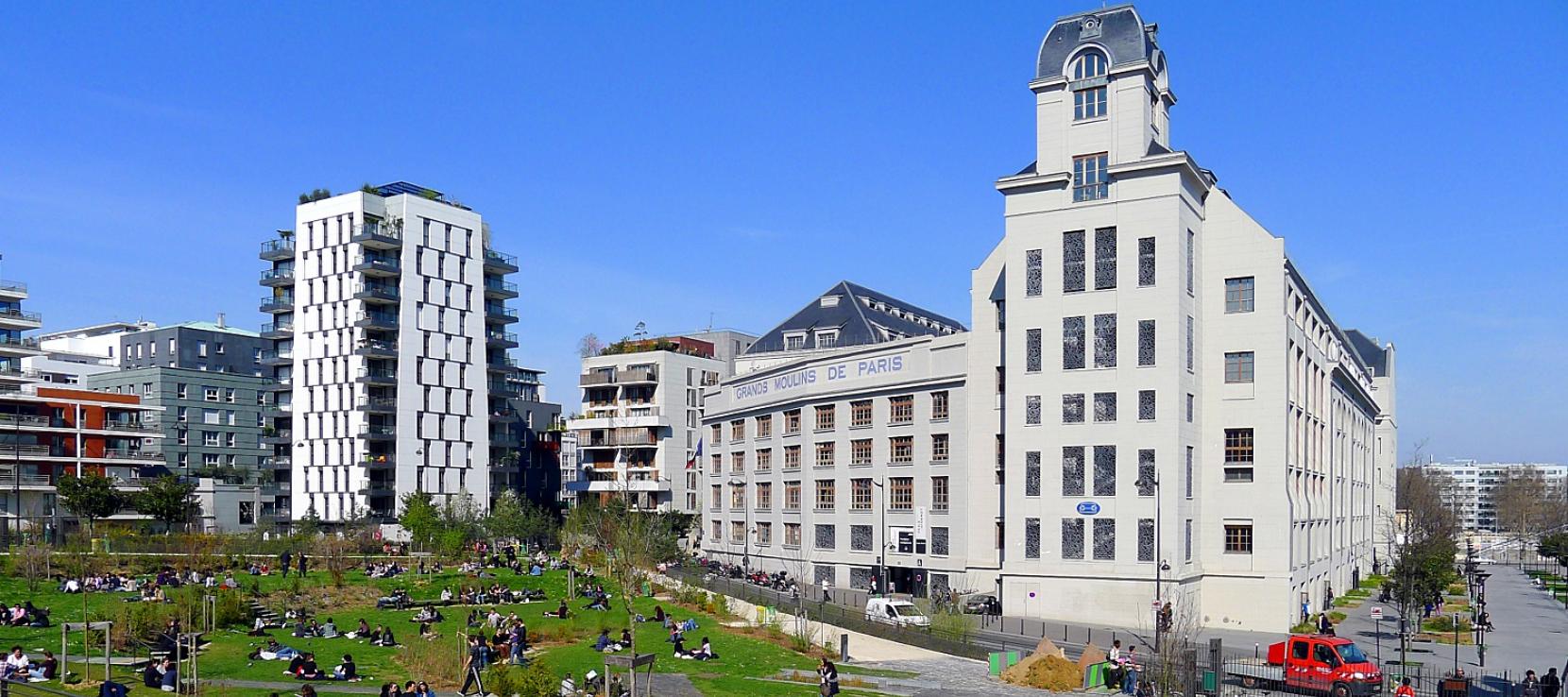
About Université Paris Cité
Université Paris Cité is a public university created by decree on 20 March 2019, from the merger of two historic Parisian institutions: Paris Descartes (Paris V) and Paris Diderot (Paris VII), together with the Institut de Physique du Globe de Paris. Both universities came from the splitting of the old University of Paris (the historic Sorbonne) after 1970. It was initially named "Université de Paris", and by decree in March 2022 it was renamed Université Paris Cité. Its headquarters is at the École de Médecine, in the 6th arrondissement of Paris, with campuses in the Latin Quarter and the Grands Moulins area.
With about 64,000 students, 4,500 teaching and research staff and 3,000 administrative employees, it is one of the largest universities in France. QS World 2026 places it at number 300 worldwide and 5th among French universities in that ranking, after PSL, Institut Polytechnique de Paris, Université Paris-Saclay and Sorbonne University. It is especially known for research: its history includes laureates such as Jean Dausset (Nobel in Medicine 1980), George Smoot (Nobel in Physics 2006), Artur Avila and Laurent Schwartz (Fields medalists).
The university is organized into three large faculties: Health (medicine, pharmacy, dentistry), Sciences (mathematics, physics, chemistry, computer science, biology, geosciences) and Society and Humanities (letters, languages, history, social sciences, law, economics). Strengths: Medicine (according to the Shanghai 2024 ranking it is number 1 in France across all medical sciences, including clinical medicine, public health, dentistry and pharmacy), exact and life Sciences, and Humanities. Most bachelor's degrees (licence) are taught in French (B2 level required), but the university also has a set of programs in English, especially at master's level and in the scientific and health fields.
For Romanian students, Paris Cité is one of the most accessible opportunities in Europe. As an EU citizen you pay EU fees identical to those of a French student: about 175 euros per year for a bachelor's degree, 250 euros for a master's and 391 euros for a doctorate (academic year 2024-2025), plus the mandatory CVEC contribution (about 103 euros per year). A non-European student pays much higher differentiated fees (about 2,770 euros for a bachelor's, 3,770 euros for a master's). Bachelor's applications go through the national Parcoursup platform, and as an EU citizen you do not need the Campus France / Études en France procedure nor a study visa.
How to apply to Paris Cité
Apply for a bachelor's via Parcoursup
As an EU citizen who wants the 1st year of a bachelor's (licence), you apply on the national Parcoursup platform, exactly like a French student. For 2025 the window was 15 January to 2 April. You create an account, choose up to 10 wishes (voeux), upload your grades and write your motivation project. For a master's or for resuming studies there are separate procedures, directly at the university (eCandidat).
Campus France: recommended, not mandatory for the EU
As a Romanian (EU) citizen you are not required to go through the Campus France / Études en France procedure for a bachelor's; you apply directly on Parcoursup. Even so, the Campus France Romania portal remains recommended as a source of information, for guidance, for diploma recognition and for the master's programs that may require it. Check the exact requirements of your program.
Prove French (DELF/DALF) or English (IELTS)
For programs in French (most bachelor's degrees) you need B2 level, proven with DELF B2, DALF C1 or TCF. For programs in English (especially at master's level and in sciences/health) you are usually asked for IELTS 6.0-6.5 or TOEFL iBT 80-90. The Romanian Baccalaureate is recognized as an access diploma for EU citizens.
Pay the CVEC and prepare your file
Before enrollment, every student must pay the CVEC (Contribution Vie Étudiante et de Campus), about 103 euros per year, online on the national portal, and obtain the certificate. In parallel, prepare your translated Baccalaureate diploma, your transcript, your Romanian passport or ID card and an address in France.
Register as an EU citizen (no visa)
As a Romanian (EU) citizen you do not need a study visa to study in France. You can settle freely. For a stay longer than 3 months, open a French bank account, get health insurance (the European Health Insurance Card or Sécurité sociale étudiante) and, optionally, apply for the CAF/APL rent allowance, which is also open to EU students.
Administrative enrollment (inscription)
After your acceptance is confirmed (summer), you complete the inscription administrative online on the Paris Cité portal, pay tuition (~175 euros for a bachelor's for EU citizens) and receive your student card. The start of the academic year: generally in September. Arrange accommodation (CROUS halls of residence or a private apartment) as early as possible, as Paris has a very competitive rental market.
Costs for Romanians
EU tuition 2026-27 (EU citizens)
Comparison and cost of living in Paris
EU fees
As an EU citizen, you automatically pay the same fees as a French student, without doing anything special, just proving your Romanian citizenship with a passport or ID card. Bachelor's tuition ~175 euros per year versus ~2,770 euros for non-EU. The difference of over 2,500 euros per year comes purely from being an EU citizen, with no visa and no differentiated fees.
European support
The CROUS needs-based scholarship: also open to EU students who meet the income and residence conditions. The CAF/APL rent allowance: can cover part of the rent, open to EU students. Erasmus+: if you first come on an academic exchange of 1-2 semesters, you receive a monthly grant. The CVEC can be free for CROUS scholarship holders.
Romania scholarship
As a Romanian student admitted to a public university abroad, you may be eligible for scholarship programs from the Romanian state or local authorities (check with your town hall and the Ministry of Education). These scholarships can be combined with French support (CROUS, CAF), but must be applied for separately, in parallel with applying on Parcoursup.
Want to apply to Paris Cité?
We help you navigate Parcoursup, choose the right program at Paris Cité, prepare your French or English proof and take advantage of the EU fees (~175 euros per year for a bachelor's). Our mentors have been through the process. The mentoring session is 100% free.
Talk to a mentorFrequently asked questions
How do I apply to Université Paris Cité as a Romanian student?
For the 1st year of a bachelor's (licence), you apply on the national Parcoursup platform, exactly like a French student. For 2025 the window was 15 January to 2 April. You create an account, choose up to 10 wishes (voeux), upload your grades and write your motivation project. As an EU citizen you do not need the Campus France / Études en France procedure for a bachelor's, although Campus France Romania remains recommended for information and guidance. For a master's, applications are made directly to the university (eCandidat), and some programs may require Campus France.
How much does Paris Cité cost for Romanians exactly?
As an EU citizen, you pay EU fees identical to those of a French student: about 175 euros per year for a bachelor's, 250 euros for a master's and 391 euros for a doctorate (academic year 2024-2025), plus the mandatory CVEC contribution of about 103 euros per year. That means around 283 euros per year in total tuition for a bachelor's. A non-European student pays much higher differentiated fees (about 2,770 euros for a bachelor's, 3,770 euros for a master's). The real budget of a Romanian student is dominated by the cost of living in Paris: accommodation 600-1,000 euros per month, food and transport ~400-550 euros per month, so about 12,000-18,000 euros per year for cost of living.
What do EU fees mean and why do they matter for a Romanian?
In France, public universities apply state-regulated fees for EU students, identical to those paid by French students (about 175 euros per year for a bachelor's). Students from outside the EU pay much higher differentiated fees (about 2,770 euros for a bachelor's). As a Romanian citizen you are automatically an EU citizen, so you benefit from the reduced fee without doing anything special, just proving your citizenship with a passport or ID card. Besides tuition, as an EU citizen you do not need a study visa and you do not go through the mandatory Campus France procedure for a bachelor's.
Do I have to speak French or can I study in English?
Most bachelor's degrees at Paris Cité are taught in French, so you need B2 level, proven with DELF B2, DALF C1 or TCF. However, there are also programs in English, especially at master's level and in the scientific and health fields, for which you are usually asked for IELTS 6.0-6.5 or TOEFL iBT 80-90. Recommendation for Romanians: if you are aiming for a bachelor's in French, start your language preparation early and obtain the DELF B2 certificate before applying. Check the exact language of instruction of each program on the official site u-paris.fr.
What are the strongest programs at Paris Cité?
Paris Cité is organized into three large faculties: Health, Sciences and Society and Humanities. Its greatest strength is Medicine: according to the Shanghai 2024 ranking, the university is number 1 in France across all medical sciences, including clinical medicine, public health, dentistry, nursing sciences and pharmacy. Also strong are the exact and life sciences (mathematics, physics, chemistry, biology, computer science, geosciences) and the humanities (letters, languages, history, social sciences). Its history includes Nobel laureates (Jean Dausset, George Smoot) and Fields medalists (Artur Avila, Laurent Schwartz).
Is the Romanian Baccalaureate accepted at Paris Cité?
Yes. For EU citizens, the Romanian Baccalaureate is recognized as an access diploma to French higher education. You apply with it directly on Parcoursup for a bachelor's, uploading your high school grades and your diploma. For competitive programs, your overall average and your grades in the subjects relevant to your chosen field matter (for example mathematics and sciences for scientific or health programs). Recommendation for Romanians: a strong profile includes a good Baccalaureate average, proof of French (DELF B2) and a clearly written motivation project in the Parcoursup section.
Do I need a visa to study in France?
No. As a Romanian (EU) citizen, you have the right of free movement and residence in France, so you do not need a study visa. You can settle freely, without a residence permit. For a stay longer than 3 months, I recommend: opening a French bank account, health insurance (the European Health Insurance Card or enrollment in Sécurité sociale étudiante) and, optionally, applying for the CAF/APL rent allowance, which is also open to EU students. After graduation, as an EU citizen you have the automatic right to work in France and anywhere in the EU, without a work visa.
What was the 2019 merger and how does it affect the diploma?
Université Paris Cité was created by decree on 20 March 2019, through the merger of two historic Parisian universities: Paris Descartes (Paris V), known for medicine and health, and Paris Diderot (Paris VII), known for sciences and humanities, together with the Institut de Physique du Globe de Paris. It was initially named "Université de Paris", then renamed Université Paris Cité by decree in 2022. For you, as a future student, the merger means a single, larger and more research-intensive university that brings together the expertise of both institutions. The diploma you receive is recognized throughout the EU through the ECTS system and the Bologna process.
Our mentors in Europe
They studied at Bocconi, Sciences Po, TU Delft, ETH Zurich and other EU universities. Now they guide you.


