
CentraleSupélec
One of the most prestigious engineering schools in France, part of Université Paris-Saclay. Born in 2015 from the merger of École Centrale Paris (1829) and Supélec (1894). The classic route is prépa plus concours, but it also offers a Bachelor in Global Engineering taught in English, accessible directly after the Baccalaureate through Parcoursup.
About CentraleSupélec
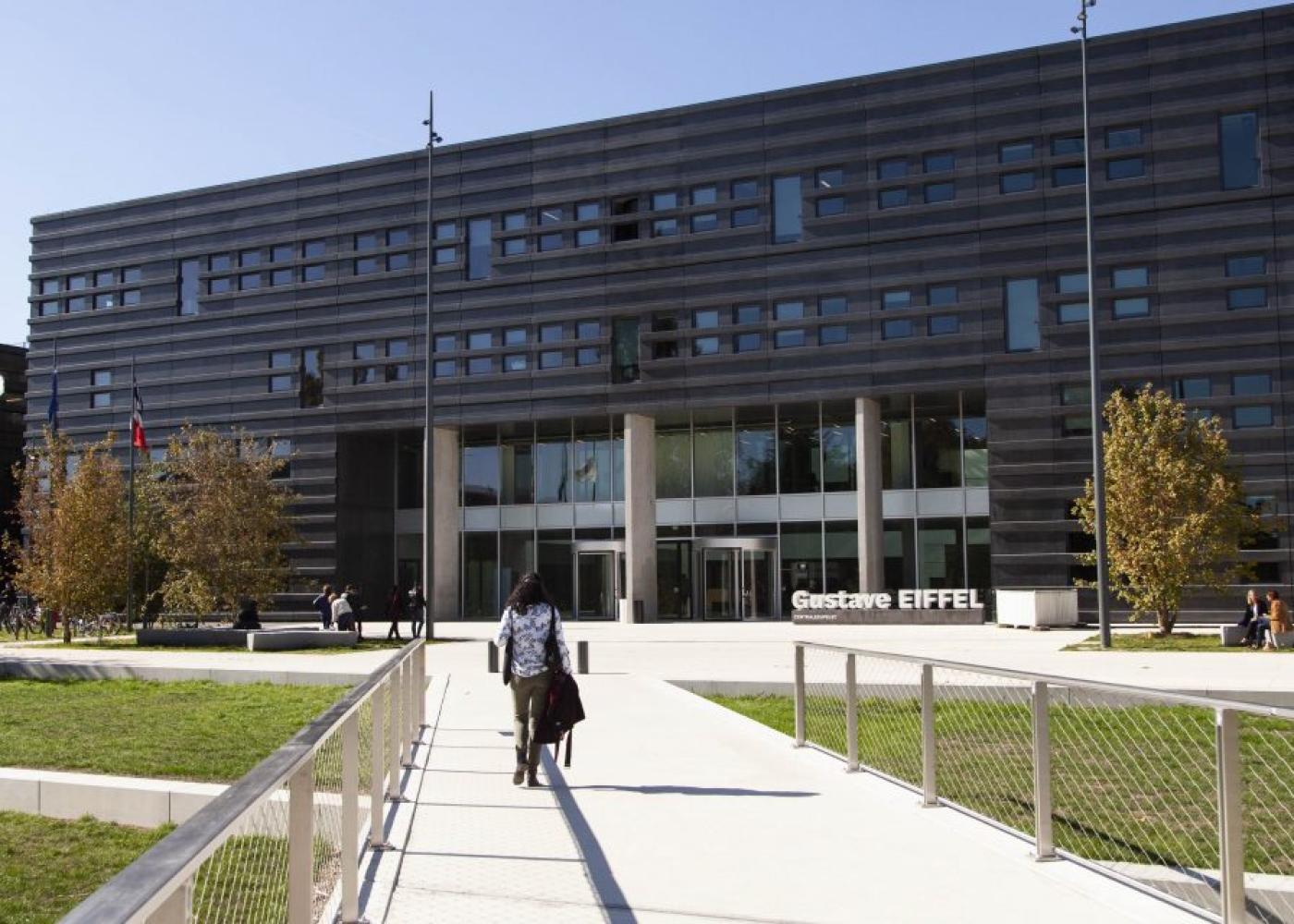
CentraleSupélec is an engineering Grande École, one of the most prestigious in France. It was created on 1 January 2015, through the merger of two historic institutions: École Centrale Paris (founded in 1829, the school of Gustave Eiffel and André Michelin) and Supélec (École supérieure d'électricité, founded in 1894). The main campus is at Gif-sur-Yvette, on the Paris-Saclay science plateau, south of Paris, plus campuses at Metz and Rennes.
CentraleSupélec is a founding member of Université Paris-Saclay, one of the highest-ranked universities in continental Europe in research rankings (Shanghai/ARWU). As an individual institution, CentraleSupélec is consistently among the top engineering schools in France and internationally recognized, especially for employability (its graduates are among the best-paid engineers in France). It has roughly 5,000 students, a high percentage of whom are international.
The Grande École system is very different from a classic university. Its flagship degree is the cycle ingénieur (the "ingénieur diplômé" title, master's equivalent, 3 years, master's level), which you traditionally enter after 2 years of classes préparatoires (prépa) plus the concours Centrale-Supélec, an extremely selective entrance exam. This classic route is hard for a Romanian student to access directly, because it requires doing prépa, usually in France.
For Romanian students who want to enter directly after the Baccalaureate, the realistic route is the Bachelor in Global Engineering (Bachelor en sciences et ingénierie), a 4-year undergraduate program taught entirely in English, run in partnership with McGill University in Montreal: the first 2 years at CentraleSupélec (Paris-Saclay), the last 2 years at McGill. Admission is through Parcoursup (the French national platform), based on an academic application plus a motivation interview, without concours. Note: this is a program separate from the cycle ingénieur, with its own fees (see the costs section). CentraleSupélec is also a partner in a Bachelor AI, Data and Management Sciences together with ESSEC. Always check the current programs and fees on centralesupelec.fr.
How to apply to CentraleSupélec
Choose the route that fits your profile
There are two distinct paths. (A) Bachelor in Global Engineering: directly after the Baccalaureate, in English, through Parcoursup, based on an application plus interview (no concours). (B) Cycle ingénieur: requires 2 years of classes préparatoires (prépa) plus the concours Centrale-Supélec. For a Romanian student applying directly, the realistic route is usually the Bachelor.
(A) Apply to the Bachelor through Parcoursup
The Bachelor in Global Engineering is applied to via Parcoursup, the French national admissions platform, generally between January and March for autumn entry. You upload your high school grades, the Baccalaureate (or predicted grades), your motivation letter and your profile. A solid scientific profile is required, especially in mathematics.
(A) Academic application plus motivation interview
If your application is declared eligible, you are invited to an individual motivation interview (usually online). It assesses your motivation to join the program, the fit of your profile with the requirements, your ability to adapt to an international environment and your professional plans. Very good English is essential (the program is 100 percent in English).
(B) Cycle ingénieur: prépa plus concours
For the engineering title (master's), the classic route is 2 years of classes préparatoires (CPGE) followed by the concours Centrale-Supélec (written plus oral exams). There is also an international concours for those doing prépa outside France, plus admission on credentials (admission sur titre) for those with a bachelor's degree. The admission rate is very low (~8 percent).
Prove the language and prepare your documents
For the Bachelor (English): IELTS, TOEFL or equivalent according to the program's requirement, plus translations of your diploma. For the cycle ingénieur taught in French: proof of French (DELF/DALF B2-C1). Check the exact level required on the program page, as it varies.
Enrollment, housing and EU formalities
As a Romanian (EU) citizen you do not need a study visa in France. After admission is confirmed, you complete the administrative enrollment, pay the fees and arrange housing (CROUS residences or private in the Paris-Saclay area). Apply early for the CAF (APL) housing assistance, also available to EU students. For the Bachelor with McGill, years 3-4 move to Canada (apply for a Canadian study permit).
Costs for Romanians
Bachelor in Global Engineering (with McGill)
Cycle ingénieur (the engineering title)
Excellence
The Fondation CentraleSupélec and the school award excellence scholarships, including for the Bachelor program (Bachelor Global Engineering scholarships), based on academic merit and, sometimes, social criteria. They reduce tuition fees. You apply separately, in parallel with admission; check the deadlines on the foundation's website.
Bourses CROUS
Students may be eligible for needs-based scholarships (bourses sur critères sociaux) and for the CAF (APL) housing assistance, also available to EU citizens. For the cycle ingénieur, certain students with civil-servant-trainee status can even receive a salary. Conditions differ by program.
Erasmus plus
As a student at a French institution, you have access to Erasmus plus for mobility semesters or internships in the EU, with a monthly grant (usually €350-€500/month plus travel support). In addition, as an EU citizen you pay EU/EEA-level fees for the cycle ingénieur, much lower than a non-European student.
Want to apply to CentraleSupélec?
We help you choose the right route (Bachelor in Global Engineering on Parcoursup or preparation for the cycle ingénieur), build your application and motivation letter, and prepare for the interview. Our mentors have been through European admissions. The first mentoring session is 100 percent free.
Talk to a mentorFrequently asked questions
Can I get into CentraleSupélec directly after the Baccalaureate, as a Romanian student?
Yes, but on a specific route. The flagship degree, the cycle ingénieur (the engineering title, master's equivalent), is classically obtained after 2 years of classes préparatoires (prépa) plus the concours Centrale-Supélec, so you do not enter directly from high school. For direct post-bac entry there is the Bachelor in Global Engineering (Bachelor en sciences et ingénierie), a 4-year undergraduate program in English, in partnership with McGill, which you apply to through Parcoursup based on an application plus interview, without concours. For a Romanian student applying directly, the realistic route is the Bachelor.
What is the difference between the Bachelor and the cycle ingénieur at CentraleSupélec?
Bachelor in Global Engineering: a 4-year undergraduate degree, taught in English, the first 2 years at CentraleSupélec (Paris-Saclay) and the last 2 at McGill University (Montreal). Post-bac admission through Parcoursup, application plus interview. High fees (it includes the years at McGill).
Cycle ingénieur: the flagship program of the Grande École, 3 years, master's level (the "ingénieur diplômé" title). Classic access through prépa plus the concours Centrale-Supélec, very selective (~8 percent). Much lower fees (it is a public program). These are two different paths, with different admissions and costs.
What is the concours Centrale-Supélec and how selective is it?
The concours Centrale-Supélec is the entrance exam for the cycle ingénieur, taken after 2 years of classes préparatoires (CPGE). It has written exams (mathematics, physics, chemistry, computer science, depending on the prépa track: MP, MPI, PC, PSI, PT) and then oral exams. The admission rate is very low, around 8 percent of candidates. There is also an international concours for those doing prépa outside France, plus admission sur titre for those who already hold a bachelor's degree. It is one of the most competitive engineering admissions in Europe.
How much do studies at CentraleSupélec cost for a Romanian?
It depends on the route. For the Bachelor in Global Engineering, the years at CentraleSupélec cost indicatively ~€13,000/year for EU citizens (much more for non-EU), and years 3-4 at McGill ~€63,000/year, so the total order of magnitude is high even for Romanians.
For the cycle ingénieur, being a public Grande École degree, the annual fee for EU/EEA citizens is in the order of a few thousand euros per year (indicatively ~€3,500-€4,000), much more affordable, but access requires prépa plus concours. The figures are indicative and change annually; check the exact amounts on centralesupelec.fr.
What scholarships can I get at CentraleSupélec?
Merit scholarships: the Fondation CentraleSupélec and the school award excellence scholarships, including scholarships dedicated to the Bachelor Global Engineering program, based on academic (and sometimes social) criteria, which reduce tuition. State/social scholarships: you may be eligible for bourses sur critères sociaux and for the CAF (APL) housing assistance, also available to EU citizens. Erasmus plus: for mobility within the EU, with a monthly grant (usually €350-€500/month). You apply for scholarships in parallel with admission; deadlines and conditions differ by program, check the foundation's and the school's website.
In what language is it taught and what level do I need?
The Bachelor in Global Engineering is taught entirely in English, so you need very good English (IELTS/TOEFL according to the program's requirement) and the ability to work in an international environment, demonstrated at the interview. The cycle ingénieur is taught largely in French, so you need a solid level of French (usually DELF/DALF B2-C1), although there are more and more courses in English. Check the exact language requirement on the page of the program you are interested in.
Do I need a visa to study in France as a Romanian?
No. As a Romanian citizen you are an EU citizen, so you have the right to study and live in France without a study visa. You only need to complete the administrative enrollment at the school, open a bank account and, if you wish, apply for the CAF (APL) housing assistance. Note: for the Bachelor in Global Engineering, years 3-4 take place at McGill, in Canada, where you will need a Canadian study permit, separate from your EU status.
What prospects do I have after CentraleSupélec?
CentraleSupélec is one of the most recognized engineering schools in France, with very high employability: its graduates are among the best-paid engineers in France and highly sought after in industry, consulting, tech, energy, aerospace and finance. Its alumni include Gustave Eiffel, André Michelin, plus current leaders such as Stéphane Bancel (CEO of Moderna) and Carlos Tavares (former CEO of Stellantis). As an EU citizen you can work freely in France and the rest of the EU after graduation, without a work visa.
Our mentors in Europe
They studied at Bocconi, Sciences Po, TU Delft, ETH Zurich and other EU universities. Now they guide you.


