
University of Copenhagen
Founded in 1479, the oldest and best university in Denmark and a Nordic leader. Ranked 101 in QS World 2026. Roughly 37,000 students, of whom about 17 percent are international. As an EU/EEA citizen you study for FREE, with no tuition fee. Strong in life sciences, medicine, sciences, law and humanities.
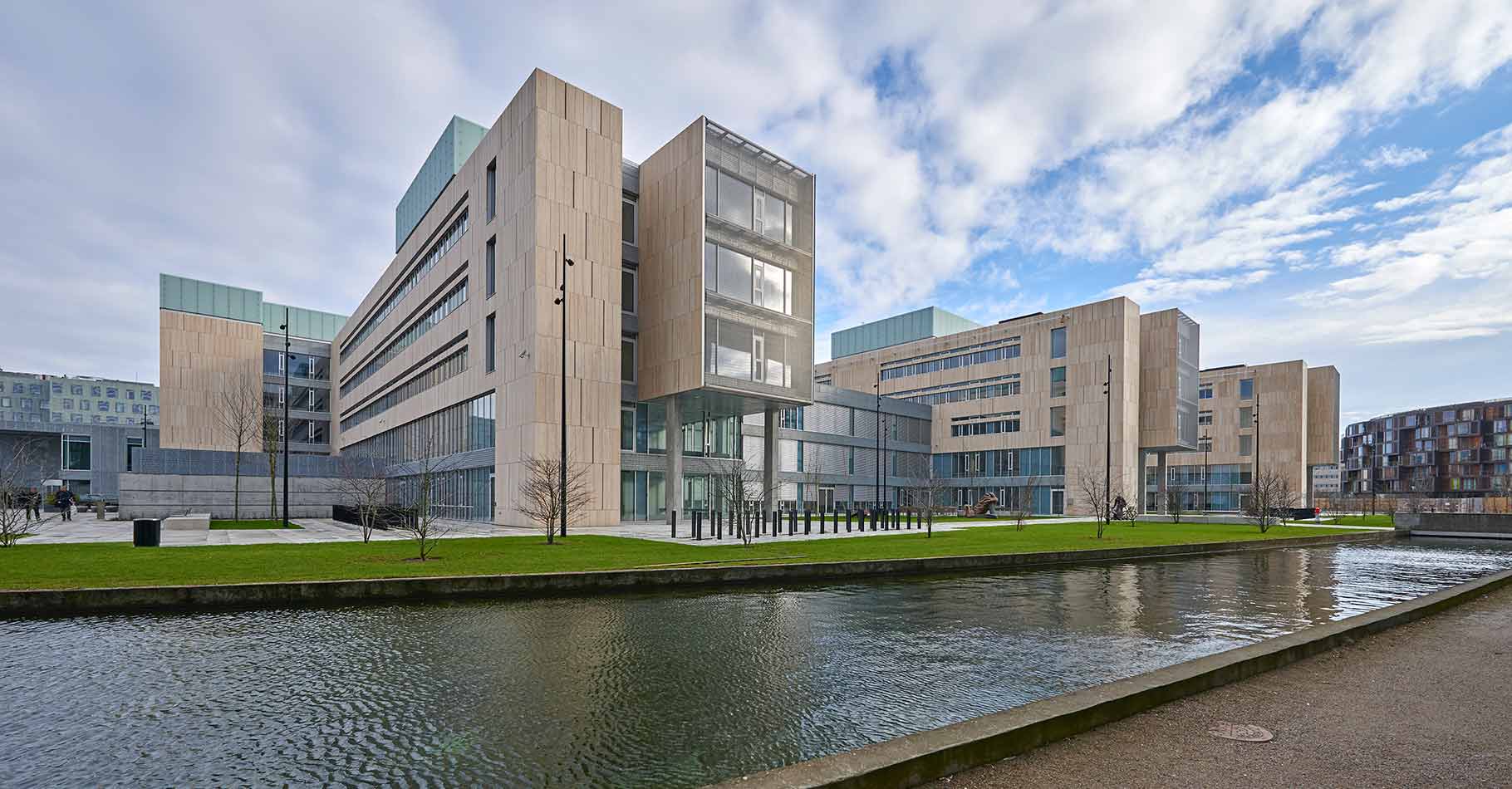
About the University of Copenhagen
University of Copenhagen (in Danish Københavns Universitet, abbreviated UCPH or KU) is a public university founded in 1479, the oldest higher education institution in Denmark, with over 540 years of tradition. It is number 1 in Denmark and one of the strongest universities in the Nordic region, consistently in the European top 5 across several rankings. Its campuses are spread across central Copenhagen, one of the safest, greenest and most student-friendly capitals in Europe.
UCPH is QS World 2026 number 101 globally and present in the global Times Higher Education and Shanghai (ARWU) rankings. It has 6 faculties: Health and Medical Sciences, Science, Social Sciences, Humanities, Law and Theology. Roughly 37,000 students, of whom about 17 percent are international. Among the 10 associated Nobel laureates are Niels Bohr (physics) and August Krogh (medicine). The university is a member of IARU (International Alliance of Research Universities), alongside Cambridge, Yale, ANU and Oxford.
Strong specializations at UCPH: life sciences (biology, biotechnology, veterinary sciences, agronomy), medicine and health sciences, natural sciences (physics, chemistry, mathematics, computer science, environmental sciences), law, social sciences (economics, political science, sociology) and humanities (linguistics, history, philosophy, Nordic studies). Copenhagen is a strong hub for pharma and biotech (Novo Nordisk, Lundbeck), and the university works closely with industry.
For international students, important to know: at bachelor level, almost all UCPH programs are taught in Danish, so you need Danish at academic level (the Studieprøven test). Programs in English are far more numerous at master level (over 50 master's programs in English). The big advantage: as an EU/EEA citizen you study for FREE, with no tuition fee, unlike non-EU students who pay between DKK 45,000 and DKK 120,000 per year. The bachelor follows the European Bologna system: 3 years / 180 ECTS.
How to apply to UCPH
Choose your program and check the language (EN or DA)
First step: choose your program on ku.dk and check the language of instruction. At bachelor level, most programs are in Danish (Studieprøven required), while the offer in English is far broader at master level (50 plus programs). Check the specific subject requirements (for example Mathematics level A, Physics, Chemistry) for your target program.
Apply through Optagelse.dk (the KOT system)
Bachelor applications are made through the national portal Optagelse.dk, part of the coordinated admission system KOT. As an applicant with a diploma from outside Denmark, the deadline is 15 March (earlier than the 5 July deadline for Danes). There are kvote 1 (based on grade average only, converted GPA) and kvote 2 (test plus admission interview).
Prove your English or Danish
For programs in English (especially at master level) you need IELTS 6.5 plus or an equivalent TOEFL iBT. For programs in Danish (most bachelors) you need Studieprøven i dansk (the Danish as a foreign language test at academic level) or Dansk A. The Romanian Baccalaureate is recognized: converted GPA of at least 6.0 on the Danish scale.
CPR registration as an EU citizen
As a Romanian citizen (EU/EEA), you do not need a study visa. After arriving in Denmark, you apply for the EU registration certificate (EU residence document) at SIRI and register for a CPR number (the Danish personal identification number), needed for banking, free medical insurance and subscriptions. Documents: ID card or passport, proof of admission, proof of accommodation.
SU (Danish state grant) if you work part-time
As an EU citizen you can become eligible for SU (Statens Uddannelsesstøtte), the monthly Danish state grant, if you work part-time at least 10-12 hours per week (EU worker status). SU amounts to roughly DKK 6,800 per month. Plus, you automatically have the right to work in Denmark without a permit, so you can combine study with a part-time job.
Enrolment and start of studies (September)
The admission response arrives at the end of July. After acceptance, you enrol online and book your accommodation (housing foundation or private) at least 2-3 months in advance, as Copenhagen has a competitive rental market. The academic year starts in early September, with an orientation week (intro week) for new students.
Costs for students
Tuition (EU/EEA citizens vs non-EU)
Cost of living in Copenhagen (monthly)
Free as an EU citizen
As a Romanian citizen (EU/EEA), you automatically pay zero tuition, identical to a Danish student. You do not need to do anything special, just prove Romanian citizenship with an ID card or passport. That means savings of €6,000-€16,000 per year compared with a non-EU student, simply by being an EU citizen.
SU plus Erasmus+
SU (Statens Uddannelsesstøtte): the monthly Danish state grant, roughly DKK 6,800 per month, available to EU citizens who work part-time (worker status). Erasmus+: if you come initially on exchange for 1-2 semesters, you receive a monthly European grant. Plus, you automatically have the right to work in Denmark without a permit, so you can combine study with a job.
Denmark scholarship
As a Romanian student admitted to a Danish public university, you can apply for the Denmark scholarship from the Romanian Ministry of Education and for local scholarships (many town halls in Romania have programs for their students abroad). Also check UCPH mobility scholarships. Important: these scholarships stack with SU and are applied for in parallel.
Want to apply to the University of Copenhagen?
We help you choose the right program (English or Danish), get your Baccalaureate recognized, apply on Optagelse.dk and benefit from free tuition as an EU citizen. Our mentors in Europe have been through the process. The mentoring session is 100% free.
Talk to a mentorFrequently asked questions
How much does the University of Copenhagen cost for an EU student?
As an EU/EEA citizen, you study for FREE: tuition €0 per year, exactly like a Dane. A non-EU student pays between DKK 45,000 and DKK 120,000 per year (roughly €6,000-€16,000). The only real cost for you is living in Copenhagen: roughly DKK 8,000-11,000 per month (accommodation DKK 4,000-7,000, food DKK 2,000-2,800, transport DKK 400-500). Copenhagen is among the most expensive cities in Europe for cost of living, but zero tuition plus the right to work offsets a lot.
Are UCPH bachelor programs in English or in Danish?
At bachelor level, almost all University of Copenhagen programs are taught in Danish, so you need Danish at academic level, proven through the Studieprøven i dansk test. The offer in English is far broader at master level: over 50 master's programs in English. For students who want to study in English right away at bachelor level, alternatives may be other Danish universities with more bachelors in English, but UCPH remains the best university in Denmark. A good strategy: a bachelor in English elsewhere, then a master in English at UCPH.
How do I apply to UCPH through Optagelse.dk and KOT?
Bachelor applications are made through the national portal Optagelse.dk, part of the coordinated admission system KOT. As an applicant with a diploma from outside Denmark, the deadline is 15 March at 12:00 (earlier than the 5 July deadline for Danish graduates). There are two paths: kvote 1 (admission based on grade average only, GPA converted to the Danish scale), where you are eligible if you have a diploma from the EU/EEA, IB or European Baccalaureate; and kvote 2 (admission test plus interview). Minimum converted GPA required: 6.0 on the Danish scale.
Is the Romanian Baccalaureate accepted at the University of Copenhagen?
Yes. The Romanian Baccalaureate is recognized, being a diploma from the EU/EEA. Your average is converted to the Danish scale (the Danish 7-point grading scale), and for kvote 1 the converted GPA must be at least 6.0. Pay attention to specific subject requirements: many programs require certain subjects at a certain level (for example Mathematics level A, Physics, Chemistry, Biology), not just a good average. Check the exact requirements on the program page on ku.dk. For programs in Danish you additionally need Studieprøven, and for those in English IELTS 6.5 plus.
Can I receive SU, the Danish state grant, as an EU student?
Yes, conditionally. SU (Statens Uddannelsesstøtte) is the monthly Danish state grant, roughly DKK 6,800 per month. As an EU citizen, you become eligible for SU if you work part-time in Denmark (generally at least 10-12 hours per week), because you acquire EU worker status. Many students combine free study with a part-time job in order to receive SU and cover their cost of living. As an EU citizen you automatically have the right to work in Denmark without a work permit, which makes this easy to arrange.
Do I need a visa or a CPR to study in Denmark?
You do not need a study visa as a Romanian citizen (EU/EEA). You do, however, need two administrative things after arrival: the EU registration certificate (EU residence document, applied for at SIRI, the Danish immigration authority) and a CPR number (Det Centrale Personregister), the Danish personal identification number. CPR opens up access to free medical insurance, a bank account, a transport pass and SU. Required documents: Romanian ID card or passport, proof of admission to UCPH and proof of accommodation.
How long is the bachelor at UCPH and what about the ECTS system?
Bachelors at the University of Copenhagen last 3 years (180 ECTS), following the European Bologna system. That is one year less than in Spain (4 years) and the same as in the UK (3 years). ECTS (European Credit Transfer System): 1 ECTS is roughly equal to 25-30 hours of total study. A standard academic year has 60 ECTS, so 2 semesters. After the bachelor, many students continue with a 2-year master (120 ECTS), where the offer in English at UCPH is very broad (over 50 programs). ECTS advantage: you can transfer credits to other European universities.
Can I stay in Denmark to work after graduation?
Yes, as an EU citizen you automatically have the right to work and live in Denmark without a visa or work permit. Denmark has one of the strongest economies in the EU, with solid hubs in pharma and biotech (Novo Nordisk, Lundbeck, Genmab), tech (Unity, Zendesk, Maersk digital), shipping and logistics (Maersk), renewable energy (Ørsted, Vestas) and design. Salaries are among the highest in Europe, and English is spoken at a very high level in the professional environment. With a UCPH degree (EU), you can work anywhere in the European Union without a visa.
Our mentors in Europe
They studied at Bocconi, Sciences Po, TU Delft, ETH Zurich and other EU universities. Now they guide you.

