
Erasmus University Rotterdam
Founded in 1913, one of Europe's strongest public universities in business, economics and management (Rotterdam School of Management, Erasmus School of Economics), plus medicine through Erasmus MC. QS World 2026 number 140. Around 32,000 students. As an EU citizen you pay the statutory EU tuition of approximately €2,694 per year, and many bachelor programmes are 100 percent in English.
About Erasmus University Rotterdam
Erasmus University Rotterdam (EUR) is a public university founded in 1913, originally under the name Nederlandsche Handels-Hoogeschool (Netherlands School of Commerce), on the initiative of the Rotterdam business community. It received its current name, after the humanist Erasmus of Rotterdam, in 1973, following a merger with the medical faculty. The name sums up the university's identity well: an institution oriented toward economics, business and health, anchored in Europe's largest port.
EUR is QS World 2026 number 140 and one of the top universities in the Netherlands. Its global reputation comes first and foremost from business, economics and management. Rotterdam School of Management (RSM) and Erasmus School of Economics (ESE) are consistently ranked among the best in continental Europe: in QS by subject, the university appears very high in Business and Management and in Economics and Econometrics. RSM holds triple accreditation (AACSB, EQUIS, AMBA), a rare standard worldwide.
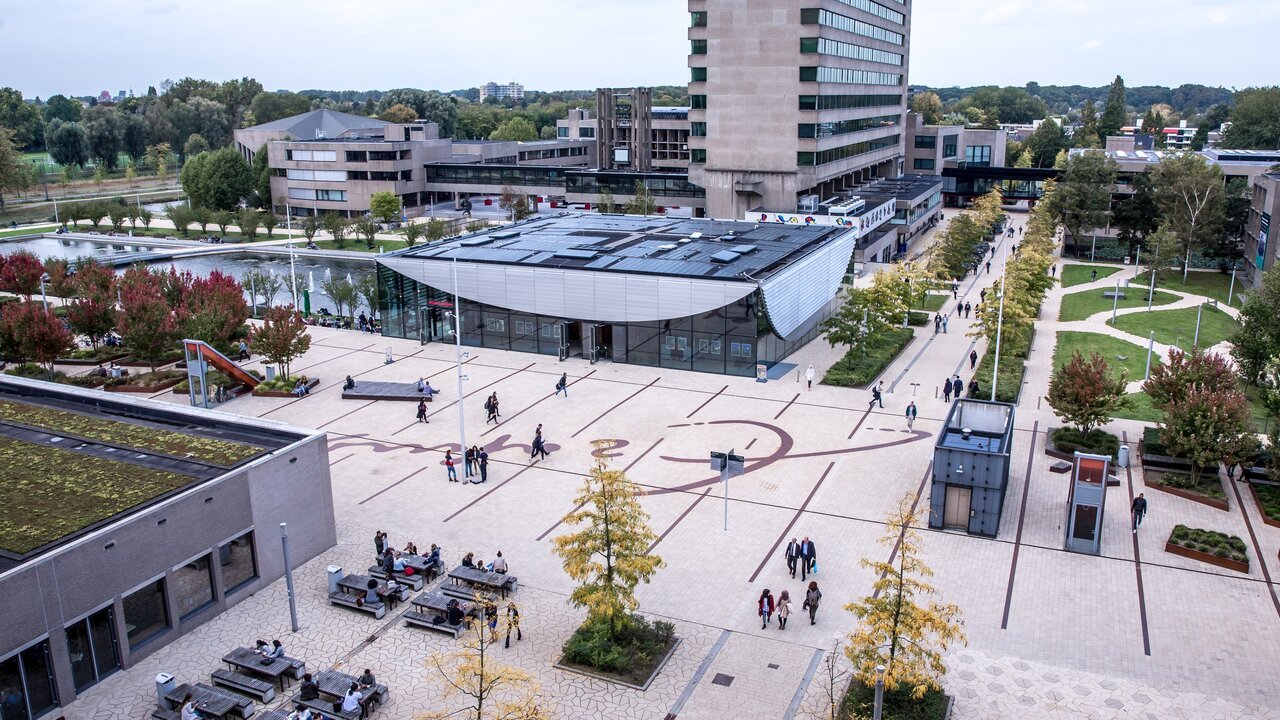
Beyond business, EUR has Erasmus MC, one of the largest and most highly regarded university medical centres in Europe, as well as strong schools of law (Erasmus School of Law), social sciences, philosophy, history and communication, public health and management. The main campus, Woudestein, is one of the most modern in the Netherlands, with architecturally award-winning buildings, while the medical faculty operates next to the Erasmus MC hospital.
For Romanian students, EUR is one of the most accessible routes to a strong Western European university. As an EU citizen you pay the statutory EU tuition of approximately €2,694 per year (2026-2027), not the institutional tuition of €8,000-€12,000 per year paid by non-Europeans. Many bachelor programmes are entirely in English: International Business Administration (IBA, at RSM), International Bachelor Economics and Business Economics (IBEB, at ESE), International Bachelor of Psychology and others. Important: the most sought-after programmes have numerus fixus (a limited number of places) and selection, and you apply through Studielink with a 15 January deadline. Bachelor degrees last 3 years (180 ECTS), as in the rest of the Netherlands.
How to apply to EUR
Choose your programme and check numerus fixus
The most sought-after English-taught bachelor programmes have numerus fixus (limited places) plus selection. Examples: IBA at Rotterdam School of Management (~750 places), IBEB at Erasmus School of Economics (~700 places), International Bachelor of Psychology. Check on eur.nl whether your programme has numerus fixus, what documents it requires and what selection method it uses.
Apply through Studielink (15 January deadline)
For programmes with numerus fixus, the application deadline is 15 January, without exception. You create an account on Studielink (the Dutch national portal), select the EUR programme and then complete your application in the university's application portal. With a non-Dutch diploma you pay a processing fee of €100 (non-refundable, regardless of the outcome).
Prove your English (IELTS / TOEFL)
For the 100 percent English-taught programmes you need a language test: generally IELTS 6.5-7.0 or TOEFL iBT 90-100, depending on the programme. Some faculties accept an equivalent (Cambridge C1 Advanced). Check the exact threshold for your programme; RSM and ESE usually require the higher level.
Submit your application and pass selection (matching)
For programmes with selection, the application usually includes high school grades, a motivation letter, a CV and, for some programmes, an online test or written assignment. The university produces a ranking of candidates and offers places within the numerus fixus limit. The selection result generally comes by 15 April. The Romanian Baccalaureate is accepted as a qualifying diploma (for quantitative programmes, mathematics at the required level is needed).
Register as an EU citizen (BSN)
As a Romanian (EU) citizen you do not need a study visa. After arriving in the Netherlands you register at the Rotterdam city hall (Gemeente) and receive a BSN (Burgerservicenummer, the Dutch identification number), required for a bank account, insurance and a part-time job. You need proof of admission, a passport or ID card and an address in the Netherlands.
Pay EU tuition and complete enrolment
Once you are admitted and have a BSN, you finalise enrolment in Studielink: you confirm your diploma and arrange payment of the statutory EU tuition (~€2,694/year), by direct debit (machtiging) or in full. The academic year starts in early September. EUR has an orientation week (Eurekaweek / introduction days) for international freshers.
Costs for Romanians
EU tuition 2026-27 (EU citizens)
Total cost per year (all in)
Statutory EU tuition
As a Romanian (EU) citizen you automatically pay the statutory EU tuition, approximately €2,694 per year, identical to that of a Dutch student. You only prove EU citizenship with a passport or ID card. Compared with the non-EU tuition of €8,100-€12,700 per year, you save several thousand euros annually simply because you are an EU citizen.
Studiefinanciering
EU students who work in the Netherlands at least 56 hours per month can become eligible for Dutch support called studiefinanciering (DUO): a low-interest loan plus, under certain conditions, an additional grant. The student public transport pass for those eligible (OV-chipkaart) can greatly reduce travel costs.
Merit and external scholarships
EUR and its schools (RSM, ESE) offer some merit scholarships, and at national level there is the Holland Scholarship for certain categories. As a Romanian student you also have access to Erasmus+ for mobility, plus possible scholarships from your city or county in Romania. Important: most scholarships are applied for separately and have their own deadlines, in parallel with admission.
Want to apply to Erasmus Rotterdam?
We help you choose the right programme (IBA, IBEB or another), navigate numerus fixus and selection, apply correctly through Studielink by 15 January and take advantage of the statutory EU tuition (~€2,694/year). Our mentors have been through the process. The first mentoring session is 100% free.
Talk to a mentorFrequently asked questions
How hard is it to get into Erasmus University Rotterdam?
It depends a lot on the programme. Many of the sought-after English-taught bachelor programmes have numerus fixus (limited places) plus selection, so you compete on a ranking of candidates. IBA at Rotterdam School of Management has approximately 750 places, and IBEB at Erasmus School of Economics approximately 700 places. Selection looks at high school grades, motivation and, for some programmes, an online test or written assignment. Recommended profile for Romanians: a general Baccalaureate average of 8.5 plus, solid mathematics for quantitative programmes (IBEB requires mathematics at the appropriate level) and a well-constructed motivation letter. The application deadline for numerus fixus is 15 January, with no extensions.
How much does Erasmus Rotterdam cost for Romanians exactly?
As an EU citizen, you pay the statutory EU tuition: approximately €2,694 per year in 2026-2027, identical to that of a Dutch student. Across the full 3-year bachelor, EU tuition comes to approximately €8,082. For comparison, a non-EU student pays the institutional tuition of approximately €8,100-€12,700 per year, depending on the programme. When applying with a non-Dutch diploma there is also a processing fee of €100 (one-off, non-refundable). Cost of living in Rotterdam: accommodation €500-€900 per month, food €250-€400 per month, transport and insurance €150-€250 per month. Estimated total per year: ~€13,000-€18,000, dramatically below the UK or USA.
What do numerus fixus and selection mean at EUR?
Numerus fixus means the programme has a maximum number of places set by law (for example ~750 at IBA, ~700 at IBEB). Because demand exceeds the places, selection applies: the university evaluates all candidates against announced criteria (high school grades, motivation letter, CV, sometimes an online test or written assignment) and ranks them in a ranking. Places are offered in the order of this ranking. Important: for numerus fixus programmes, the application deadline is 15 January, earlier than for programmes without numerus fixus, and the result generally comes by 15 April.
Are the bachelor programmes at EUR in English?
Yes, EUR has a wide range of 100 percent English-taught bachelor programmes, designed for international students. The best known: International Business Administration (IBA) at Rotterdam School of Management, International Bachelor Economics and Business Economics (IBEB) at Erasmus School of Economics, International Bachelor of Psychology, plus programmes in social sciences, communication, health and management. For these you need an English test, generally IELTS 6.5-7.0 or TOEFL iBT 90-100, depending on the programme. There are also programmes taught in Dutch, but for Romanians the natural route is the English-taught programmes. WIB note: the Dutch Wet internationalisering in balans law, currently being phased in, aims to rebalance internationalisation and may gradually reduce some English-taught programmes; check the exact language of your programme when you apply.
What are the strongest programmes at EUR for Romanians?
EUR is recognised globally first and foremost in business, economics and management. Rotterdam School of Management (RSM) holds triple accreditation (AACSB, EQUIS, AMBA) and ranks very high in QS by subject in Business and Management. Erasmus School of Economics (ESE) is one of the most highly regarded in Europe in Economics and Econometrics. Beyond these, EUR has Erasmus MC, one of the largest university medical centres in Europe, plus strong schools of law, social sciences, philosophy, history and communication, public health and management. For Romanians interested in business, finance, economics or medicine, EUR is one of the best choices in continental Europe.
How do I apply through Studielink and what deadlines apply?
Studielink is the Dutch national portal through which you enrol at any public university in the Netherlands. Steps: you create an account on Studielink, select the EUR programme, then complete the detailed application in the university's application portal (grades, motivation letter, CV, English proof). With a non-Dutch diploma you pay a processing fee of €100. Deadlines: for numerus fixus programmes, applications close on 15 January, without exception. The selection result generally comes by 15 April. For programmes without numerus fixus the deadline is later (usually 1 May), but for the popular bachelor programmes at EUR you almost always deal with numerus fixus, so 15 January.
Can I stay in the Netherlands after graduation?
Yes, as an EU citizen. Unlike the UK or USA, as a Romanian (EU) citizen you automatically have the right to work in the Netherlands without a visa, both during your studies (part-time) and after graduation. The Netherlands has a strong economy and high demand for graduates in finance, consulting, logistics, tech and health, with many jobs available in English. Rotterdam, Europe's largest port, plus its proximity to Amsterdam and The Hague, offers access to international employers (Unilever, many banks, consulting firms, logistics and transport companies). With an EUR degree and EU citizenship, you can later work anywhere in the EU without a visa.
How long does a bachelor at EUR take and how does ECTS work?
Bachelor degrees at EUR last 3 years (180 ECTS), in line with the European Bologna system and the Dutch model, one year shorter than in Spain or Germany on many programmes and the same duration as in the UK. ECTS (European Credit Transfer System): 1 ECTS means approximately 25-30 hours of total study (lectures plus individual work), and a standard academic year has 60 ECTS (2 semesters x 30 ECTS). To obtain the degree you must accumulate 180 ECTS, including a final project (bachelor thesis). Advantage: ECTS credits are recognised across Europe, useful for Erasmus+ mobility and for continuing to a master's degree anywhere in the EU.
Our mentors from Europe
They studied at Bocconi, Sciences Po, TU Delft, ETH Zurich and other EU universities. Now they guide you.

