
Utrecht University
Founded in 1636, one of the oldest universities in the Netherlands. QS World 2026 number 103 globally, 3rd in the Netherlands. Around 39,000 students. As an EU citizen you pay the statutory EU fee of EUR 2,694 per year, drastically lower than a non-European. Strong in life sciences, geosciences, law and liberal arts (University College Utrecht).
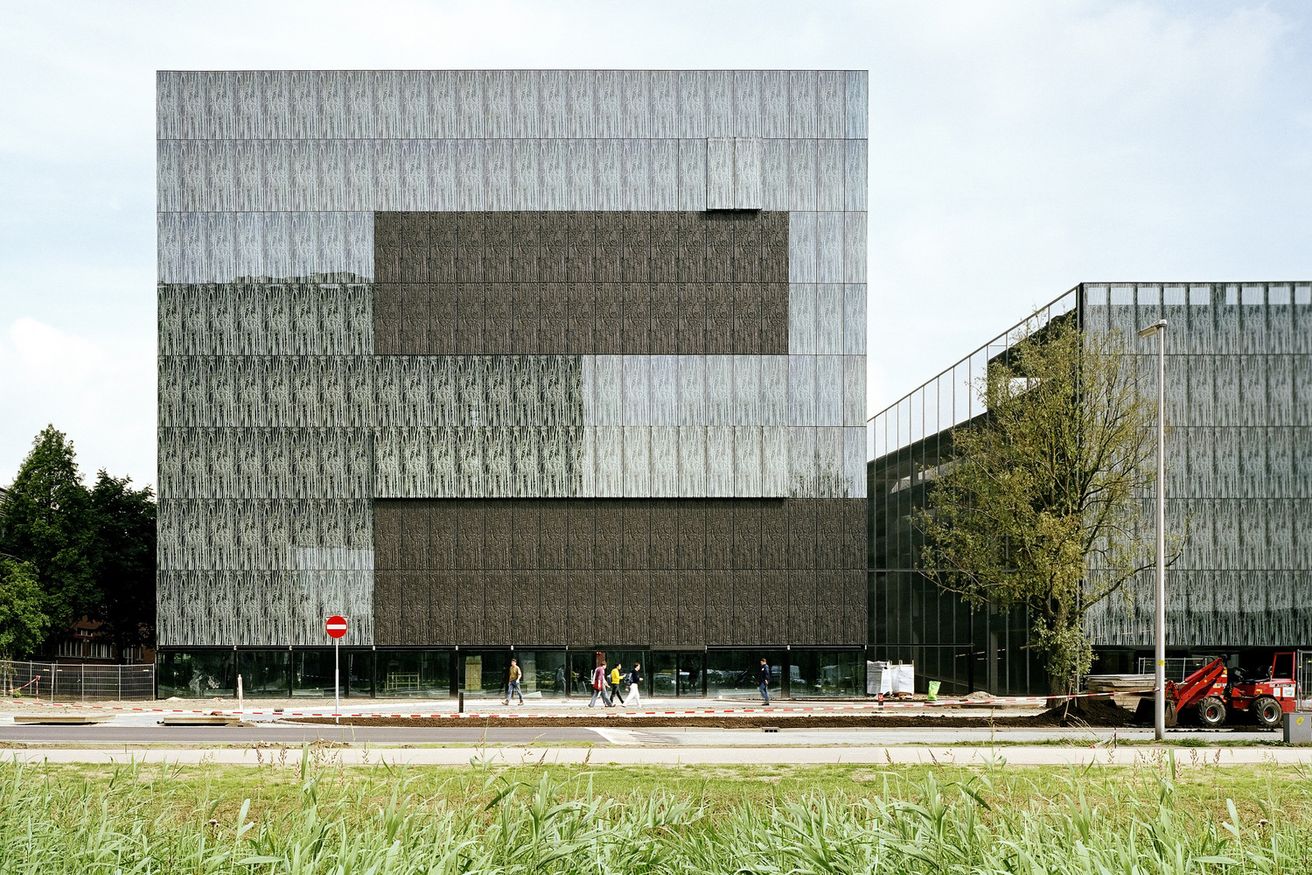
About Utrecht University
Utrecht University (Universiteit Utrecht) is a comprehensive public university, founded in 1636, one of the oldest and largest higher education institutions in the Netherlands. It is located in Utrecht, a historic student city in the centre of the country, around 30 minutes from Amsterdam by train. The main campus, Utrecht Science Park (De Uithof), is one of the largest research and education hubs in Europe, while the historic buildings in the city centre house the faculties of law, humanities and governance.
In the QS World University Rankings 2026, Utrecht is 103rd globally and 3rd in the Netherlands, after TU Delft and the University of Amsterdam. It has around 39,000 students and a strong international community, with students from dozens of countries. The university counts 12 Nobel laureates among its alumni and faculty, plus recipients of the Spinoza, Wolf and Pulitzer prizes.
Strong specialisations at Utrecht: life sciences (biology, biomedicine, veterinary medicine), geosciences (Utrecht is consistently among the world's best in earth sciences and water resources), natural sciences (chemistry, physics, mathematics, computer science), law, social sciences and psychology, plus public administration, a field in which it ranks very highly worldwide. Utrecht offers bachelor's programmes taught entirely in English (Liberal Arts and Sciences, Economics and Business Economics, Molecular and Biophysical Life Sciences, Artificial Intelligence, History and Philosophy of Science and others).
A gem of Utrecht is University College Utrecht (UCU), a liberal arts and sciences college where around 750 students live on an international residential campus, with small classes (on average 20 students) and over 50 percent international students from more than 70 nationalities. At UCU you build your own curriculum, combining sciences, social sciences and humanities, all in English.
For international students, Utrecht is one of the best opportunities in Europe. As an EU citizen you pay the statutory EU fee: EUR 2,694 per year for the 2026-2027 academic year, compared with the much higher institutional fees paid by non-Europeans. Classic bachelor's degrees last 3 years (180 ECTS), and the language of instruction for international programmes is English. You apply through the Dutch national platform Studielink, and some programmes have a Numerus Fixus (a limited number of places with selection).
How to apply to Utrecht
Choose your programme and check Numerus Fixus
Utrecht offers many bachelor's degrees in English (Liberal Arts and Sciences, Economics and Business Economics, Artificial Intelligence, Molecular Life Sciences and others). Check on uu.nl whether your programme has a Numerus Fixus (a limited number of places with selection) or standard admission. Numerus Fixus programmes have an earlier deadline, usually 15 January.
Register on Studielink
Applications in the Netherlands are centralised through Studielink, the national portal. You create an account (with DigiD if you have one or with European authentication), choose your programme at Utrecht and submit your request. Studielink then sends the data to the university, which opens your application in its internal system (OSIRIS).
Prove your English (IELTS / TOEFL)
For English-taught programmes you need proof of language: typically IELTS 6.5 (with a minimum of 6.0 on each component) or TOEFL iBT 90, or Cambridge C1 Advanced. University College Utrecht usually requires a slightly higher level. An English subject on a school-leaving diploma does not replace the standardised test.
Selection and matching
For Numerus Fixus programmes and at University College Utrecht there is a selection procedure (motivation letter, essays, sometimes an interview, academic record). For programmes without Numerus Fixus, the Netherlands has a compulsory matching: an orientation activity that confirms how well you fit the programme, but which is usually not eliminatory.
Registration as an EU citizen (BSN)
As an EU citizen you do not need a study visa. After arriving in Utrecht you register with the municipality (gemeente) and obtain a BSN (Burgerservicenummer), the Dutch identification number, needed for a bank account, insurance and a part-time job. You need your passport or national ID card, proof of admission and your housing contract.
Enrolment and tuition payment
After admission you confirm your place in Studielink, sign the tuition payment mandate (EUR 2,694 per year for EU citizens, payable in full or in monthly instalments) and complete your enrolment. The academic year begins in early September, with an introduction week (UIT) for new students. Arrange your housing early, as the Utrecht market is very competitive.
Costs for EU students
EU tuition 2026-27 (EU citizens)
Total cost per year (estimate)
Statutory EU fee
As an EU citizen, you automatically pay the statutory EU fee of EUR 2,694 per year (2026-2027), identical to that of a Dutch student. You do not have to do anything special, just prove your EU citizenship with your passport or national ID card. Non-Europeans pay the institutional fee, several times higher.
European scholarships
The Utrecht Excellence Scholarship and other merit scholarships (especially at master's level) support students with very strong results. Erasmus+ offers a monthly grant if you come for an exchange of 1-2 semesters. Also check the Dutch tuition loan (collegegeldkrediet via DUO), available to EU students under certain conditions.
Home-country scholarships
As a student admitted to a public university abroad, you may be able to apply for scholarships from your home country's education ministry and for scholarship programmes run by certain local authorities or foundations. Important: these scholarships can often be combined with Dutch support, but they must be applied for separately and well in advance.
Want to apply to Utrecht?
We help you choose the right programme, navigate Studielink and any Numerus Fixus, prepare for IELTS and the selection file, and take advantage of the statutory EU fee (€2,694/year). Our mentors have been through the process. The mentoring session is 100 percent free.
Talk to a mentorFrequently asked questions
How hard is it to get into Utrecht University as an international student?
It depends a lot on the programme. For bachelor's degrees without Numerus Fixus, admission is relatively accessible if you meet the academic (a solid school-leaving diploma) and language (IELTS 6.5) requirements. For Numerus Fixus programmes and for University College Utrecht there is a selection procedure (motivation letter, essays, academic record, sometimes an interview), so competition is higher. For international applicants, the recommendation is a strong grade average (a good final average, ideally near the top for competitive programmes) plus a clear motivation profile.
How much does Utrecht University cost for EU students exactly?
As an EU citizen, you pay the statutory EU fee: EUR 2,694 per year for the 2026-2027 academic year. A classic bachelor's degree lasts 3 years (180 ECTS), so total tuition is approximately EUR 8,082. University College Utrecht (liberal arts, residential campus) has a higher fee, around EUR 5,591 per year for EU students. Living costs in Utrecht: housing EUR 450-750 per month, food EUR 250-350 per month, transport and other EUR 100-150 per month. Estimated total per year: ~EUR 12,000-16,000, drastically lower than the UK or the USA.
Are the bachelor's programmes at Utrecht in English?
Yes, Utrecht has a solid set of bachelor's degrees taught entirely in English: Liberal Arts and Sciences (at University College Utrecht), Economics and Business Economics, Molecular and Biophysical Life Sciences, Artificial Intelligence, History and Philosophy of Science and others. Many other programmes are taught in Dutch, so check the language on each programme's page at uu.nl. For English-taught programmes you need proof of language (typically IELTS 6.5 or TOEFL iBT 90). WIB note: the Dutch Wet internationalisering in balans law, currently being phased in, aims to rebalance internationalisation and may gradually reduce some English-taught programmes; check the exact language of your programme when you apply.
What is Numerus Fixus and how does it affect me?
Numerus Fixus means a limited number of places on certain programmes, with a selection procedure. For these programmes the application deadline through Studielink is earlier (usually 15 January), and the university ranks you on the basis of certain criteria (academic record, motivation, sometimes tests or essays). If your programme does not have Numerus Fixus, you generally have a more relaxed deadline and a matching procedure (orientation), which confirms how well you fit the programme but is usually not eliminatory.
What is University College Utrecht and who is it suitable for?
University College Utrecht (UCU) is the university's liberal arts and sciences college, with around 750 students on an international residential campus. Classes are small (on average 20 students), over 50 percent of students are international from more than 70 nationalities, and everything is taught in English. At UCU you build your own curriculum, combining sciences, social sciences and humanities. It suits curious students with a broad profile who want an intense, international and flexible experience. Admission is by selection.
How do I apply to Utrecht through Studielink?
Studielink is the Dutch national application portal. The steps: 1) choose your programme on uu.nl and check whether it has Numerus Fixus; 2) create an account on Studielink and submit your request for your chosen programme at Utrecht; 3) Studielink sends the data to the university, which opens your application in its internal system (OSIRIS), where you upload your documents (diploma or transcript of grades, proof of English, motivation letter where required); 4) you go through the selection or matching, as applicable; 5) upon admission you confirm your place and complete enrolment. Deadlines: 15 January for Numerus Fixus, later (usually May-June) for the rest, but apply early.
Is the Romanian Baccalaureate accepted at Utrecht?
Yes, the Romanian Baccalaureate is recognised for admission to Utrecht's bachelor's degrees, as the equivalent of the Dutch VWO diploma. For certain programmes (especially sciences) specific subjects at an advanced level are required: for example mathematics for exact sciences, economics or AI, or mathematics, chemistry and biology for the life sciences. Check the exact requirements on each programme's page. The Baccalaureate does not replace the English test (IELTS or TOEFL), which remains mandatory for English-taught programmes.
Can I stay in the Netherlands after graduating from Utrecht?
Yes, as an EU citizen! Unlike the UK or the USA, as an EU citizen you have the automatic right to work in the Netherlands without a visa or work permit. The Netherlands has a strong economy and an English-speaking job market, especially in the Randstad area (Amsterdam, Utrecht, Rotterdam, The Hague), with hubs in tech, life sciences, sustainability, logistics and finance. Many international companies work in English. With a degree from Utrecht (a university recognised across the EU) you can work anywhere in the European Union without a visa.
Our mentors from Europe
They studied at Bocconi, Sciences Po, TU Delft, ETH Zurich and other EU universities. Now they guide you.

