
Heidelberg University
Founded in 1386, the oldest university in Germany (over 630 years). QS World 2026 ranks it number 80 globally and number 3 in Germany. Around 30,000 students, of whom over 5,000 are international (~20 percent). Strong in medicine, life sciences, physics, law and the humanities. As an EU citizen (Romanian) you pay EUR 0 tuition in Baden-Württemberg, only the semester contribution.
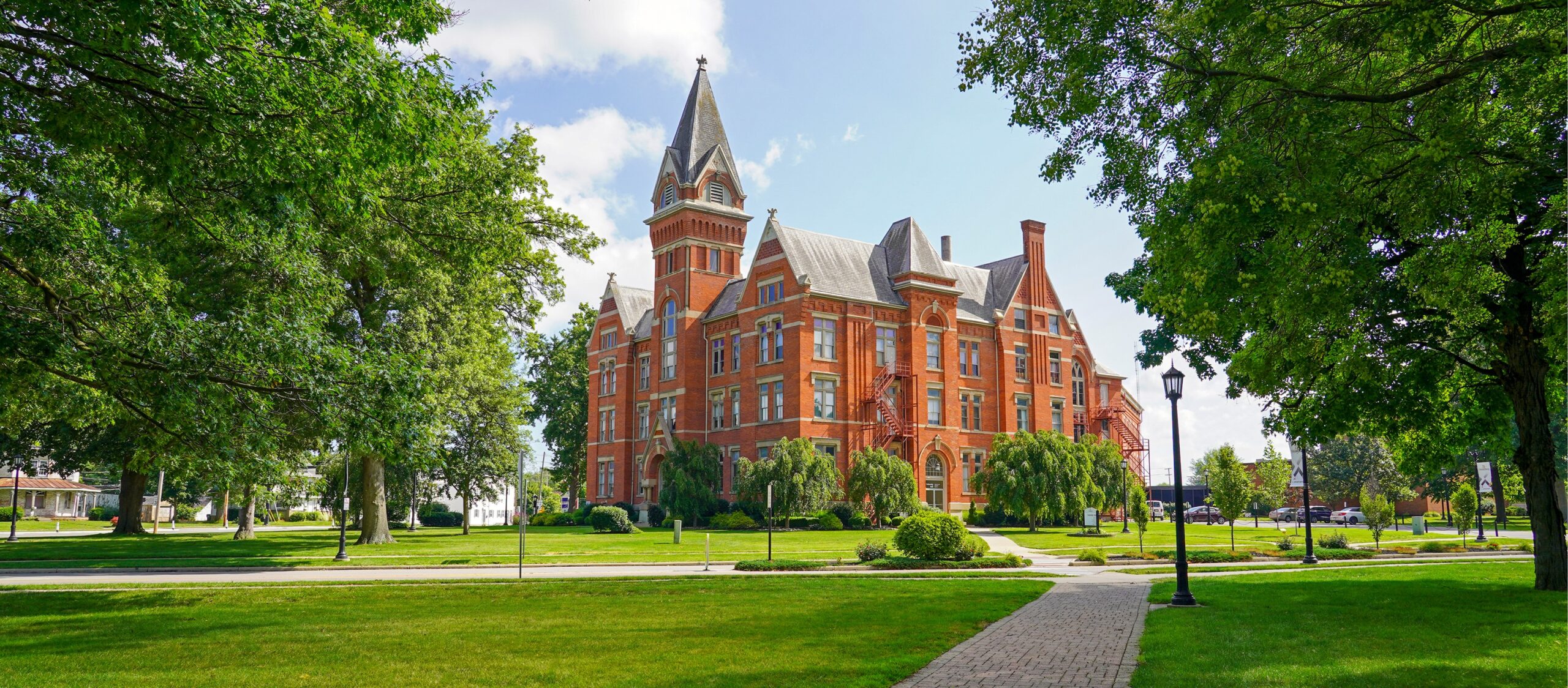
About Heidelberg University
Heidelberg University (Ruprecht-Karls-Universität Heidelberg) is a public research university founded in 1386, by decree of Pope Urban VI. It is the oldest university in Germany and one of the oldest continuously operating higher education institutions in the world, with over 630 years of academic tradition. It is located in Heidelberg, the state of Baden-Württemberg, a university town on the Neckar river, considered one of the most beautiful in Germany.
Heidelberg is QS World 2026 number 80 globally and number 3 in Germany, climbing four places from the previous year and ranking 27th in the European comparison. The university has around 30,000 students, of whom over 5,000 are international (nearly 20 percent of the student body). With over 160 fields of study, it covers the broad spectrum of a comprehensive university. Heidelberg is part of LERU (League of European Research Universities) and of the Coimbra Group, alongside Bologna, Oxford, Salamanca and Universitat de Barcelona, and holds University of Excellence status in the German Exzellenzstrategie programme.
Strong specialisations at Heidelberg: Medicine (with the Universitätsklinikum Heidelberg university hospital, one of the largest medical centres in Europe), life sciences and biotechnology (around the Neuenheimer Feld campus and the DKFZ and EMBL centres), physics and astronomy, chemistry, law (Law ranked in the world top 50, 3rd in Germany), the humanities (Classics and Theologie ranked number 1 in Germany), mathematics, economics and psychology. Many bachelor's programmes are taught in German, but Heidelberg also offers an ever wider set of programmes in English, especially at master's level.
For Romanian students, Heidelberg is one of the best opportunities in Europe. As an EU citizen you pay EUR 0 tuition: since 2012, tuition fees have been abolished for students with an EU/EEA access qualification. Note the Baden-Württemberg rule: since 2017, non-EU students pay EUR 1,500 per semester tuition for bachelor's and master's, but EU/EEA citizens, including Romanians, are fully exempt. You pay only the semester contribution (Semesterbeitrag), around EUR 150 to EUR 180 per semester, which includes student services and usually the transport pass. The Romanian Baccalaureate is generally evaluated through uni-assist (the joint validation centre for international diplomas for German universities).
How to apply to Heidelberg
Check your eligibility through uni-assist
The first step for Romanians with a Baccalaureate: sending your diploma to uni-assist, the joint centre that evaluates international qualifications for German universities. uni-assist confirms whether your Baccalaureate gives you direct access (Hochschulzugangsberechtigung) or whether you need a year of Studienkolleg. You upload the diploma, transcript and translations, and pay the fee (~EUR 75 for the first application). Recommended timing: start 3 to 4 months before the admission deadline.
Choose your programme and language of instruction
Heidelberg has over 160 fields of study. Most bachelor's degrees are in German, but there are programmes and modules in English, especially at master's level (for example in life sciences, physics, economics). Check the language of instruction on the faculty website and whether the programme has open or restricted admission (Numerus Clausus). Very popular programmes: Medicine, Law, Physics, Molecular Biotechnology.
Prove your German or English
For programmes in German you need DSH-2 or TestDaF (TDN 4 in all components), demonstrated at enrolment. For programmes in English you usually need IELTS 6.5+ or TOEFL iBT 90+. ISZ Heidelberg offers intensive German courses (A1-C1) and DSH preparation. If you do not yet have the level, you can first apply to the language course.
Apply online (heiCO) or via uni-assist
Depending on the programme, you apply through the university's online portal heiCO or through uni-assist. Usual deadlines: 15 July for the winter semester (October start) and 15 January for the summer semester (April start). For Numerus Clausus programmes, the access grade (calculated from your Baccalaureate average) is the decisive factor. Check the exact deadline for your faculty.
Register as an EU citizen in Germany
As a Romanian (EU) citizen, you do not need a study visa. After arriving in Heidelberg you register at the Bürgeramt (Anmeldung, your residence address) within the first 14 days. Documents required: your ID card or passport, the rental contract and the landlord's confirmation (Wohnungsgeberbestätigung). You will also need a German bank account and health insurance (the European Health Insurance Card or German public insurance).
Enrolment and paying the Semesterbeitrag
After the admission letter you complete Immatrikulation (enrolment) at the university. As an EU citizen you pay no tuition (EUR 0), only the Semesterbeitrag of around EUR 150 to EUR 180 per semester (Studierendenwerk student services, student body and administrative fees). The contribution usually includes a transport pass as well. You then receive your student ID and full access to the campus, libraries and canteens (Mensa).
Costs for Romanians
Tuition EU citizen (Romanian) vs non-EU
Cost of living in Heidelberg per month
€0 tuition
As a Romanian (EU/EEA) citizen you are automatically exempt from tuition in Baden-Württemberg. You do not need to do anything special, just prove your Romanian citizenship with an ID card or passport. You pay only the Semesterbeitrag of ~EUR 150 to EUR 180 per semester, compared with the EUR 1,500 per semester a non-European pays.
German scholarships
Deutschlandstipendium: EUR 300 per month for students with good results, funded partly by the state and by sponsors, also open to EU students. DAAD: scholarship programmes for international students, including Romanians, for bachelor's, master's and exchanges. Erasmus+: if you come initially on an exchange of 1 to 2 semesters, you receive a monthly grant. Heidelberg also has internal scholarships and emergency funds.
Romania scholarship
As a Romanian student, you are eligible for the study-abroad scholarship of the Romanian Ministry of Education if you gain admission to a German public university. Many cities and counties in Romania have their own scholarship programmes for their students abroad (check with your city hall or county council). These scholarships can be combined with the German ones, but must be applied for in parallel.
Want to apply to Heidelberg?
We help you navigate uni-assist for the recognition of your Baccalaureate, choose the right programme at Heidelberg, prepare your German or English proof and benefit from EUR 0 tuition as an EU citizen. Our mentors have been through the process. The mentoring session is 100% free.
Talk to a mentorFrequently asked questions
How much does Heidelberg University cost for a Romanian student?
As an EU citizen, you pay EUR 0 tuition. In Baden-Württemberg, the state where Heidelberg is located, non-EU students pay EUR 1,500 per semester, but EU/EEA citizens (including Romanians) are fully exempt since 2012. The only mandatory fee is the Semesterbeitrag of around EUR 150 to EUR 180 per semester (student services, student body, administrative fees), which usually includes the transport pass. In practice, your tuition costs under EUR 360 per year. The real cost is living in Heidelberg, around EUR 850 to EUR 1,100 per month.
Why do I pay EUR 0 as a Romanian, while a non-European pays EUR 1,500 per semester?
Because you are part of the European Union. Since 2012, Germany abolished tuition for students with an EU/EEA access qualification. The state of Baden-Württemberg reintroduced from 2017 a fee of EUR 1,500 per semester only for students from outside the EU/EEA at bachelor's and master's level. EU/EEA citizens, including Romanians, are explicitly exempt from this fee. It is one of the biggest advantages of being an EU citizen: the same education at Heidelberg, but without tuition, while an American, Indian or Chinese student pays EUR 3,000 per year in tuition alone.
How hard is it to get into Heidelberg and is the Baccalaureate recognised?
Yes, the Romanian Baccalaureate is recognised, but it is generally evaluated through uni-assist, which confirms whether it gives you direct access or whether you need a year of Studienkolleg. Difficulty depends on the programme: many programmes have open admission (you enrol if you meet the requirements), while the competitive ones have Numerus Clausus (NC), where the access grade calculated from your Baccalaureate average decides admission. Medicine is the most competitive (very high NC). For NC programmes, a high Baccalaureate average (9 plus) significantly increases your chances.
Are programmes at Heidelberg in German or English?
Most bachelor's degrees at Heidelberg are taught in German, so you need DSH-2 or TestDaF (TDN 4) at enrolment. However, Heidelberg also offers an ever wider set of programmes in English, especially at master's level (life sciences, physics, economics, public health), where you usually need IELTS 6.5+ or TOEFL iBT 90+. Recommendation for Romanians who want a bachelor's: if you are aiming for German, start your language preparation 1 to 2 years in advance; ISZ Heidelberg offers intensive A1-C1 courses and DSH preparation.
What scholarships are there for Romanians at Heidelberg?
Deutschlandstipendium: EUR 300 per month for students with good results, also open to EU students. DAAD (German Academic Exchange Service): scholarship programmes for international students, including Romanians, for bachelor's, master's and exchanges. Erasmus+: if you come initially on an academic exchange of 1 to 2 semesters, you receive a monthly grant. Internal Heidelberg scholarships and emergency funds. The study-abroad scholarship of the Romanian Ministry of Education for Romanians admitted to a German public university, combinable with German scholarships. Important: the EUR 0 tuition you automatically receive as an EU citizen is already a huge advantage over non-EU students.
What are the strongest programmes at Heidelberg?
Heidelberg is renowned for: Medicine (with Universitätsklinikum Heidelberg, one of the largest university hospitals in Europe), life sciences and biotechnology (the Neuenheimer Feld campus, alongside the DKFZ and EMBL centres), physics and astronomy, chemistry, law (ranked in the world top 50, 3rd in Germany), mathematics, economics, psychology and the humanities (Classics and Theologie ranked number 1 in Germany at subject level). Heidelberg holds University of Excellence status in the German Exzellenzstrategie programme.
Do I need a visa to study at Heidelberg as a Romanian?
No. As a Romanian (EU) citizen you do not need a study visa for Germany. You can move and enrol freely. After arrival, you only need to do Anmeldung (registering your residence address) at the Bürgeramt within the first 14 days, open a German bank account and have health insurance (the European Health Insurance Card or German public insurance). Unlike non-EU students, you do not need a mandatory Sperrkonto with a fixed amount, nor a residence permit for studies.
Can I stay and work in Germany after graduation?
Yes, as an EU citizen you have the automatic right to work in Germany without a visa or work permit. Germany is the largest economy in Europe, with high demand for graduates in engineering, IT, life sciences, medicine and finance. The Heidelberg-Mannheim region has a strong cluster of biotechnology, pharma and research (BASF, SAP nearby, plus DKFZ and EMBL). During your studies you can work part-time without special restrictions as an EU citizen. After graduation, with a German degree recognised across the EU, you can work anywhere in the Union without a visa.
Our mentors from Europe
They studied at Bocconi, Sciences Po, TU Delft, ETH Zurich and other EU universities. Now they guide you.