
LMU Munich
Ludwig-Maximilians-Universitat Munchen, founded in 1472, one of the oldest universities in Germany. QS World 2026 ranked #58, second in Germany. Around 52,000 students, over 6,000 international. As an EU citizen you pay zero tuition, only the Semesterbeitrag of roughly 97 euros per semester. Most bachelor's programmes are taught in German, so you need a C1 level.
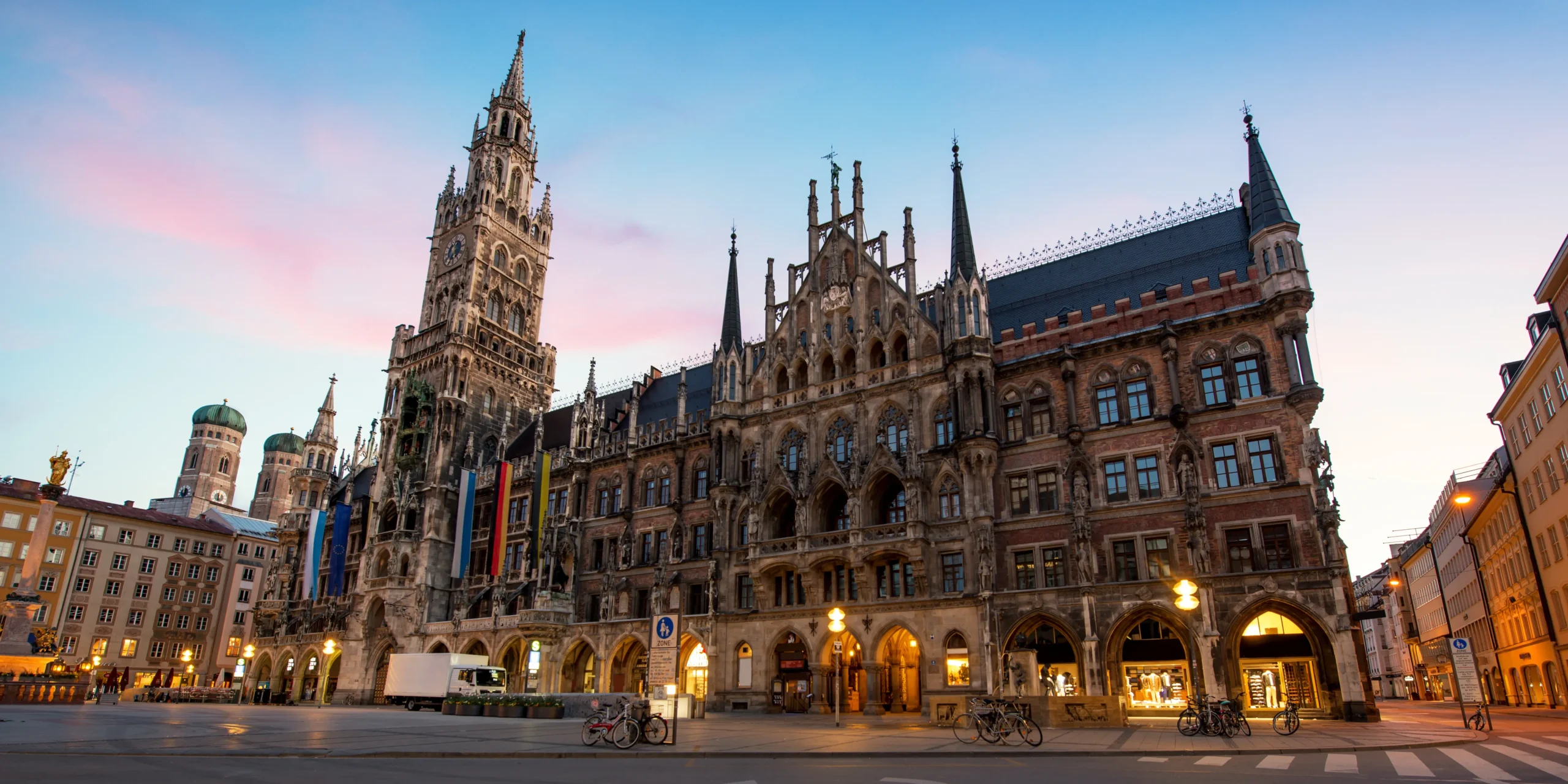
About LMU Munich
Ludwig-Maximilians-Universitat Munchen (LMU) was founded in 1472 in Ingolstadt, later moved to Landshut in 1800 and established in Munich from 1826. With over 550 years of academic tradition, it is one of the oldest and most prestigious universities in Germany. It is a public, comprehensive university in the heart of Munich, the capital of Bavaria, consistently considered one of the safest and most pleasant cities in Europe for students.
In international rankings, LMU is QS World 2026 ranked #58 and second in Germany, after Technische Universitat Munchen (TUM). It has around 52,000 students, of whom over 6,000 are international (roughly 22 percent) from more than 130 countries. The university has 18 faculties and a strong research tradition, being associated with over 40 Nobel laureates throughout its history, among them Wilhelm Rontgen, Werner Heisenberg and Thomas Mann.
Strong fields at LMU: sciences (physics, chemistry, biology, mathematics), medicine (with the Grosshadern and Innenstadt university clinics), law, economics, psychology and humanities (philosophy, history, philology, theology). Physics at LMU is recognised worldwide, part of the Munich research ecosystem alongside the Max Planck institutes. The university offers over 200 study programmes, organised on the European Bologna system (bachelor's, master's, doctorate).
For Romanian students, LMU is one of the most accessible opportunities in Europe. As an EU citizen you pay zero tuition, exactly like a German student: the only mandatory fee is the Semesterbeitrag (the Studierendenwerk fee), of roughly 97 euros per semester. Important to know: most bachelor's programmes at LMU are taught in German, so you need a high level of German (usually C1, proven through TestDaF or DSH). English-taught programmes exist mainly at master's level. The Romanian Baccalaureate is recognised as equivalent to the German Abitur for EU citizens.
How to apply to LMU
Choose your programme and check the requirements
LMU has over 200 programmes. Check on lmu.de whether your programme has open or restricted admission (Numerus Clausus, as in Medicine, Psychology, Law) and what documents it requires. Pay attention to the language of instruction: most bachelor's programmes are in German, the English-taught offer is broader at master's level.
Prepare your application (uni-assist)
For many programmes, the application is submitted through uni-assist, the national service that verifies international diplomas. You upload your translated and certified Baccalaureate diploma, your transcript and your language certificates. As an EU citizen, the Romanian Baccalaureate is recognised as equivalent to the Abitur.
Prove your German (TestDaF, DSH or telc C1)
For German-taught programmes (most at LMU) you need a high level: TestDaF level 4 (TDN 4) in all sections, DSH-2 or telc Deutsch C1 Hochschule. In practice you need C1. Recommendation for Romanians: start your German preparation from the 11th grade.
English for English-taught programmes (master's)
If you apply to an English-taught programme (especially master's), you need proof of language: usually IELTS 6.5+ or TOEFL iBT 88+. Check the exact requirement on the programme page; some international programmes also require a basic German component.
Apply and register as an EU citizen
Submit your application within LMU's deadlines (usually 15 July for the winter semester, 15 January for the summer one). As a Romanian citizen (EU), you do not need a visa. After arriving in Munich, you register at the city hall (Anmeldung at the Burgerburo) for your residence address, a mandatory step for any EU citizen.
Imatrikulation and paying the Semesterbeitrag
After acceptance, you complete the Imatrikulation (enrolment) at LMU and pay the Semesterbeitrag (roughly 97 euros per semester, the Studierendenwerk fee). There is no tuition for EU citizens. You then receive your student card and access to university services. The winter semester starts in October.
Costs for Romanians
LMU fees 2026-27 (EU citizens)
Munich cost of living (indicative)
Zero tuition
As an EU citizen, you pay no tuition at LMU, identical to a German student. You do not have to do anything special, just prove your Romanian citizenship through your passport or ID card. The only fee is the Semesterbeitrag of roughly 97 euros per semester, which includes the Studierendenwerk services.
European scholarships
Deutschlandstipendium: a merit scholarship of 300 euros per month for students with good results, open to international students too. DAAD scholarships: the German academic exchange service, with programmes for European students. Erasmus+: if you come initially on an academic exchange for 1-2 semesters, you receive a monthly grant. Many foundations (Studienstiftung, political foundations) offer competitive scholarships.
Scholarships and student job
As a Romanian student, you can check the scholarship programmes of the Romanian Ministry of Education for studies abroad and any scholarships offered by your local city hall. In addition, as an EU citizen you can freely work part-time in Germany (Werkstudent, mini-job), a common source of income for students in Munich.
Want to apply to LMU Munich?
We help you choose the right programme, navigate uni-assist for the recognition of your Baccalaureate, plan your proof of German (C1) and make the most of zero tuition as an EU citizen. Our mentors have been through the process. The first mentoring session is 100% free.
Talk to a mentorFrequently asked questions
How much does LMU Munich cost for Romanians?
As an EU citizen, you pay zero tuition at LMU, exactly like a German student. The only mandatory university fee is the Semesterbeitrag (the Studierendenwerk fee), of roughly 97 euros per semester, that is under 200 euros per year. When applying, an application review fee may apply through uni-assist (roughly 75 euros for the first request). The real expense is the cost of living in Munich, roughly 950 to 1,500 euros per month, higher than in other German cities.
Do I need to know German to study at LMU?
For most programmes, yes. Most bachelor's programmes at LMU are taught in German, so you need a high level, usually C1, proven through TestDaF level 4 (TDN 4) in all sections, DSH-2 or telc Deutsch C1 Hochschule. English-taught programmes exist, but are concentrated mainly at master's level. Recommendation for Romanians: if you are aiming for a bachelor's at LMU, start your German preparation from the 11th grade so you reach C1 by the time you apply.
How do I apply to LMU as a Romanian student through uni-assist?
For many programmes, the application is submitted through uni-assist, the national service that verifies international diplomas. The main steps: 1) Choose your programme and check the requirements on lmu.de. 2) Prepare your application (translated and certified Baccalaureate diploma, transcript, language certificate). 3) Submit through uni-assist or, in some cases, directly to the LMU International Office. 4) Meet LMU's deadlines: usually 15 July for the winter semester and 15 January for the summer one. As an EU citizen, the Romanian Baccalaureate is recognised as equivalent to the Abitur.
Is the Romanian Baccalaureate accepted at LMU?
Yes. As an EU citizen, the Romanian Baccalaureate is recognised as equivalent to the German Abitur and gives you the right to study at LMU. The diploma is verified through uni-assist or the International Office. For programmes with Numerus Clausus (restricted admission, such as Medicine, Psychology or Law), your Baccalaureate grade counts directly, so the higher your grade, the better your chances. For programmes with open admission, recognition of the diploma plus proof of language are sufficient.
What does Semesterbeitrag mean and what does it cover?
The Semesterbeitrag is the mandatory semester fee that every student at LMU pays, regardless of citizenship. At LMU, this fee is currently the Grundbeitrag of roughly 97 euros per semester, paid to Studierendenwerk Munchen. It covers student services such as the canteens (Mensa), counselling, housing support and administration. As of winter 2023/24, the separate fee for the transport ticket (Semesterticket) was suspended. It is not tuition: as an EU citizen, tuition remains zero.
Which are the strongest programmes at LMU?
LMU is renowned for: sciences (LMU physics is recognised worldwide, alongside chemistry, biology and mathematics), medicine (with the Grosshadern and Innenstadt university clinics), law, economics, psychology and humanities (philosophy, history, philology, theology). The university is associated with over 40 Nobel laureates throughout its history, among them Wilhelm Rontgen and Werner Heisenberg. The Medicine, Psychology and Law programmes have restricted admission (Numerus Clausus), so they are the most competitive.
As an EU citizen, do I need a visa for Germany?
No. As a Romanian citizen (EU), you do not need a study visa for Germany and you have the right of residence and to work. After arriving in Munich, you only need to register at the city hall (Anmeldung at the Burgerburo) for your residence address, in the first days after moving. You will need health insurance (the European health card or German insurance) and a German bank account for rent and fees. As an EU citizen you can freely work part-time, with no visa restrictions.
Can I stay in Germany after graduation?
Yes, as an EU citizen! Unlike the UK or the US where you need a work visa, as a Romanian citizen (EU) you automatically have the right to work in Germany without a visa. Germany is the largest economy in the EU, and Munich is one of the strongest economic hubs in Europe, home to companies such as BMW, Siemens, Allianz, Munich Re and a strong technology and research ecosystem. An LMU degree is highly respected in the job market. With a degree earned in the EU, you can then work anywhere in the European Union without a visa.
Our mentors from Europe
They studied at Bocconi, Sciences Po, TU Delft, ETH Zurich and other EU universities. Now they guide you.