
Università degli Studi di Milano
Founded in 1924, the largest public university in Milan (known as La Statale). Roughly 65,000 students, QS World 2026 number 276 and the only Italian university that is a member of LERU. As an EU citizen you pay EU fees calculated through ISEE, from 0 up to around 4,000 euro per year. Strengths: medicine (number 1 in Italy), law, sciences and humanities.
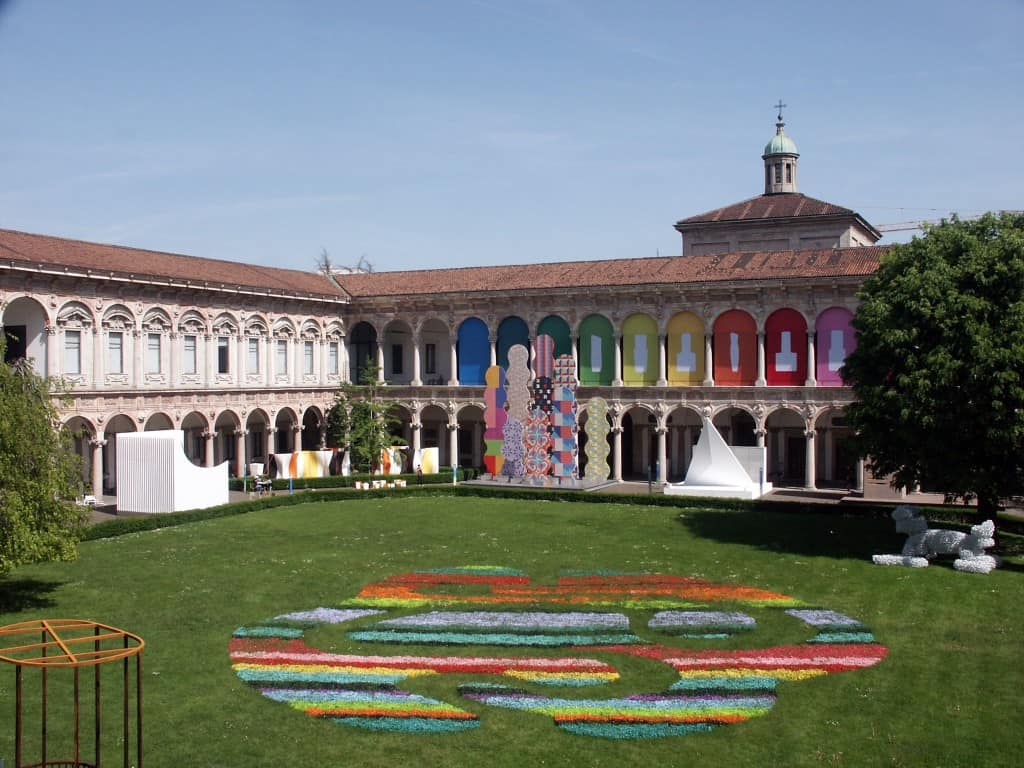
About Università degli Studi di Milano
Università degli Studi di Milano, known locally as La Statale, is a comprehensive public university founded in 1924 through the merger of the Accademia Scientifico-Letteraria (active since 1861) and the Istituti Clinici di Perfezionamento (1906). Its historic seat is Ca Granda, on Via Festa del Perdono, in the centre of Milan, with buildings and campuses spread across the city and the metropolitan area. It is one of the largest public universities in Italy, with roughly 65,000 enrolled students.
UniMi is the only Italian university that is a member of LERU (League of European Research Universities), the European group of research-intensive universities that includes Oxford, Cambridge, Heidelberg and the Sorbonne. It was one of the founding institutions of this group. In the global rankings it is QS World 2026 number 276 worldwide, a solid position among Italy's comprehensive public universities, alongside Bologna, Sapienza Rome and Padua.
Strong specialisations at La Statale: Medicine and surgery (ranked number 1 in Italy and around position 65 worldwide by subject in QS 2026, with an extensive university hospital network), Law, Sciences (Physics, Chemistry, Biology, Mathematics, Computer Science), Agricultural and food sciences, Pharmaceutical sciences, and a strong block of humanities (Letters, Philosophy, History, Languages). The university offers more than 140 bachelor's and master's programmes, organised across roughly 33 departments.
For Romanian students, La Statale is one of the most accessible opportunities in Europe. As an EU citizen you pay EU fees, and in Italy the annual contribution is calculated through ISEE (the indicator of the family's economic situation). Families on a modest income can fall within the no tax area and pay almost nothing, while the upper ceiling for a bachelor's programme is around 4,000 euro per year. There are more and more programmes taught in English, especially at master's level and on a few international bachelor's degrees, but most bachelor's programmes are taught in Italian (a B2 level is required). Many programmes have admission by test (TOLC or a national test, particularly for Medicine), and enrolment for non-Italian citizens is done through the Universitaly portal.
How to apply to UniMi
Pre-enrolment on Universitaly
For citizens who hold a foreign diploma (including the Romanian Baccalaureate), pre-enrolment is done on the national portal Universitaly. Here you declare your chosen programme at La Statale and upload your diploma. As an EU citizen you do not need a visa, but you go through the same diploma-recognition steps via Universitaly. Recommended timing: open your file in spring, before the test sessions.
Sit the admission test (TOLC or national test)
Many programmes have admission based on a test. For scientific, economic and humanities bachelor's degrees the TOLC (Test OnLine CISIA) is usually used, of the TOLC-I, TOLC-E, TOLC-S or TOLC-SU type depending on the field. For Medicine there is a dedicated national test. Check on the UniMi website the exact type of test, the date and the admission threshold for your programme.
Obtain the ISEE or ISEE parificato certificate
The annual contribution in Italy is calculated through ISEE (the family's economic situation). Romanians with income and assets abroad use the ISEE parificato, always available to EU citizens. The document is mandatory in order to benefit from a reduced fee or the no tax area; without an ISEE submitted on time, you automatically pay the programme's maximum contribution.
Prove the language (Italian CILS B2 or IELTS)
For programmes in Italian (most bachelor's degrees) you need a B2 level, proven through a certificate such as CILS, CELI or PLIDA or through the university's language test. For programmes in English an IELTS 6.0-6.5 or an equivalent TOEFL iBT is usually required. Check the exact requirement on the programme page.
Obtain a codice fiscale and register as an EU citizen
For any formality in Italy you need a codice fiscale (the Italian tax code), which you can obtain from the Agenzia delle Entrate or through the Italian consulate. As a Romanian (EU) citizen you do not need a visa; if you stay longer than 3 months, you register with the town hall (Anagrafe) for residence. You will also need a codice fiscale to open a bank account and to rent accommodation.
Enrolment (immatricolazione) and payment of the first instalment
After the test result, you complete the immatricolazione online on the UniMi portal, upload your ISEE and pay the first instalment (the same for everyone: the regional tax for the right to study of around 140 euro plus the stamp duty of 16 euro). The second instalment varies depending on ISEE, programme and merit. The academic year usually starts in late September or in October.
Costs for Romanians
Annual EU contribution via ISEE (EU citizens)
Estimated total cost per year (Milan)
EU fees via ISEE
As a Romanian (EU) citizen you pay the same fees as an Italian student, calculated through ISEE. You submit an ISEE parificato (the economic situation of the family outside Italy) and the contribution drops proportionally. Non-EU students usually pay a fixed amount by country group, without the ISEE benefit. This means you can reach almost zero contribution where a non-European pays in full.
Regional grants
The Borsa di studio DSU (diritto allo studio), managed regionally, offers EU citizens with an ISEE below the threshold a cash grant plus a contribution waiver and, sometimes, a place in a hall of residence and meals in the canteen. In Lombardy, the regional agency assesses the ISEE and academic merit. These grants are open to Romanian students exactly as they are to Italians, with no nationality restrictions within the EU.
Romania grant plus Erasmus+
As a Romanian student you are eligible for the grants of the Romanian Ministry of Education aimed at studies abroad, plus the grant programmes of some town halls or foundations in Romania. If you arrive initially through an Erasmus+ exchange (1-2 semesters), you receive a monthly grant. Important: the Romanian grants can be combined with the DSU, but they must be applied for in parallel, each with its own deadline.
Want to apply to Università degli Studi di Milano?
We help you do the pre-enrolment on Universitaly, prepare for the TOLC test or the Medicine test, submit the ISEE parificato correctly and take advantage of EU fees (from 0 euro through the no tax area). Our mentors have been through the process. The mentoring session is 100% free.
Talk to a mentorFrequently asked questions
How hard is it to get into Università degli Studi di Milano?
It depends a lot on the programme. Most bachelor's degrees have admission based on a test: TOLC (TOLC-I for engineering and sciences, TOLC-E for economics, TOLC-S for sciences, TOLC-SU for humanities) or a dedicated national test for Medicine, which is the most competitive. For programmes with a numerus clausus, your test score and sometimes your Baccalaureate average matter. Humanities programmes and some of the scientific ones have more accessible thresholds. Recommendation for Romanians: prepare the TOLC test in good time and check on the programme page whether admission is open or with a numerus clausus.
How much exactly does UniMi cost for Romanians?
As an EU citizen you pay EU fees calculated through ISEE. The first instalment is the same for everyone: the regional tax for the right to study (around 140 euro) plus the stamp duty (16 euro), so around 156 euro. The second instalment varies depending on ISEE, programme and merit. Families with an ISEE of up to around 30,000 euro fall within the no tax area and do not pay the second instalment. As the ISEE rises, the contribution rises too, up to a ceiling of about 4,000 euro per year at bachelor's level. On top of this comes the cost of living in Milan: accommodation 450-800 euro per month, food 250-400 euro per month, ATM transport 22-35 euro per month. Estimated total: roughly 10,000-16,000 euro per year, drastically below the UK or USA.
What is ISEE and why is it mandatory?
ISEE (Indicatore della Situazione Economica Equivalente) is the official indicator of the family's economic situation in Italy, used to calculate the university contribution and eligibility for grants. For Romanians with income and assets outside Italy there is the ISEE parificato, always available to EU citizens, calculated by a CAF (tax assistance centre) on the basis of income documents from Romania.
The ISEE is mandatory if you want a reduced fee or the no tax area. Without an ISEE submitted on time, the university automatically applies the programme's maximum contribution. In practice, submitting the ISEE is the step that turns the theoretical fees into the real, much lower payment for a family on a modest income.
What grants are available at UniMi for Romanians?
The Borsa di studio DSU (diritto allo studio), the regional grant for the right to study, offers EU citizens with an ISEE below the threshold cash plus a contribution waiver and sometimes a place in a hall of residence and meals in the canteen. UniMi merit grants: for students with very strong academic results. Erasmus+: if you come on an exchange for 1-2 semesters, you receive a monthly grant. The grant from the Romanian Ministry of Education and the programmes of some Romanian town halls or foundations for studies abroad can be combined with the DSU if you apply in parallel. Important: the EU fees calculated through ISEE, down to the no tax area, are already a major advantage over a non-EU student.
Are the programmes at La Statale in English?
Most bachelor's degrees at UniMi are taught in Italian, so you need a B2 level proven through CILS, CELI, PLIDA or the university's language test. There are, however, programmes in English that are growing, especially at master's level and on a few international bachelor's degrees (for example in economic, scientific and international fields). For programmes in English an IELTS 6.0-6.5 or an equivalent TOEFL iBT is usually required. Recommendation for Romanians: if you do not speak Italian, filter the English-taught programmes on the UniMi website, but also factor in an Italian course, because daily life in Milan happens in Italian.
What are the strongest programmes at UniMi for Romanians?
La Statale is renowned for: Medicine and surgery (number 1 in Italy and around position 65 worldwide by subject in QS 2026, with an extensive university hospital network), Law (a historic faculty), Sciences (Physics, Chemistry, Biology, Mathematics, Computer Science), Pharmaceutical sciences, Agricultural and food sciences, and a solid block of humanities (Letters, Philosophy, History, Languages). For competitive programmes such as Medicine, admission is through a national test with a numerus clausus, so preparation matters enormously.
How do I apply as a Romanian: Universitaly, test and enrolment?
The main steps for a Romanian (EU) citizen: 1) Pre-enrolment on Universitaly, the national portal where you declare your programme and upload your Baccalaureate diploma for recognition. 2) The admission test: TOLC for most bachelor's degrees or a national test for Medicine. 3) ISEE parificato to calculate the reduced contribution (mandatory for the no tax area). 4) Proof of language: CILS B2 for Italian or IELTS for programmes in English. 5) Codice fiscale and, if you stay longer than 3 months, registration with the town hall (you do not need a visa as an EU citizen). 6) Immatricolazione online plus payment of the first instalment. Deadlines differ by programme, so start in spring.
Can I stay in Italy after graduation?
Yes, as an EU citizen. Unlike the United Kingdom or the USA, as a Romanian (EU) citizen you automatically have the right to work in Italy with no visa and no work permit. Milan is Italy's economic capital: a hub for finance, fashion and design, pharma, media and tech, with the headquarters of major companies and an active startup ecosystem. Main industries in the Milan area: banking and insurance, fashion (the headquarters of the great houses), pharmaceuticals, consulting, engineering, IT. With a degree recognised across the EU you can then work anywhere in the European Union without a visa, which makes La Statale a good starting point for a European career.
Our mentors from Europe
They studied at Bocconi, Sciences Po, TU Delft, ETH Zurich and other EU universities. Now they guide you.


