
LUISS Guido Carli
A private university in Rome, founded in 1974, specialised in economics, business, political science and law. Number 1 in Italy for Politics and International Studies in the QS subject rankings, with triple EQUIS, AMBA and AACSB accreditation. Around 11,000 students and bachelor's programmes taught entirely in English. Closely linked to Confindustria, Italy's industrial confederation.
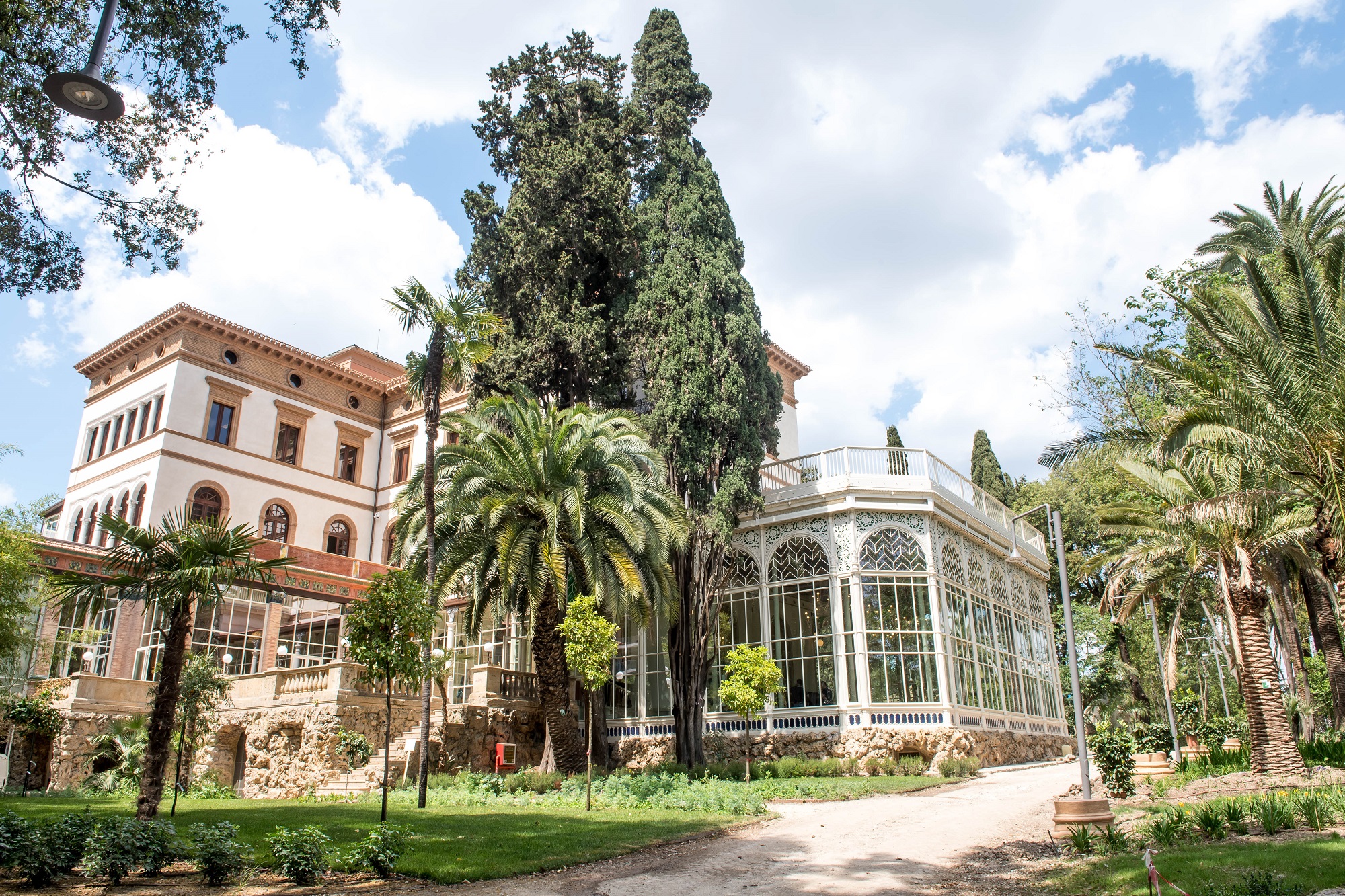
About LUISS Guido Carli
LUISS Guido Carli (Libera Università Internazionale degli Studi Sociali) is a private university in Rome, founded in 1974, with roots in an earlier institution from 1966. It was renamed in 1994 in honour of Guido Carli, former governor of the Bank of Italy. Unlike Italy's large public mass universities, LUISS is a small and selective institution focused on economics, business, management, political science and law, backed by Confindustria, Italy's industrial confederation.
The main campus is in the Trieste and Parioli districts of Rome, with several sites for the different departments. The university has around 11,000 students and is organised into 6 departments. Its profile is strongly international: LUISS offers bachelor's programmes taught entirely in English and holds the triple accreditation of the world's elite business schools, EQUIS, AMBA and AACSB, a rare status in Italy.
In the QS subject rankings, LUISS is number 1 in Italy for Politics and International Studies and consistently in the global top for this subject, as well as well placed for Economics, Business and Management. The English-taught bachelor's programmes include Economics and Business, Management and Artificial Intelligence and Politics: Philosophy and Economics (PPE), alongside Italian-taught programmes in Management, Law (Giurisprudenza) and Political Science. Selectivity is high: a large share of admitted students have high-school averages above 90 out of 100.
For Romanian students: LUISS is a private university, so tuition is high, comparable to what non-EU students pay in other systems, without the ISEE-type statutory public reductions offered by Italy's state universities. In return, LUISS has a strong system of merit-based scholarships that can cover between 30 percent and 100 percent of the fee, plus partial reductions and support offered with the backing of public and private partners. The language of instruction on the international programmes is English, and the degree is recognised throughout the European Union.
How to apply to LUISS
Direct online application on the LUISS portal
LUISS runs its own admissions, you do not apply through a national platform. You create an account on the LUISS admissions portal, choose your bachelor's programme (Economics and Business, Management and Artificial Intelligence, PPE or the Italian-taught programmes) and upload your documents. There are several admission sessions per year; apply in the first session for the best chances at a place and a scholarship.
LUISS admission test or direct admission with certifications
For EU citizens there are two paths: the LUISS admission test (LUISS's own test assessing logic, reading comprehension and knowledge relevant to the programme), or direct admission with certifications. SAT or ACT are accepted as optional certifications that can replace the test. Some programmes also include a motivation interview.
Proof of English
For the English-taught bachelor's programmes you need an English certification: IELTS 6.0-6.5, TOEFL iBT around 80-90, or a Cambridge equivalent (B2 First, C1 Advanced). The Italian-taught programmes require proof of Italian. Check the exact threshold on the page of your chosen programme, it may vary slightly.
Documents, essays and CV
You upload your Baccalaureate diploma or certificate, your high-school transcript with grades, passport or ID card and a photo. Many applications also ask for a motivation letter or a short essay, possibly a CV with your extracurricular activities, olympiads, volunteering and relevant projects.
Admission decision and scholarship application
After the test or the assessment of your file, you receive your admission decision. In parallel you apply for LUISS's merit-based scholarships, which can cover between 30 percent and 100 percent of the fee. Merit scholarships are awarded on the basis of academic results and sometimes an interview or an additional test; submit your scholarship file by the announced deadline.
Enrolment and arrival in Rome
You confirm your place, pay the first tuition instalment and complete enrolment online. As a Romanian (EU) citizen you do not need a study visa; after arrival you register with the local authorities for residence and the Italian tax code (codice fiscale). Arrange accommodation early, in Rome the rental market is competitive in the months at the start of the academic year.
Costs and scholarships for Romanians
Bachelor's tuition (indicative, year)
Cost of living in Rome (indicative)
30-100% of the fee
Each year LUISS awards merit scholarships and partial or full tuition waivers, based on academic results. Depending on the file, the scholarship can cover from 30 percent up to 100 percent of the tuition fee. For Romanian students with high averages and a strong profile, this is the most important lever for reducing the cost.
Reductions and need-based
Beyond merit, LUISS offers reductions and forms of financial support that take the family's situation into account, backed by public and private partners. These are not statutory public rates but internal university support; you apply for them separately, by the announced deadline, with supporting documents on family income.
Scholarships from Romania
As a Romanian student admitted abroad you can look for complementary external scholarships: programmes from the Ministry of Education, scholarships offered by city halls or county councils for their students, plus private scholarships and foundations. These can generally be combined with LUISS scholarships; apply in parallel and check the rules on combining them.
Want to apply to LUISS?
We help you choose the right programme, prepare for the LUISS admission test or for direct admission with certifications, write your essays and CV, and apply for the merit scholarships. Our mentors have been through the process. Your first mentoring session is 100% free.
Talk to a mentorFrequently asked questions
How hard is it to get into LUISS Guido Carli?
LUISS is a selective private university, much smaller than Italy's large public universities. Admission happens either through the LUISS in-house test (logic, reading comprehension, knowledge relevant to the programme), or through direct admission with certifications such as SAT or ACT. The typical profile of admitted students is strong: a large share have high-school averages above 90 out of 100. For Romanian students with good high-school and Baccalaureate results, plus a carefully prepared application, LUISS is a realistic target.
How much does LUISS cost per year for a Romanian student?
LUISS is a private university, so tuition is high, around €12,000 per year at bachelor's level (up to about €12,600 for the first year on some programmes), comparable to what non-EU students pay in other systems. The ISEE-type statutory public reductions do not apply here as they do at Italy's state universities. The cost of living in Rome adds roughly €950-€1,500 per month. The good news: LUISS offers merit-based scholarships of 30 percent up to 100 percent of the fee, which can significantly reduce the real cost. The figures are indicative; check the exact amount on the official LUISS website for your chosen programme.
Does LUISS offer scholarships for international students?
Yes. Each year LUISS awards merit scholarships and partial or full tuition waivers, which can cover between 30 percent and 100 percent of the fee, depending on the academic file. Beyond merit, there are forms of support that take the family's financial situation into account, backed by public and private partners. Note: these are internal university support measures, not statutory public rates. For a Romanian student with high averages, the merit scholarship is the most effective way to reduce the cost.
Are the bachelor's programmes at LUISS in English?
Yes, LUISS has bachelor's programmes taught entirely in English: Economics and Business, Management and Artificial Intelligence and Politics: Philosophy and Economics (PPE). Alongside these there are Italian-taught programmes in Management, Law (Giurisprudenza) and Political Science. For the English-taught programmes you need a certification (IELTS 6.0-6.5, TOEFL iBT 80-90 or a Cambridge equivalent). Many programmes also include the study of a second foreign language.
What is the LUISS admission test and do I need the SAT?
LUISS uses its own admission test, not the SAT as a mandatory requirement. The test assesses logic, reading comprehension and knowledge relevant to the chosen programme. There is also the path of direct admission with certifications: if you have a good SAT or ACT score, these can be accepted as an optional certification in place of the LUISS test. Some programmes also add a motivation interview. In practice, the SAT is not mandatory, but it can be an advantage or an alternative way in.
What makes LUISS different from an Italian public university?
LUISS is private, small and highly focused on economics, business, political science and law, backed by Confindustria. Unlike the large public mass universities, it has smaller classes, strong career services and a network of companies for internships and employment. It holds the triple EQUIS, AMBA and AACSB accreditation, rare in Italy. The cost is higher (private-type tuition, without ISEE statutory public reductions), but merit scholarships can offset it, and its emphasis on careers and internationalisation is its strong point.
Do I need a visa as a Romanian to study at LUISS?
No. As a Romanian (EU) citizen, you have the right to study and live in Italy without a study visa. After arriving in Rome you register with the local authorities for residence and obtain the codice fiscale (the Italian tax code), useful for rental contracts, a bank account and formalities. You will need a valid Romanian passport or ID card and health insurance (the European Health Insurance Card or private insurance).
How long is the bachelor's at LUISS and what career prospects does it offer?
Bachelor's degrees at LUISS last 3 years (180 ECTS), in line with the European Bologna system, after which you can continue with a master's. LUISS has well-developed career services and close ties with the business world through Confindustria, which helps with internships and employment in consulting, finance, business, public policy, law and European institutions. With a degree recognised throughout the European Union, you can work without a visa anywhere in the EU, including Romania, Italy or other member states.
Our mentors from Europe
They studied at Bocconi, Sciences Po, TU Delft, ETH Zurich and other EU universities. Now they guide you.


