
Aalborg University
A public university founded in 1974, known worldwide for the "Aalborg model" of Problem-Based Learning (PBL). One of the strongest engineering universities in Europe, with over 21,000 students. As an EU citizen you pay zero tuition, and the SU state grant can cover your living costs. Bachelor's in 3 years, with programs taught in English.
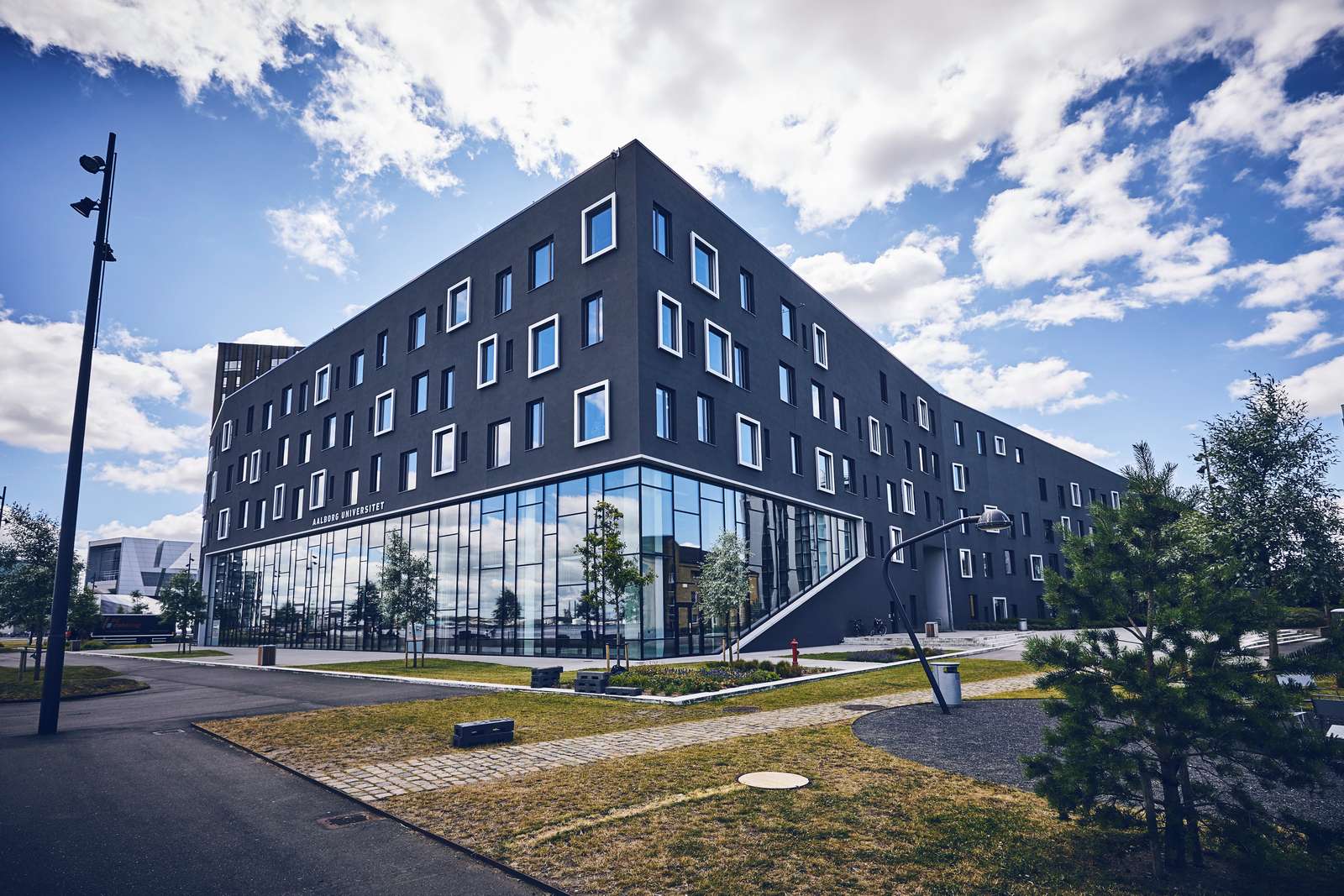
About Aalborg University
Aalborg University (AAU) is a Danish public university founded in 1974, in the city of Aalborg in northern Denmark (Jutland), with campuses also in Copenhagen and Esbjerg. Although it is young compared with Europe's historic universities, AAU quickly established itself as a global reference thanks to a radically different way of teaching: Problem-Based Learning (PBL), also known as the "Aalborg model".
In the "Aalborg model", roughly half of each semester is dedicated to working in teams on real projects, often proposed together with companies or institutions. You do not memorize for classic exams; you solve concrete problems, in a group, under the guidance of a supervisor. This model is internationally recognized as one of the most effective applied learning systems and is the university's hallmark, the reason AAU is so highly valued by employers.
AAU is especially recognized for engineering and technology. A report by the Massachusetts Institute of Technology (MIT) on the global state of engineering education placed AAU among the best engineering universities in the world and a leader in Europe in this field. In the U.S. News Best Global Universities ranking for engineering, AAU consistently appears among the top positions in Europe. Overall, the QS World University Rankings 2026 place AAU around position 306 worldwide, in the top 5 universities in Denmark.
For Romanian students, AAU is one of the best opportunities in Northern Europe. As an EU/EEA citizen, you pay no tuition (studies are free, just like for Danish students). In addition, if you meet the part-time work conditions, you can receive the Danish state grant SU (Statens Uddannelsesstotte). The bachelor's takes 3 years (180 ECTS), and AAU offers bachelor's programs taught entirely in English, so you do not need to know Danish to begin.
How to apply to Aalborg
Choose the program and the language of instruction
Check the AAU website for the list of bachelor's programs. For Romanians, the ones taught in English are the most accessible route (for example engineering programs or economics and business administration). Confirm the program's specific admission requirements (mandatory high school subjects, for example mathematics at A level for engineering).
Apply through Optagelse.dk (the KOT system)
In Denmark you do not apply directly to the university, but through the national portal Optagelse.dk, part of the coordinated admission system KOT (Den Koordinerede Tilmelding). Here you choose up to 8 programs ranked by preference. Deadlines: standard application by 5 July, 12:00 CET; quota 1 (with priority) by 15 March.
Get your Baccalaureate equivalated and prove your English
The Romanian Baccalaureate diploma is assessed for equivalence with the Danish access level. For programs in English you need proof of language: the Danish "English B" level, generally equivalent to IELTS 6.5+ or TOEFL iBT around 88. Certain programs (especially engineering) also require high school mathematics at a high level.
Obtain your CPR as an EU citizen
As a Romanian (EU) citizen you do not need a study visa for Denmark. After arrival you register with the local authorities and obtain an EU registration certificate plus your personal number CPR, essential for banking, health insurance and everyday life. The process is free and is done in the first weeks.
Check your eligibility for SU
The Danish state grant SU (Statens Uddannelsesstotte) can be accessible to EU citizens. As a rule, the main condition is to work part-time in Denmark (approximately 10-12 hours per week) to be considered an "EU worker". Check the updated conditions early; SU can cover a significant part of the cost of living.
Enrollment and start (September)
Admission responses arrive around 28 July. After acceptance you confirm your place, enroll online and arrange accommodation (AAU and partner organizations help with student housing). The academic year starts in September, with an introduction week to the "Aalborg model" and the formation of project teams.
Costs for Romanians
Tuition and fees (EU/EEA citizens)
Estimated cost of living per year
Zero tuition
As an EU/EEA citizen, you pay no tuition at Aalborg University. Bachelor's studies are free, just like for Danish students. You only need to prove your Romanian citizenship with a passport or ID card. A non-European would pay approximately €8,000-€14,000 per year, so the EU citizen advantage is complete.
SU for EU citizens
SU (Statens Uddannelsesstotte) is the monthly state grant for students. EU citizens can become eligible, as a rule if they work part-time in Denmark (approximately 10-12 hours per week) and are considered EU workers. SU can cover an important part of the cost of living. Check the updated conditions early with the Danish authorities.
Erasmus and RO grants
Erasmus+: if you initially come on an academic exchange for 1-2 semesters, you receive a monthly European grant. Grants from the Romanian Ministry of Education and programs of some local councils for their students abroad can be combined. Many students combine zero tuition, a part-time job and SU for a balanced budget in Denmark.
Want to apply to Aalborg University?
We help you choose the right program in English, get your Baccalaureate equivalated, apply correctly through Optagelse.dk and take advantage of zero tuition plus the SU grant. Our mentors have been through the process in Europe. The first mentoring session is 100% free.
Talk to a mentorFrequently asked questions
How much does Aalborg University cost for a Romanian student?
As an EU/EEA citizen, you pay no tuition: bachelor's studies at Aalborg University are free, exactly as for Danish students. Applying through Optagelse.dk has no fee. The only real cost is living, estimated at approximately €9,000-€13,000 per year in Aalborg (accommodation ~€400-€600/month, food ~€250-€350/month, transport and miscellaneous ~€100-€150/month). Aalborg is significantly cheaper than Copenhagen. A non-European student would pay tuition of approximately €8,000-€14,000 per year, so the advantage of being an EU citizen is complete.
What is the "Aalborg model" of Problem-Based Learning?
Problem-Based Learning (PBL), known as the "Aalborg model", is the university's distinctive way of teaching. Instead of only listening to lectures and sitting classic exams, roughly half of each semester is dedicated to working in teams on real projects, often proposed together with companies or institutions. You solve concrete problems, under the guidance of a supervisor, and learn collaboration, critical thinking and practical application. This model is internationally recognized as one of the most effective applied learning systems and is AAU's hallmark, highly valued by employers.
How well ranked is Aalborg University, especially in engineering?
In the QS World University Rankings 2026, AAU is around position 306 worldwide, in the top 5 universities in Denmark. Its strong point, however, is engineering: a report by the Massachusetts Institute of Technology (MIT) on the global state of engineering education placed AAU among the best engineering universities in the world and a leader in Europe in this field. In the U.S. News Best Global Universities ranking for engineering, AAU consistently appears among the top positions in Europe. For a student interested in applied engineering, AAU is one of the strongest choices in Northern Europe.
Are there bachelor's programs taught in English at Aalborg?
Yes. AAU offers bachelor's programs taught entirely in English, so you do not need to know Danish to begin your studies. Examples include engineering programs (for example at the Esbjerg campus) and economics and business administration in Aalborg. For these programs you must prove English at the Danish "English B" level, generally equivalent to IELTS 6.5+ or TOEFL iBT around 88. Check the AAU website for the updated list of programs in English, because the offer changes from year to year.
How do I apply to Aalborg through Optagelse.dk and what are the deadlines?
In Denmark you do not apply directly to the university, but through the national portal Optagelse.dk, part of the coordinated admission system KOT (Den Koordinerede Tilmelding). Here you can choose up to 8 programs ranked by preference, at one or more universities. Deadlines: the standard application closes on 5 July, 12:00 CET; for quota 1 (with priority, based mainly on grade average) the deadline is 15 March. Admission responses arrive around 28 July. The Romanian Baccalaureate diploma is assessed for equivalence with the Danish access level.
Do I need a visa to study in Denmark as a Romanian?
No. As a Romanian (EU) citizen, you have the right to study and live in Denmark without a study visa. After arrival you register with the local authorities and obtain an EU registration certificate plus your personal number CPR (Det Centrale Personregister). CPR is essential for a bank account, public health insurance and everyday life. The process is free and is usually done in the first weeks after moving. You also have the automatic right to work part-time, which matters for SU eligibility.
Can I receive the SU state grant as a Romanian student?
Possibly, yes. SU (Statens Uddannelsesstotte) is the monthly state grant for students in Denmark. EU citizens can become eligible, as a rule if they work part-time in Denmark (approximately 10-12 hours per week) and are considered "EU workers" under European rules. SU can cover an important part of the monthly cost of living. The conditions are updated periodically, so check early with the Danish authorities before relying on SU in your budget.
How long is the bachelor's and can I stay to work in Denmark after graduation?
The bachelor's takes 3 years (180 ECTS), according to the European Bologna system, optionally followed by a 2-year master's. Yes, you can stay to work: as a Romanian EU citizen you have the automatic right to work in Denmark without a work permit. Denmark has a strong economy in engineering, energy, IT and design, with companies such as Vestas, Grundfos, Novo Nordisk and an active startup ecosystem. The practical profile gained through the "Aalborg model" and collaboration with companies on real projects clearly works in your favor on the job market. With an EU diploma you can then work anywhere in the European Union without a visa.
Our mentors in Europe
They studied at Bocconi, Sciences Po, TU Delft, ETH Zurich and other EU universities. Now they guide you.

