
Copenhagen Business School
Founded in 1917, one of the largest business schools in Europe, with more than 20,000 students. Triple accreditation EQUIS, AMBA and AACSB (under 1 percent of business schools worldwide). QS Business and Management Studies 2025 ranked number 15 globally. 6 BSc programmes in English and, as an EU citizen, free bachelor studies.
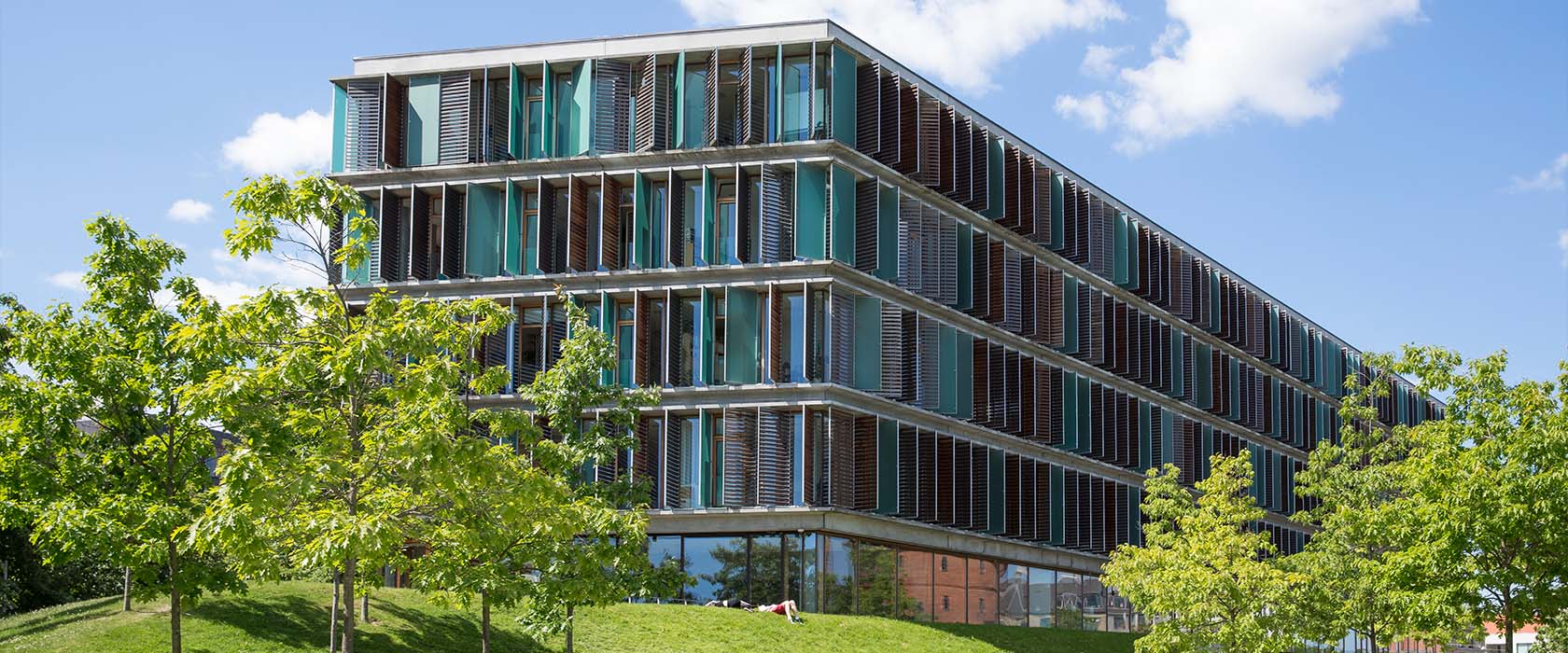
About Copenhagen Business School
Copenhagen Business School (CBS) is a public, state business school, founded in 1917 by the Danish Society for the Advancement of Business Education. Today it is one of the largest business schools in Europe, with more than 20,000 students and over 1,500 faculty and staff. Its campuses are located in Frederiksberg, part of the Copenhagen metropolitan area, accessible by metro and bicycle, in the purest Danish style.
CBS is part of the elite under 1 percent of business schools worldwide that hold triple accreditation: EQUIS, AMBA and AACSB. In the QS World University Rankings by Subject 2025 (Business and Management Studies), CBS ranks 15th globally. The Full-time Copenhagen MBA is the only full-time MBA in Scandinavia included in the Financial Times Global MBA Ranking 2026.
For a prospective bachelor student, CBS offers 6 BSc programmes taught entirely in English: BSc in International Business, BSc in International Business and Politics, BSc in Business Administration and Sociology, BSc in Business Administration and Digital Management, BSc in Business Administration and Service Management and BSc in International Shipping and Trade. The remaining programmes (the HA family, erhvervsøkonomi) are in Danish. At bachelor level, the European Bologna structure means 3 years (180 ECTS), usually followed by a 2-year master.
For international students, CBS is one of the strongest business opportunities in Europe. As a public Danish university, bachelor and master studies are free for EU and EEA citizens; only students from outside the EU/EEA pay tuition. On top of that, the international community is large: over 4,000 international students from more than 80 nationalities. Copenhagen is a Nordic business hub, home to companies such as Maersk, Novo Nordisk, Carlsberg and a strong fintech and shipping ecosystem.
How to apply to CBS
Choose the programme and language
The most relevant options are the 6 BSc programmes in English: International Business, International Business and Politics, Business Administration and Sociology, Business Administration and Digital Management, Business Administration and Service Management, International Shipping and Trade. The rest (the HA family) are in Danish.
Apply through Optagelse.dk (KOT)
Admission to all Danish universities is centralised through Optagelse.dk, the national portal of the KOT system (Den Koordinerede Tilmelding). You can apply to up to 8 programmes ranked by priority. Standard deadline: 5 July, 12:00 noon CET (there is also an earlier deadline, 15 March, for certain cases).
Understand Kvote 1 and Kvote 2
Danish admission uses two quotas. Kvote 1: based on your high school GPA (your Baccalaureate converted to the Danish 7-trin scale). Kvote 2: a holistic assessment on CBS's own criteria (motivation, admission test, experience). If your Baccalaureate average is not enough for Kvote 1, you apply through Kvote 2.
Prove your English (IELTS 6.5+)
For BSc programmes in English you must demonstrate English at Danish level A, equivalent to IELTS 6.5+ or TOEFL iBT ~83+. CBS also officially accepts the Cambridge exams C1 Advanced or C2 Proficiency. Check the entry requirements page to see the exact documents CBS requires for your diploma.
CPR and registration as an EU citizen
As an EU citizen you do not need a study visa. After moving, you obtain the EU registration certificate (EU residence document) and then the CPR number (Det Centrale Personregister), essential for banking, health insurance and everyday life in Denmark.
Enrolment and possible SU
After acceptance (the decision arrives at the end of July) you confirm your place and enrol. As an EU student working part-time in Denmark you may become eligible for SU (Statens Uddannelsesstøtte), the Danish state grant, under certain conditions. Academic year starts: late August / early September.
Costs for international students
Bachelor tuition (EU/EEA citizens)
Cost of living in Copenhagen (estimate)
Free studies
As an EU/EEA citizen, the bachelor and master at CBS are free, identical to a Danish student. You do not have to do anything special, just prove your EU citizenship through your passport or ID. That means savings of approximately €15,000 per year compared to a non-EU student, plus zero student debt at the end.
The Danish SU grant
As an EU student working part-time in Denmark you may become eligible for SU (Statens Uddannelsesstøtte), the monthly state grant for students. Many part-time jobs in Copenhagen are well paid, and the EU right to work without a visa makes the job plus SU combination realistic for EU students.
Erasmus+ and EU grants
Erasmus+ offers monthly grants if you arrive initially on a mobility programme. In addition, many national education ministries and local councils run scholarship programmes for their students abroad. These can be combined with SU and are applied for in parallel. Check with your local council and your ministry.
Want to apply to CBS?
We help you choose the right BSc programme in English, apply correctly through Optagelse.dk (Kvote 1 or Kvote 2), prepare for IELTS and make the most of free studies for EU citizens. Our mentors have been through the process. The first mentoring session is 100% free.
Talk to a mentorFrequently asked questions
How much does CBS cost for an EU student?
CBS is a public, state business school. Bachelor (BSc) and master studies are free for EU and EEA citizens, so as an EU citizen you pay zero tuition. Only students from outside the EU/EEA pay tuition (approximately €15,000 per year). The only real cost for you is living in Copenhagen: accommodation €600-€1,000 per month, food €300-€450, transport ~€50-€60, so approximately €12,000-€18,000 per year in living costs. MBA programmes are separate and are paid (self-funded), but those are postgraduate.
What bachelor programmes in English does CBS offer?
CBS offers 6 BSc programmes taught entirely in English: BSc in International Business, BSc in International Business and Politics, BSc in Business Administration and Sociology, BSc in Business Administration and Digital Management, BSc in Business Administration and Service Management and BSc in International Shipping and Trade. The remaining bachelor programmes (the HA family, erhvervsøkonomi) are taught in Danish. For students who do not speak Danish, the 6 BSc programmes in English are the natural path.
How do I apply to CBS through Optagelse.dk?
Admission to Danish universities is centralised through Optagelse.dk, the portal of the national KOT system (Den Koordinerede Tilmelding). You can apply to up to 8 programmes ranked by priority (you will be admitted to the highest programme you qualify for). The standard deadline is 5 July, 12:00 noon CET, with an earlier deadline (15 March) for certain categories. The application itself through KOT is free.
What are Kvote 1 and Kvote 2 and how do they affect me?
The Danish system admits in two quotas. Kvote 1 allocates places strictly based on your high school GPA (your Baccalaureate converted to the Danish 7-trin scale). Kvote 2 uses a holistic assessment on CBS's own criteria, which may include an admission test, a motivation letter and relevant experience. In practice: if your converted Baccalaureate average is high enough, you are assessed automatically in Kvote 1; if not, you apply through Kvote 2, where your full profile counts for more than the bare grade.
What level of English do I need for CBS?
For the BSc programmes in English you must prove English at Danish level A, equivalent to approximately IELTS 6.5+ or TOEFL iBT around 83. CBS also officially accepts the Cambridge exams C1 Advanced and C2 Proficiency to meet this requirement. Danish is NOT required for the 6 BSc programmes in English, although it will be useful in everyday life and on the job market. Check the official entry requirements page to see which documents CBS requires for your high school diploma.
How well ranked is CBS?
CBS is one of the strongest business schools in Europe. In the QS World University Rankings by Subject 2025 (Business and Management Studies) it ranks 15th globally. It holds triple accreditation EQUIS, AMBA and AACSB, which under 1 percent of business schools worldwide have. The Full-time Copenhagen MBA is the only full-time MBA in Scandinavia included in the Financial Times Global MBA Ranking 2026. A CBS degree is recognised internationally and opens doors both in the EU and globally.
How long is the bachelor at CBS and how does it work afterwards?
Bachelors (BSc) at CBS last 3 years (180 ECTS), following the European Bologna system, so one year less than in Spain (4 years) and the same as in the UK. After the BSc, many students continue with a 2-year master at CBS or elsewhere in the EU, which is also free for EU/EEA citizens. The typical Danish model is 3 years bachelor plus 2 years master (the 3+2 model). With a CBS degree you can apply directly to the job market in Denmark or anywhere in the EU.
Can I stay and work in Denmark after CBS?
Yes, as an EU citizen! Unlike the UK or the USA, as an EU citizen you have the automatic right to work in Denmark without a visa or work permit. Copenhagen is a strong Nordic business hub, with companies such as Maersk, Novo Nordisk, Carlsberg, Danske Bank and an active fintech, shipping and consulting ecosystem. Denmark has high salaries and a work-life balance valued worldwide. On top of that, the CPR number and the EU registration certificate give you full access to services and the job market.
Our mentors in Europe
They studied at Bocconi, Sciences Po, TU Delft, ETH Zurich and other EU universities. Now they guide you.

