
Technical University of Denmark
Number 1 in engineering in Denmark, founded in 1829 by physicist H.C. Ørsted. QS World 2026 number 107, number 2 in Denmark and number 5 in the Nordic region. As an EU citizen you study for FREE (zero tuition) and can receive Danish SU support. The BSc in General Engineering is taught entirely in English.
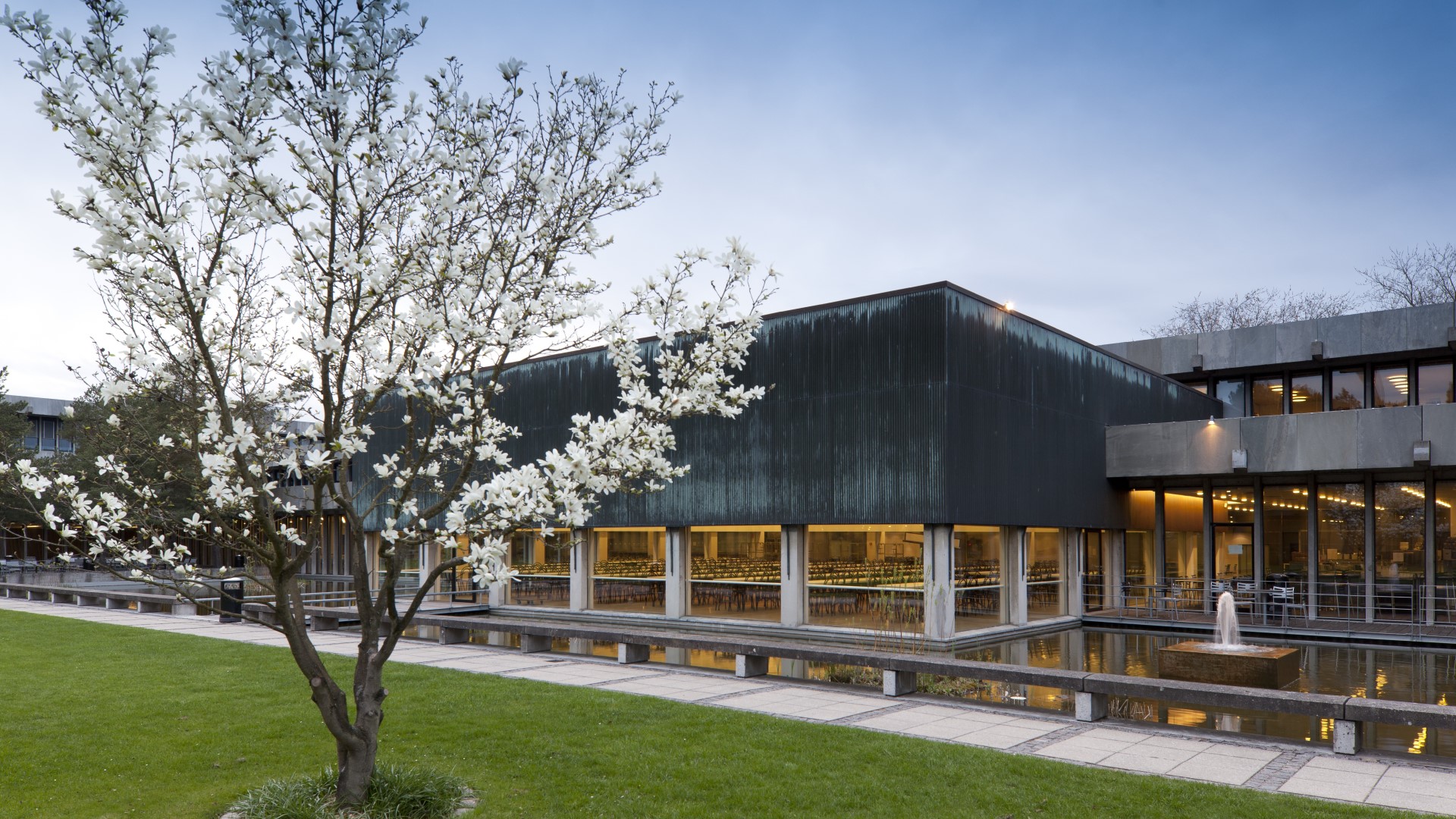
About DTU
The Technical University of Denmark (DTU, Danmarks Tekniske Universitet) is a public technical university founded in 1829 at the initiative of Danish physicist Hans Christian Ørsted, the discoverer of electromagnetism. It was originally called Den Polytekniske Læreanstalt (the Polytechnic College), inspired by the École Polytechnique in Paris, and was the first polytechnic institution in Denmark. Today it is number 1 in engineering in Denmark and one of the technical benchmarks of the Nordic region.
DTU is QS World 2026 number 107, number 2 in Denmark (after the University of Copenhagen), number 42 in Europe and number 5 in the Nordic region. At Times Higher Education it is number 121 worldwide, and at Shanghai (ARWU) in the 151-200 band. The main campus is in Kongens Lyngby, a green suburb about 12 km north of central Copenhagen, quickly reached by the S-train and bus. There is also a satellite campus at Risø, near Roskilde, dedicated to energy research. DTU's motto is "Technology for people".
The university has roughly 11,000-13,000 students at bachelor's and master's level, organised across more than 20 departments, plus around 2,000 academic staff. DTU is a member of the elite European alliance EuroTech Universities Alliance, alongside TU Eindhoven, EPFL, Technion and others. Strong fields: electrical and electronic engineering, wind energy (DTU Wind), mechanical and materials engineering, computer science, biotechnology, physics, space engineering (DTU Space). The concept of "Software Engineering" was formalised at a 1968 NATO conference in which DTU was involved.
For Romanian students: at bachelor's level, many programmes (BEng/BSc) are taught in Danish, but DTU offers a full bachelor's degree in English, the BSc in General Engineering (3 years, 4 specialisations: Living Systems, Advanced Materials, Cyber Systems, Future Energy), where about 60 percent of students are international. At master's level, the English-taught offer is very broad (most MSc programmes are in English). Most important for a Romanian: as an EU/EEA citizen you study for FREE, the Danish state fully covers tuition, and you can also apply for the monthly SU support if you work part-time in Denmark. The BSc lasts 3 years (180 ECTS).
How to apply to DTU
Choose the programme and check the language
At bachelor's level, most BEng/BSc programmes at DTU are taught in Danish. The only full bachelor's degree in English is the BSc in General Engineering (3 years, 180 ECTS), with 4 specialisations: Living Systems, Advanced Materials, Cyber Systems, Future Energy. If you want a Danish-taught programme, you need Danish at level A. At master's (MSc) level, most programmes are in English.
Apply through Optagelse.dk (the KOT system)
Bachelor's applications in Denmark are centralised through the national portal Optagelse.dk, run by the KOT system (Den Koordinerede Tilmelding / Coordinated Enrolment). There you upload your documents, choose programmes in order of preference and track the outcome. Deadline for EU/EEA citizens: 5 July (quota 2, 12:00 noon). There is also an earlier quota 1 round, based on grade average.
Prove your English (or Danish)
For the BSc in General Engineering (in English) you need English B-level, demonstrable through IELTS minimum 6.5, an equivalent TOEFL iBT or recognised certificates. For Danish-taught programmes you need Studieprøven / Danish A. The Romanian Baccalaureate with English studied is usually enough for the basic requirement, but check the exact threshold for your year.
Register as an EU citizen (CPR)
As a Romanian citizen (EU) you do not need a study visa. After arrival you register with the authorities and obtain your CPR number (Det Centrale Personregister), the key for healthcare, banking and SU. For a stay over 3 months you apply for an EU registration certificate (EU residence document) at SIRI. Required documents: passport or ID card, proof of admission to DTU, proof of financial resources.
Apply for SU (support possible)
Studies are FREE for EU/EEA citizens, but Denmark also offers SU (Statens Uddannelsesstøtte), a monthly grant for students. As an EU citizen you can become eligible for SU especially if you work part-time (usually at least ~10-12 hours/week) and gain EU worker status. SU is real support for rent and food, but the eligibility rules should be checked on su.dk.
Enrolment and starting your studies
Bachelor's admission results usually appear at the end of July. After acceptance you confirm your place, enrol online at DTU and start in September (the autumn semester). DTU runs an introduction week for international freshers, with orientation on the Lyngby campus, mentors and housing support (student rooms and kollegium through dedicated organisations).
Costs for Romanians
Tuition: FREE for EU citizens
Cost of living in Copenhagen (monthly)
Tuition €0
As a Romanian citizen (EU/EEA) you do not pay tuition at DTU, the Danish state covers it in full. You do not need to do anything special, just prove your Romanian citizenship through your passport or ID card. Compared with a non-European who pays roughly €15,000 per year, your saving is around €45,000 over a full 3-year bachelor's cycle.
Danish SU
SU (Statens Uddannelsesstøtte) is the monthly Danish grant for students. As an EU citizen you can become eligible especially if you work part-time (usually ~10-12 hours/week) and gain EU worker status. In addition, part-time wages in Denmark are among the highest in Europe, so a student job covers a good part of your rent. Check the rules on su.dk.
Erasmus + RO scholarships
Erasmus+: if you come initially on an academic exchange of 1-2 semesters, you receive a monthly grant for Denmark (a high-cost country, so one of the highest rates). Many cities in Romania also have scholarship programmes for their students abroad (check with your city hall). These scholarships can be combined with Danish support and a part-time job.
Want to apply to DTU?
We help you choose the right programme (BSc in General Engineering in English or an MSc), apply correctly through Optagelse.dk, prepare for IELTS and make the most of FREE tuition for EU citizens plus SU support. Our mentors in Europe have been through the process. The mentoring session is 100% free.
Talk to a mentorFrequently asked questions
How much does DTU cost for a Romanian student?
As an EU/EEA citizen, you study at DTU completely FREE: the Danish state fully covers tuition, at both bachelor's and master's level. A non-European student pays roughly €15,000 per year, so your EU citizen advantage is enormous.
The only real cost is living in the Copenhagen area, one of the most expensive in Europe: housing €500-€800 per month, food €300-€400, transport €50-€60, total roughly €1,000-€1,500 per month. The good news: you can receive the monthly SU support if you work part-time and you have access to well-paid student jobs.
Are DTU's bachelor's programmes in English or in Danish?
At bachelor's level, most BEng/BSc programmes at DTU are taught in Danish. However, there is a full bachelor's degree in English: the BSc in General Engineering (3 years, 180 ECTS), with 4 specialisations (Living Systems, Advanced Materials, Cyber Systems, Future Energy), where about 60 percent of students are international.
At master's (MSc) level, the English-taught offer is very broad, with most master's programmes in English. So a common path for Romanians is the BSc in General Engineering in English, followed by an MSc also in English.
How do I apply to DTU through Optagelse.dk?
Bachelor's applications in Denmark are centralised through the national portal Optagelse.dk, run by the KOT system (Den Koordinerede Tilmelding / Coordinated Enrolment). There you create an account, upload your documents (Baccalaureate diploma, transcript, English certificate), choose programmes in order of preference and track the outcome.
The deadline for EU/EEA citizens is usually 5 July (quota 2, 12:00 noon). There is also an earlier quota 1 round, based on grade average. Results appear at the end of July, and studies begin in September.
What level of English do I need for DTU?
For the BSc in General Engineering (in English) DTU requires English B-level, demonstrable through IELTS minimum 6.5, an equivalent TOEFL iBT or other recognised certificates. The Romanian Baccalaureate with English studied as a subject usually covers the basic requirement, but it is good to also have an IELTS 6.5+ as clear proof.
For bachelor's programmes in Danish you need Danish A level (for example through Studieprøven). For English-taught master's degrees, the English requirement is similar to that for the BSc.
What is SU and can I get financial support as a Romanian?
SU (Statens Uddannelsesstøtte) is the monthly Danish grant for students, real support for rent and food. For Danes it is almost automatic, and for EU citizens there is a path: if you work part-time in Denmark (usually at least ~10-12 hours per week) and gain EU worker status, you can become eligible for SU.
In addition, part-time wages in Denmark are among the highest in Europe, so a student job combined with SU covers a good part of the cost of living. The exact eligibility rules should be checked on su.dk. Important: even without SU, tuition stays €0 for you as an EU citizen.
How long is the bachelor's at DTU and what credit system does it use?
The bachelor's (BSc) at DTU lasts 3 years (180 ECTS), in line with the European Bologna system. One year less than in Spain (4 years / 240 ECTS) and the same as in the United Kingdom. A standard academic year has 60 ECTS, distributed across semesters and course blocks with the "13-week + 3-week" system specific to DTU.
After the BSc you can continue with a master's (MSc) of 2 years (120 ECTS), most in English, also FREE for EU citizens. ECTS credits are transferable to other European universities, useful for Erasmus and for continuing your studies.
Why do I need a CPR number in Denmark?
As a Romanian citizen (EU) you do not need a study visa for Denmark. After arrival, however, you must obtain your CPR number (Det Centrale Personregister), a personal code without which you cannot open a bank account, register with a doctor or receive SU.
For a stay over 3 months you also apply for an EU registration certificate (EU residence document) at SIRI (the Danish Agency for International Recruitment and Integration). Required documents: Romanian passport or ID card, proof of admission to DTU and proof that you have financial resources for the stay.
Can I stay to work in Denmark after graduating from DTU?
Yes, as an EU citizen! Unlike the United Kingdom or the USA, where you need a work visa, as a Romanian citizen (EU) you have the automatic right to work in Denmark without a visa or special permit.
Denmark has a strong market for engineers, with companies such as those in wind energy (Ørsted, Vestas), pharma and biotech (Novo Nordisk, Novonesis), maritime transport (Maersk), audio and technology. The Copenhagen area (Greater Copenhagen / Øresund, together with Malmö in Sweden) is an active technology hub. Salaries for engineers are among the highest in Europe, and a DTU degree is highly respected. With an EU degree you can work anywhere in the EU without a visa.
Our mentors in Europe
They studied at Bocconi, Sciences Po, TU Delft, ETH Zurich and other EU universities. Now they guide you.

