
Vanderbilt University
The most prestigious private university in the southern United States. A 331-acre campus officially recognized as a national arboretum, in the heart of Nashville (Music City). Peabody College ranks among the top in the USA for education, and pre-med has its own hospital on campus. Opportunity Vanderbilt since 2009: financial aid that is 100 percent need-met, with no loans.
About Vanderbilt
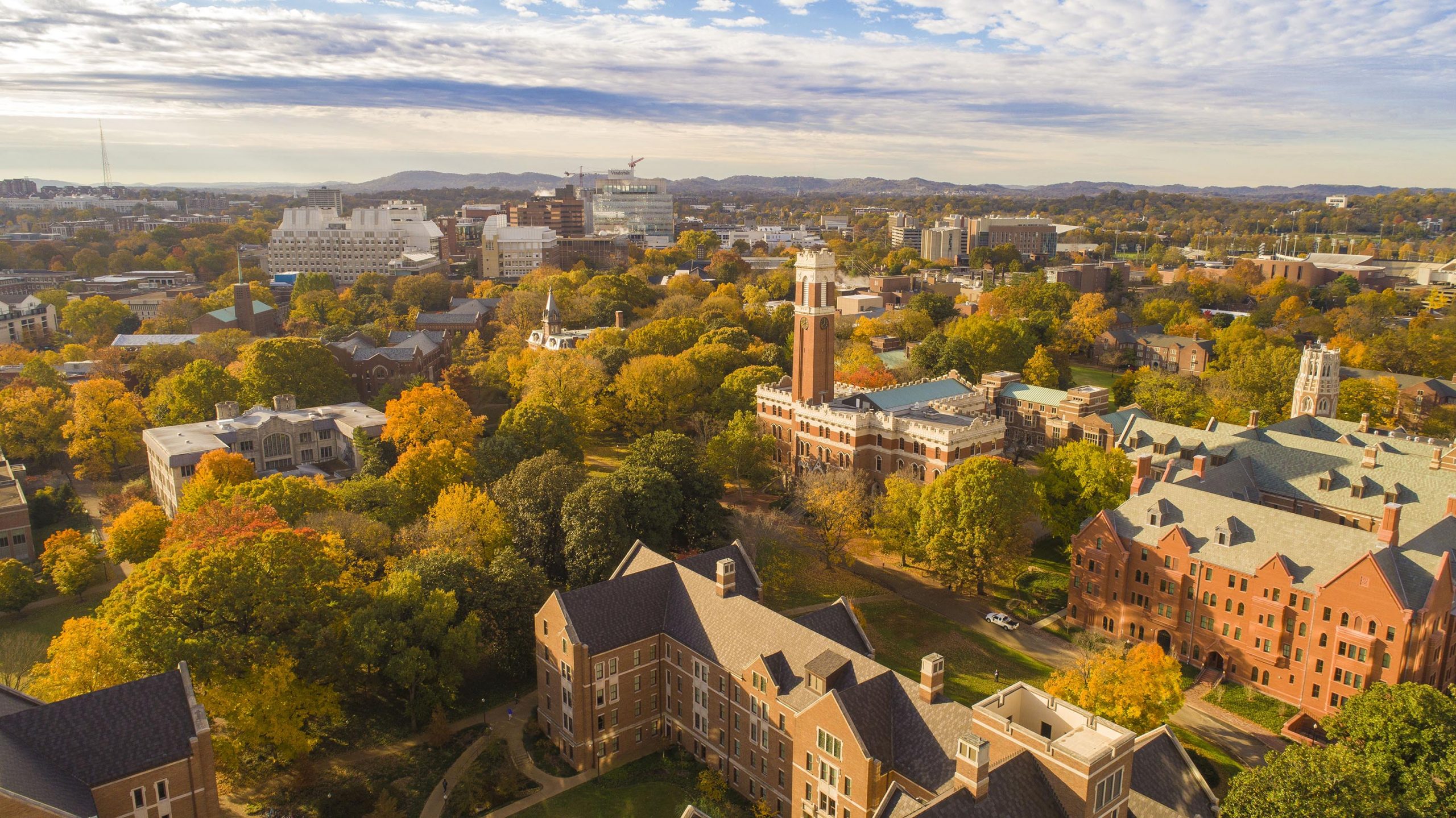
Vanderbilt University is located in Nashville, Tennessee, the country music capital of the USA and a major hub for the music industry, healthcare and education. The 331-acre campus is officially a national arboretum (more than 300 tree species) and sits 1.5 miles from downtown Nashville. It is a rare combination: a green, quiet Southern collegiate campus plus direct access to a fast-growing metropolis (Nashville is among the best job markets in the USA). Founded in 1873 with a $1 million gift from Cornelius Vanderbilt (the richest man of his era), the university quickly became the leading academic institution in the southern United States.
Vanderbilt has 4 undergraduate schools with separate admissions: College of Arts and Science (~60 percent of students, full liberal arts: Economics, Neuroscience, Political Science, English), School of Engineering (Computer Science, Biomedical Engineering, ChemE, MechE, strong focus on interdisciplinarity), Peabody College of Education and Human Development (ranked among the top in the USA for graduate education, undergraduate in Human and Organizational Development, Cognitive Studies, Child Development) and Blair School of Music (full conservatory, audition required). At the graduate level: Vanderbilt Law School (top 15), Owen Graduate School of Management (MBA), Vanderbilt University Medical Center and Vanderbilt Divinity School.
Vanderbilt is the only private university in the Southeastern Conference (SEC), alongside other large public schools. Vanderbilt Medical Center is on campus, integrated with the undergraduate experience: access to clinical research is excellent for pre-med students. Opportunity Vanderbilt (launched in 2009) makes the university one of the ~20 schools in the USA that replace all loans with grants and cover 100 percent of demonstrated need. In addition, Vanderbilt offers the Cornelius Vanderbilt Scholarship: a merit-based full-tuition award for ~30 students per year (rare at elite universities). Mascot: Commodores. Colors: black and gold. The atmosphere is known as "Southern hospitality" combined with top academic rigor: more relaxed than the Ivies, but academically very competitive.
How to apply to Vanderbilt
Common App or Coalition
Vanderbilt accepts the Common App or the Coalition Application. When you apply you choose one of the 4 schools (Arts and Science, Engineering, Peabody, Blair). A switch after admission is possible among Arts and Science, Peabody and Engineering; Blair (Music) requires an audition: you cannot transfer there easily.
Deadlines: ED1 Nov 1, ED2 Jan 1, RD Jan 1
Vanderbilt offers ED1 and ED2 (both binding), plus RD. No EA. ED1 decision December 15, ED2 decision February 15, RD final in March. ED rate Class of 2029: 13.2% (record low). RD rate Class of 2029: 3.3% (1,411 / 43,322), an absolute record low. ED roughly doubles your odds statistically. Strategy for Romanians: ED2 is a second chance in January if your ED elsewhere was rejected.
SAT/ACT still test-optional
Vanderbilt remains test-optional for the current cycle (it has NOT reinstated the requirement like JHU, Caltech or MIT). For international students from Romania, the SAT remains practically mandatory. Admitted profiles: SAT 1500-1560 (median 1530), ACT 33-35 (median 34). 91.5% of admitted students in the top 10 percent of their high school class. For Engineering and the Cornelius Vanderbilt Scholarship: scores in the top 25 percent (SAT 1560+, ACT 35+) are almost mandatory. Vanderbilt code: 1871.
Vanderbilt Supplement (only 1 essay)
In addition to the Common App Personal Statement (650 words), Vanderbilt requires only 1 supplemental essay (200-400 words): "Vanderbilt offers a community... briefly elaborate on how one of your extracurricular activities or work experiences has influenced you." The supplement is among the shortest at elite universities, but also more competitive. Be specific, concrete and authentic.
Recommendations (counselor + 1-2 teachers)
A counselor recommendation is required plus 1-2 teachers from core academic subjects (Vanderbilt accepts 1 or 2, but 2 is the standard). For Engineering: one from a math or science teacher. For Blair (Music): a mandatory pre-screening audition (video) plus an in-person or live virtual audition for selected candidates.
Alumni interview (optional)
Vanderbilt offers optional interviews through the Vanderbilt Alumni Network. For Romanians, the network is very limited, likely a video call. It is not a decisive factor. For the Cornelius Vanderbilt Scholarship, finalist candidates are invited to campus in March for interviews and activities over 3 days (Vanderbilt covers international travel).
Costs and financial aid
Sticker cost 2024-25
Average cost paid (after aid)
Factor
For international students, financial circumstances matter in admissions. For Americans, Vanderbilt is need-blind.
100%
For those admitted with aid: 100 percent of demonstrated need, with no loans (all-grant). Average international package: ~$58,000/year.
Full-tuition
A merit-based (NOT need-based) award for ~30 students per year. Covers full tuition plus a stipend for a summer fellowship. Separate application.
Want to apply to Vanderbilt?
Vanderbilt has only 1 supplement essay (very short), but it is decisive: every word counts. We help you build it correctly, decide between ED1, ED2 or RD, and apply for the Cornelius Vanderbilt Scholarship as well if your profile is a fit. The mentoring session is 100 percent free.
Talk to a mentorFrequently asked questions
What is the difference between Vanderbilt, Duke and the Ivies for a Romanian?
Vanderbilt is the most prestigious private university in the southern USA: the main difference is the more relaxed atmosphere, authentic "Southern hospitality", a strong focus on community and work-life balance vs. the intense atmosphere at the Ivies. For pre-med: Vanderbilt Medical Center is on campus, top tier. For education and policy: Peabody College ranks among the top in the USA (graduate). For undergraduate business: there is no major undergraduate program (Owen is MBA only), but Economics in Arts and Science is very strong. Duke is the closest peer: similar regionally (the South), elite, very sports-oriented; Duke is, however, more academically intense, while Vanderbilt is more balanced. The Ivies carry more international prestige, but Vanderbilt has more money for aid and a more integrated collegiate experience. For Romanians who want a Southern campus plus top pre-med plus generous aid: Vanderbilt is an excellent choice.
How do I choose among the 4 Vanderbilt undergraduate schools?
Each school has separate admissions. College of Arts and Science (~60 percent of students, ~70 majors): comprehensive liberal arts, ideal for pre-med, pre-law, economics, sciences, humanities; the most flexible, with an easy switch later. School of Engineering: Computer Science (top 20), Biomedical Engineering, ChemE, MechE, EE; emphasis on interdisciplinarity (all engineers also take liberal arts). Peabody College: Human and Organizational Development (HOD, the most popular Vanderbilt major), Cognitive Studies, Child Development, Special Education; ideal for those interested in applied psychology, education policy, social impact. Blair School of Music: full conservatory, performance plus composition; audition required. Switching later: Arts and Science, Peabody and Engineering possible; Blair, however, is quasi-permanent.
What is Vanderbilt like for pre-med?
Vanderbilt is among the top 10 pre-med universities in the USA. Advantages: Vanderbilt University Medical Center on campus: clinical research, shadowing and internships are extremely accessible (many students start in year 1). Medical school acceptance rate for Vanderbilt applicants: ~80% (vs the national average of ~40%). Required courses: Bio, Chem, Organic Chem, Physics, Calculus plus recommended Biochem, Statistics. Pre-med advising is personalized and very good. The difference from JHU and Northwestern: Vanderbilt has a more relaxed atmosphere, less cutthroat, and students collaborate instead of competing. For Romanians interested in medicine in the USA long term, Vanderbilt is a strong choice.
ED1 vs ED2 at Vanderbilt: which is better?
Vanderbilt is among the few top universities that offer 2 binding ED rounds. ED1: deadline November 1, decision December 15. ED rate Class of 2029: 13.2%. ED2: deadline January 1, decision February 15. Rate: roughly similar (combined data). RD Class of 2029: deadline January 1, decision late March. Record-low rate: 3.3% (1,411 / 43,322). Strategy for Romanians: ED1 if Vanderbilt is clearly your first choice and you have estimated your financial aid. ED2 is a valuable second chance in January: many Romanians apply ED1 elsewhere (Northwestern, JHU, an Ivy) and if rejected, they submit ED2 to Vanderbilt with an already-polished profile. Note: ED1 and ED2 are both binding, with mandatory acceptance (exception: if financial aid does not cover demonstrated need).
What is the Cornelius Vanderbilt Scholarship and how do you apply?
The Cornelius Vanderbilt Scholarship (CVS) is a merit-based award (NOT need-based), rare at elite universities, that covers full tuition plus a summer fellowship stipend for all 4 years. ~30 students per year receive the CVS out of ~2,300 admitted. To apply: you check a box in the Common App plus a separate supplemental essay (500 words) about leadership, impact, or intellectual passion plus an additional recommendation from someone who has observed your impact. Finalists (~100 candidates) are invited to campus in March for 3 days of interviews and activities. Important for Romanians: the CVS is need-blind for the scholarship application, financial circumstances do not matter. It is one of the most accessible merit-based scholarships at elite universities for international students.
How does Opportunity Vanderbilt work for Romanians?
Opportunity Vanderbilt is the financial aid program launched in 2009: Vanderbilt covers 100 percent of demonstrated need with no loans (all-grant). Average international package: ~$58,000/year. But important: Vanderbilt is need-aware for international students (need-blind only for Americans), so applying for aid affects your admission chances. Only ~10-15 percent of admitted international students receive aid, vs ~65 percent of Americans. Critical: you must apply for aid at the time of application, in year 1. If you do not, you can never request it again, even if your circumstances change. Complete the CSS Profile from the College Board plus the ISFAA (International Student Financial Aid Application) for Vanderbilt.
SAT/ACT at Vanderbilt: mandatory or optional?
Vanderbilt is officially still test-optional (it has NOT reinstated the SAT/ACT requirement like JHU, Caltech or MIT). But for international students from Romania the SAT/ACT remains practically mandatory: the competition is too strong to rely on your transcript alone. Admitted profiles: SAT 1500-1560 (median 1530), ACT 33-35 (median 34), 91.5% of admitted students in the top 10 percent of their high school class. For Engineering and the Cornelius Vanderbilt Scholarship: scores in the top 25 percent (SAT 1560+, ACT 35+) are almost mandatory. The Vanderbilt code for the College Board: 1871. Plus TOEFL 100+ or IELTS 7.0+ if English is not the primary language of instruction in your high school (Duolingo English Test 130+ accepted as an alternative).
How many Romanian students are at Vanderbilt?
Vanderbilt admits on average 1-2 Romanian students per year at the undergraduate level: the community is small but present. At the graduate level (Owen MBA, Vanderbilt Law, Peabody, Medical), the number is considerably larger: 4-6 per year. The total active Romanian community (undergraduate plus graduate plus post-doc): 20-30 people. Vanderbilt is popular among Romanians oriented toward pre-med, Human and Organizational Development (HOD), Engineering and Music (Blair). There is an active Eastern European Student Association and a Vanderbilt International Students Office that runs regular networking events. Class of 2029: 15.2% international in the class (the highest percentage recently).
Our mentors for the USA
They studied in the USA, at universities like Harvard, MIT and Stanford. They went through the process. Now they guide you.


